Camouflage and Styling
How often should you brush your hair? What experts advise
New analysis explains why hair type, brush design and technique—not stroke counts—should guide your routine.
By the Thicker Thinking Editorial Team
Published · Updated · 5 min read
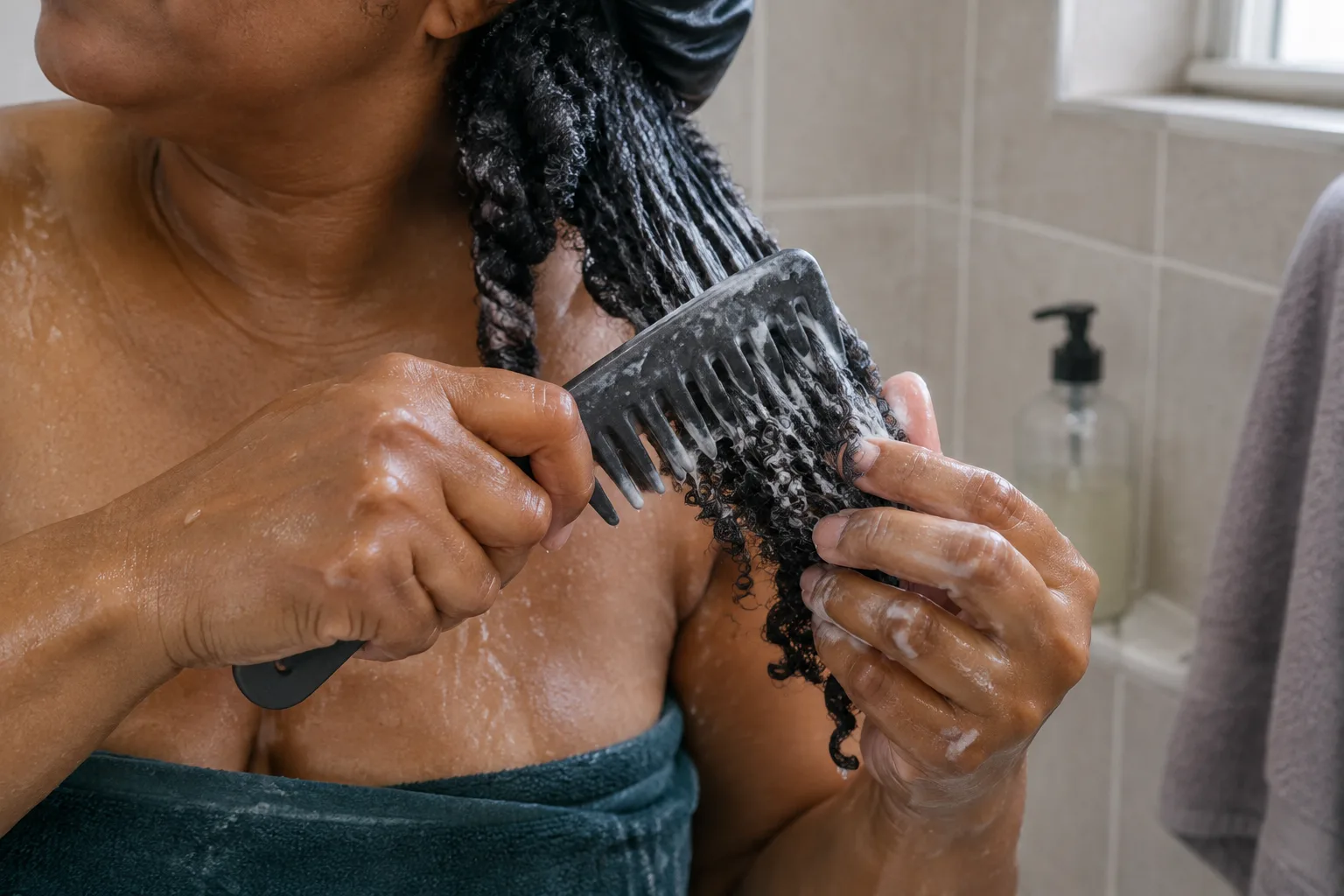
Quick answerThere’s no single rule. For straight or wavy hair, gentle brushing several times a week (up to daily) helps. For curly or coily hair, detangle when wet with slip, not dry. Technique and force matter far more than stroke counts.
How often should you brush your hair? According to BBC News Health and bbc.com, there isn’t a one‑size‑fits‑all answer, and the right routine depends on hair type, brush design and how much force you use.
What does emerge clearly is that stroke counts are unhelpful. Laboratory work suggests high tension and knot‑pulling can damage fibres, while regular, gentle detangling helps prevent matting and scalp build‑up that later require harsher brushing.
What happened
New reporting from bbc.com brings together insights from physics, materials science and haircare professionals: the Victorian‑era advice to brush 100 times a night is a myth, and modern guidance is to match method to hair type and keep the force low.
Researchers modelling how strands knot and are pulled apart found that repeated combing under tension can propagate cracks along hair fibres, providing a plausible route to split ends. The effect worsens when knots concentrate stress at a sharp bend.
A separate analysis of grooming damage concluded that repetitive brushing produces cumulative fatigue in fibres, though in day‑to‑day life this is often outweighed by chemical colouring and high‑heat styling. This underlines why gentle technique matters more than counting strokes.
Everyday benefits exist too. Regular, light brushing helps clear shed hairs, dead skin and debris that can irritate the scalp if they build up. This reduces the risk of big tangles that later need forceful detangling, which is when breakage is more likely.
Frequency depends on texture. For straight or wavy hair, experts cited by bbc.com suggest brushing several times a week and, for some, up to twice daily if done gently. For curly or coily hair, avoid dry brushing; detangle during washing when hair has slip.
Wet versus dry also varies by type. In straight and wavy hair, wet strands are stretchier but mechanically weaker, so brushing is safer when dry. In curly and coily hair, detangling with water and product during wash routines reduces snagging and knots.
Brush choice matters. Flexible detangling brushes are advised when working on wet hair, while soft, scalp‑friendly bristles help on dry hair to move oils along the shaft. Some designers are even testing hybrid tools combining long plastic pins with shorter smoothing bristles.
Growth is unaffected by stroke counts. A 2025 survey reported by bbc.com found that over 46% of respondents believed brushing boosts growth, yet experts say there’s no evidence it speeds hair production from follicles. See our explainer on what makes hair grow faster.
The background
Combing and brushing date back to prehistory, with early tools made from bone, wood and ivory. The practice became highly ritualised in the Victorian era, when very long hair was prized and nightly routines involved combing, then smoothing with natural‑bristle brushes.
Industrial innovation changed access. In 1898, inventor Lyda Newman patented a brush with synthetic bristles, cutting costs and helping everyday brushing become commonplace. Mass adoption also spread myths, including the idea that more strokes equal healthier growth.
Hair structure explains why technique matters. Each strand has a central cortex and an outer cuticle made of overlapping keratin “tiles”. In straight or wavy hair, these tiles lift when wet, making fibres more elastic but also easier to chip or snap under load.
Curly and coily fibres behave differently. According to research highlighted by bbc.com, evolving classifications show that chemical bonds and cuticle patterns shift as curl tightness increases, which affects strength, moisture retention and susceptibility to tangling. Early findings need more study.
Laboratory tests emphasise mechanics: the highest stresses arise at tight bends, such as during knot‑pulling, which accelerates split ends. In daily life, however, heat tools and chemical treatments typically cause more overall damage than careful brushing.
Scalp comfort also plays a role. Light, regular brushing can help lift flakes and debris that collect around follicles. If you notice persistent irritation or scale, dermatologists generally advise assessing for underlying scalp conditions before changing your routine. Our guide to scalp conditions that cause hair loss explains warning signs and next steps.
For styling, gentler detangling supports shape and volume without roughing the cuticle. Those managing finer greying hair often use minimal‑tension brushes and strategic cuts to boost lift; see our report on the best haircuts for fine grey hair to look thicker.
Seasonal frizz and dryness complicate routines, especially for textured hair. Smoother detangling with conditioner, wide‑section brushes and minimal force help preserve curl pattern, as covered in our curly hair winter care tips.
What people are saying
Hair professionals quoted by bbc.com agree that “Brushing isn’t the enemy” — it’s the force and friction. Gentle strokes, patient detangling and the right tool reduce stress on fibres and the scalp.
Dermatologists and trichologists generally advise starting at the ends, working up in small sections, and pausing to add slip rather than yanking through knots. Consistency avoids the once‑a‑week tug‑of‑war that leads to mechanical breakage.
For straight or wavy hair, finger‑detangle obvious snags first, then use a soft‑bristle or cushioned brush on dry hair. If you must brush when wet, a flexible detangler is kinder to raised cuticles than a rigid, narrow‑tooth comb.
For curly and coily hair, detangle only when wet or very damp, ideally with conditioner to increase slip. Many people find sectioning, wide‑spaced flexible pins and slow strokes preserve curls and limit halo frizz without tearing at knots.
Scalp‑friendly design reduces irritation. Cushioned bases, rounded pins and softer bristles can help distribute oils without scraping. Clean brushes regularly to remove residue that would otherwise redeposit on strands or the scalp.
Avoid excessive force or tight, repetitive pulling, which can cause breakage and discomfort and, over time, contribute to traction at vulnerable sites. If you notice tenderness, scaling or patchy thinning, seek assessment before making big routine changes.
Don’t be alarmed by shed hairs in your brush. Brushing often collects strands already in the shedding phase, so a small pile can look dramatic. A sudden, sustained rise in shedding, however, warrants a conversation with a GP, dermatologist or trichologist.
What happens next
Researchers are building more precise models of how different curl patterns, cuticle structures and grooming forces interact, which could lead to clearer guidance by hair type and better‑designed tools that minimise stress at knots.
Brush makers are experimenting with mixed‑bristle layouts and more flexible pins to part hair while smoothing with less drag, aiming to preserve fibre integrity and reduce split ends from daily care.
For now, practical takeaways are straightforward: match frequency to your hair type, use the gentlest tool that gets the job done, and keep stroke counts and hard pulling out of your routine. If hair is fragile due to illness, medication or recent shedding, dial down force and get tailored advice.
For UK readers managing thinning or styling challenges, consider small, consistent detangling sessions over occasional heavy brushing. If you’re seeing persistent scalp symptoms, new breakage or rapid shedding, book a review with your GP, a dermatologist or a registered trichologist.
Related: Hair shaft defects: causes, signs and when they cause hair loss
Related: Black hair care practices and hair loss: what dermatology says
Related: Catherine Zeta‑Jones debuts ‘twilights’ to cover grey hair
Related: Best root-lifting spray for fine hair: what experts recommend
Why this matters
Daily brushing is one of the simplest styling choices people with hair loss can adjust. Gentle, regular detangling can reduce breakage and scalp irritation, while heavy‑handed brushing may worsen frays and split ends. If you notice rapid shedding, sore patches or new thinning, speak to your GP, a dermatologist or a trichologist. Our explainer on how much hair loss is normal can help you decide when to seek help.
Common questions
- how often should you brush your hair
- Match it to your hair type. Straight or wavy hair benefits from gentle brushing several times a week, up to daily. Curly or coily hair is best detangled when wet with slip, not brushed dry.
- does brushing your hair make it grow faster
- No. Brushing doesn’t speed hair growth from follicles. A 2025 survey found many people still believe it does, but experts say stroke counts don’t boost growth.
- should you brush hair when it’s wet
- For straight or wavy hair, mostly brush when dry because wet strands are weaker. For curly or coily hair, detangle when wet or very damp with conditioner for slip.
- can overbrushing cause hair loss
- Excessive force and repeated knot‑pulling can cause breakage and split ends. Lab studies show cumulative fibre damage from grooming, especially when tension is high.
- what’s the best brush for thinning or sensitive scalps
- Choose scalp‑friendly options with cushioned bases, rounded pins and soft bristles. Flexible detangling brushes help on wet hair; soft bristles help distribute oils on dry hair.
- how should i detangle curly or coily hair
- Detangle when wet or very damp, in sections, with conditioner to add slip. Use wide‑spaced flexible pins and gentle strokes to avoid snagging and preserve curl pattern.
- why do split ends happen when brushing
- Stress concentrates at tight bends and knots, which can initiate cracks along the fibre. Repeated high‑tension combing increases the chance of splits and breakage.
- is it normal to see lots of hair in my brush
- Often, yes. Brushing gathers hairs already due to shed, so the amount can look dramatic. A sudden, sustained increase should be discussed with a clinician.
Sources
- BBC News Health: How often should you brush your hair? - BBC Future
- bbc.com: The AI bubble could expose your deepest secrets
This article was written by Thicker Thinking using the sources listed above. It is for general information and is not medical advice. Speak to your GP, a dermatologist or a qualified trichologist about your own situation.