Hair Loss Causes
Black hair care practices and hair loss: what dermatology says
Dermatology sources explain how common Black hair care practices can raise hair loss risk — and practical steps to protect the scalp and hair shaft.
By the Thicker Thinking Editorial Team
Published · Updated · 6 min read
Quick answerDermatology resources link tight, prolonged tension styles and some chemical or heat straightening to breakage and traction alopecia. Gentler handling, less tension, and cautious use of chemicals can reduce risk, according to DermNet and cleobserver.org.
Timeline
1786
Louisiana’s Spanish governor required women of African descent to cover their hair, cleobserver.org reports.
Early 1900s
Annie Turnbo Malone and Madam C.J. Walker popularised Black hair‑care products, according to cleobserver.org.
2019
The CROWN Act was introduced to prohibit hair‑based discrimination, per cleobserver.org.
2023
CROWN Act Workplace Research Study reported bias in perceptions of natural hairstyles, cleobserver.org notes.
October 2025
Cuyahoga County expanded protections for natural hairstyles, according to cleobserver.org.
2026
Legal Defense Fund counted 27 US states enacting CROWN Act laws, via cleobserver.org.
Hair loss linked to everyday styling choices is a preventable problem for many women of African descent. According to DermNet and cleobserver.org, tight styles that pull on the scalp and some straightening methods can damage the hair shaft and contribute to traction alopecia, a hair loss pattern caused by chronic tension.
DermNet notes that Afro‑textured hair is often drier and curlier, so routines frequently centre on adding moisture and making hair easier to manage. That goal, however, can lead to practices — such as long‑wear protective styles, chemical relaxers or frequent heat — that raise the risk of breakage if not done carefully.
What happened
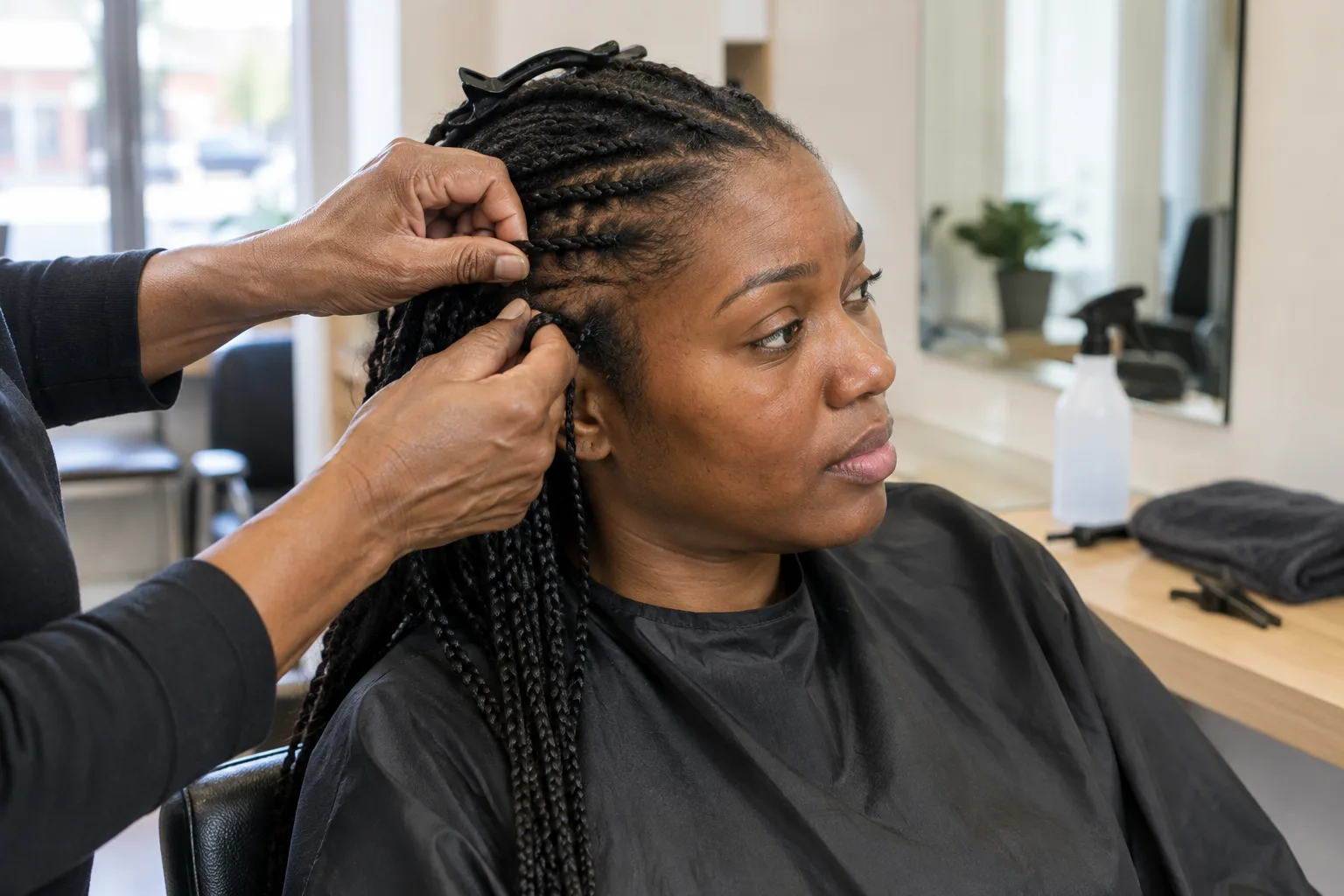
DermNet describes how tight braids, twists and weaves can cause hair loss around the hairline when worn with sustained tension, a pattern known as traction alopecia. It adds that the risk increases with styles that remain in for weeks without adjustment or that feel painful or tight at the outset.
According to cleobserver.org, JAMA Dermatology reports a higher traction alopecia risk with hairstyles that create prolonged pull on the scalp, and paediatric dermatology guidance flags pain, stinging, crusting, bumps or ‘tenting’ as warning signs to stop or loosen a style.
DermNet explains that chemical relaxers — typically hydroxide-based — permanently alter curl pattern by breaking disulfide bonds, leaving treated hair straighter but more fragile. It notes relaxers can cause irritant dermatitis, chemical burns and hair‑shaft defects that present as weak points prone to snap.
Cleobserver.org adds that regulators warn some heated hair‑smoothing treatments can release formaldehyde gas when used with heat, and that relaxer misuse can injure skin, hair and eyes, underscoring the value of professional application and careful scalp protection.
A small 2021 study cited by cleobserver.org reported more hair‑fibre damage in frequent braiders versus occasional braiders, and separate testing in the same report found daily combing of natural Afro‑textured hair increased breakage markers, suggesting manipulation frequency matters.
Social pressures also influence choices: cleobserver.org highlights research showing natural hairstyles were often rated less professional, and a 2023 workplace study found many Black women felt compelled to straighten hair for interviews, factors that can nudge people toward higher‑risk methods.
The background
DermNet outlines that daily shampooing is less common in Afro‑textured hair because of innate dryness, with routines ranging from several times a week to monthly. It recommends cleansing at least every one to two weeks to limit product buildup and reduce dermatitis risk that can worsen shedding.
Conditioning is described as essential by DermNet to limit knotting and frictional damage. Emollient products such as oils or creams are often applied after washing to reduce breakage during handling and to support the intended style.
Heat straightening — via blow‑drying, flat irons or pressing combs — temporarily reshapes the hair but can cause breakage if used too often or too hot, DermNet advises. It recommends spacing heat sessions and starting with clean hair to reduce cumulative stress on fibres.
Chemical relaxers provide permanent straightening of treated strands until they grow out, according to DermNet. Because new growth retains its original curl, repeat applications to roots introduce repeated chemical exposure, and DermNet cautions against excessive frequency or overlapping applications to avoid weakening the hair.
DermNet also describes curl‑loosening systems based on thioglycolate chemistry, which can trigger irritant or, less often, allergic contact dermatitis. Scalp symptoms after such treatments merit prompt assessment and pausing further chemical services.
Braids and twists are common with both natural and relaxed hair, DermNet notes, often worn for several weeks. It encourages regular shampooing during wear and stresses that excessive tightness increases hairline loss, highlighting the importance of comfortable installation and maintenance.
Weaves, which add hair via clips, sewing, bonding or fusion, can distribute weight and reduce daily manipulation but still pose traction risks if applied too tight or left in too long, DermNet explains. Gentle removal and scalp breaks between installations help reduce cumulative pull.
Cleobserver.org reports that while some organisations describe Black hair as especially fragile, laboratory analysis suggests hair type alone is not the sole driver of weakness. Instead, repeated grooming — including combing, relaxing and tight styling — appears to be a major contributor to fibre damage over time.
Understanding the difference between breakage and shedding helps people choose next steps. Breakage shortens hairs along the shaft and thins length and volume, while shedding releases hairs with bulbs from the root. Our guide to hair shaft defects: causes, signs and when they cause hair loss explains how to tell them apart.
Combing habits matter, especially on coily patterns that tangle. Cleobserver.org cites research linking frequent combing to more breakage markers in natural Afro‑textured hair. Our explainer on how often to brush your hair and what experts advise outlines gentler detangling strategies that can lower mechanical stress.
Scalp health underpins any routine. DermNet warns that infrequent cleansing and heavy product layering can contribute to dermatitis and flakes, which may worsen temporary shedding. See our overview of scalp conditions that cause hair loss: signs and next steps for common triggers and when to seek help.
What people are saying
Dermatologists and trichologists generally advise alternating low‑tension styles with rest periods to reduce cumulative pull on follicles, especially along the hairline and nape where traction is common. They suggest checking comfort at installation and loosening any section that feels tight or painful.
Specialists also emphasise spacing chemical services and avoiding overlapping relaxer onto previously straightened hair to limit weakening of fibre segments. Many recommend professional application, protective bases on the scalp and patch testing adhesives if using extensions or bonding methods.
For heat styling, clinicians usually recommend limiting frequency, using the minimum effective temperature and focusing on well‑conditioned, fully dry hair to reduce bubble hair and micro‑cracks. Breaks from heat allow recovery and lower the risk of cumulative cuticle wear.
Dermatology guidance commonly encourages weekly-to-fortnightly cleansing with a gentle shampoo, followed by conditioner to reduce friction. This cadence helps limit product buildup and reduces the chance of irritant or seborrhoeic dermatitis that can aggravate shedding.
If signs of traction appear — such as bumps at hair roots, scalp tenderness, broken hairs around the hairline or widening parts — clinicians advise stopping the offending style promptly. Early changes are often reversible; long‑standing traction can scar and become permanent.
People exploring accessories like scalp massagers or heavy oils may wish to proceed carefully. Our analysis of rosemary oil and scalp massagers: hair loss risks and facts highlights that over‑vigorous tools or added friction can backfire on fragile shafts.
What happens next
Cleobserver.org notes ongoing policy efforts, including CROWN Act measures, which may reduce workplace pressures that nudge some towards higher‑risk hair alteration. As social norms shift, protective styling can continue with more emphasis on comfort and scalp‑first techniques.
At the same time, cleobserver.org highlights regulatory warnings about certain heated smoothing products that may release formaldehyde, suggesting consumers should check ingredients and salon practices. Choosing services with clear safety information and trained professionals remains a practical safeguard.
Research specific to Afro‑textured hair continues to expand, including work on how grooming frequency, tension and chemistry interact to affect breakage and shedding. Larger, longer studies should help refine guidance on safe intervals, maintenance routines and early detection of traction damage.
For individuals, a simple log of styles, wear time and any scalp symptoms can help spot patterns before damage becomes obvious. If you notice increased breakage, hairline thinning or scalp irritation, speak to a GP, dermatologist or trichologist for assessment and a tailored plan.
Related: Folliculitis and hair loss: causes, signs and next steps
Related: Winter hair loss: why shedding rises and what really helps
Related: Olaplex lawsuit over hair loss: what the claims say
Why this matters
Understanding how routine styling choices influence hair loss risk helps people protect their edges, reduce breakage and keep the scalp comfortable. Early changes from traction can often be reversed by easing tension, spacing treatments and improving care. If you notice persistent tenderness, bumps, widening parts or hairline thinning, it is worth speaking to a GP, dermatologist or trichologist. Our explainer on scalp conditions that cause hair loss: signs and next steps offers pointers on what to watch for and how doctors investigate.
Common questions
- do tight braids cause hair loss
- Yes. Tight, prolonged-tension styles can cause traction alopecia, especially at the hairline, according to DermNet and cleobserver.org. Easing tension early can prevent permanent loss.
- how often should you wash afro‑textured hair to protect the scalp
- DermNet recommends cleansing at least every one to two weeks to reduce product buildup and dermatitis, while balancing moisture needs with a suitable conditioner.
- are chemical relaxers bad for your hair and scalp
- Relaxers permanently weaken treated hairs and can irritate or burn the scalp if misused, DermNet notes. Professional application and spacing treatments reduce risk.
- is black hair inherently more fragile
- Not necessarily. Cleobserver.org cites lab work suggesting hair type alone isn’t the sole driver; repeated grooming, combing and tight styles increase breakage risk.
- can heated smoothing treatments release formaldehyde
- Yes. Cleobserver.org reports regulators warn some products can release formaldehyde gas when heated. Checking product information and salon practices is advised.
- does frequent combing damage afro‑textured hair
- It can. A small 2021 study cited by cleobserver.org linked frequent combing of natural Afro‑textured hair with more fibre damage markers.
- what are early signs a hairstyle is too tight
- Pain, stinging, bumps, crusting or ‘tenting’ at the roots are warning signs, according to cleobserver.org. Loosen the style or remove it promptly.
- is traction alopecia reversible
- Often, if caught early and tension stops. Long‑standing traction can scar and become permanent, so prompt changes and medical advice are important.
Sources
- DermNet: Hair care practices in women of African descent
- cleobserver.org: How hair care treatments affect Black hair health
This article was written by Thicker Thinking using the sources listed above. It is for general information and is not medical advice. Speak to your GP, a dermatologist or a qualified trichologist about your own situation.