Camouflage and Styling
Best haircuts for fine grey hair to look thicker
Stylists explain the cuts and tricks that add apparent density to fine grey hair, from bobs to soft layers and well‑blended extensions.
By the Thicker Thinking Editorial Team
Published · 6 min read
Quick answerShort, weighty shapes and blunt edges help fine grey hair look fuller. Experts also suggest soft, face‑framing layers, working with natural waves, and colour‑matched extensions for added bulk, according to Women’s Health UK and harpersbazaar.com.
Fine grey hair can show the scalp more easily, which can make it feel thinner even when shedding is stable. According to Women’s Health UK and harpersbazaar.com, stylists are steering clients towards specific cuts and styling tricks that keep weight in the hair and create convincing fullness without damage.
The approach spans short, sharp shapes, carefully judged layers and working with natural texture. For those who want long hair that still looks thick, both outlets report that well‑matched extensions can discreetly add bulk while blending with multi‑tonal grey.
What happened
Two London stylists outlined practical ways to build the look of density in grey hair that is fine or thinning with age. One told both outlets: “Fine grey hair can be tricky,” noting that lighter, low‑pigment hair reflects more light and can appear more transparent at the ends.
They recommend short cuts as a reliable route to a fuller appearance because many people’s hair feels thicker towards the root and finer at the tips. Celebrities such as Judi Dench and Jamie Lee Curtis are cited as examples of short grey styles that keep bulk close to the scalp and avoid wispy ends.
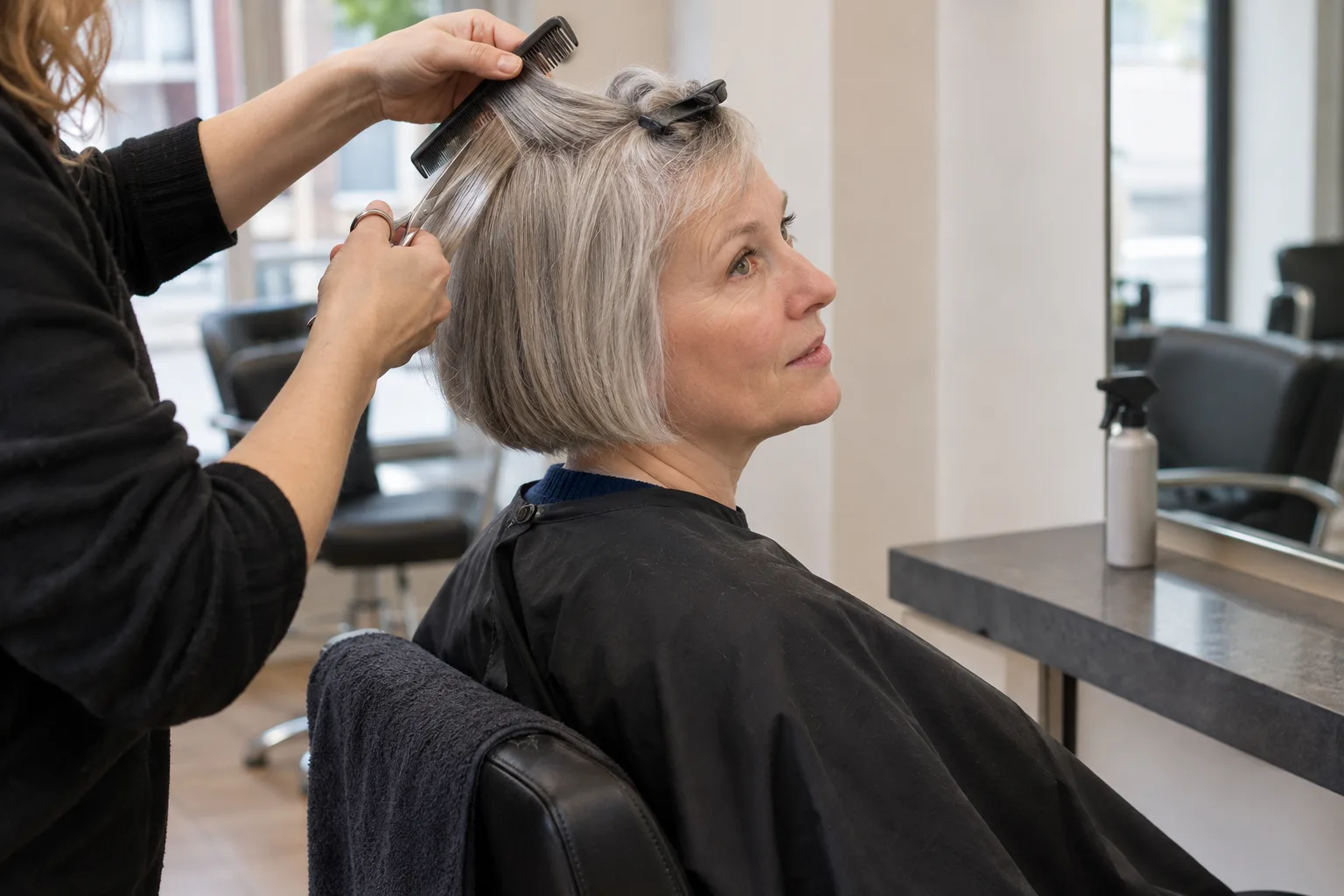
A blunt bob is highlighted as another shape that helps hair look thicker by keeping the perimeter solid. Stylists say a smooth, tucked‑under finish can seal the ends visually, so the line looks weighty rather than frayed or flyaway.
Adding a fringe to a bob may make the hairline seem denser by bringing hair forward. The advice is to judge this against face shape and the pattern of thinning, and to avoid carving out a heavy fringe that steals too much density from behind it.
On fine hair, layers need a careful hand. Soft, face‑framing layers can soften recession at the temples and draw the eye to movement, but over‑layering or using thinning shears can remove precious bulk and make grey hair look more see‑through.
Where hair has a natural wave or curl, both publications report that stylists encourage clients to lean into it. Light products and minimal brushing or high heat help keep the curl pattern intact, which in turn gives lift and body. For more wave‑care pointers, see our guide to curly hair winter care: practical ways to reduce frizz.
Rollers or pin curls are suggested for short, fine hair to set volume at the crown without aggressive backcombing. Flocked rollers are highlighted as gentle for fine hair because they grip without snagging and can hold shape for longer periods.
For long grey hair that appears thick and full on red carpets, the outlets note that extensions are frequently used. The blending trick involves mixing several silver and grey tones to match natural variation, so the added hair disappears into the wearer’s shade.
Extensions are presented as a way to add bulk as well as length, not just a glam statement. Stylists caution that placement, weight and maintenance need to be tailored to fine hair so the extra load does not strain the follicles over time.
The background
As hair turns grey, pigment loss reduces optical depth so light bounces off the fibre more, which can accentuate any see‑through areas. Ageing can also narrow hair diameter and change growth cycles, so styles that reduce contrast and keep weight where you need it can help.
Grey strands can feel coarser to the touch yet be more prone to dryness and frizz, so a strong perimeter line can stop ends from looking stringy. Our explainer on what makes hair grow faster — and what causes breakage outlines why blunt ends and gentle handling limit mechanical wear.
Dermatologists generally advise that haircuts cannot change follicle count, but they can change how hair reads to the eye. Concentrating weight at the perimeter, avoiding excessive thinning, and directing volume to the crown are established ways to create the illusion of density.
Fringes and face‑framing layers are widely used to distract from temple recession or a widening parting. The key is balancing how much hair you move forward; taking too much from behind can leave the rest sparse, especially on fine textures.
Working with natural texture is a low‑risk way to gain lift because wave and curl increase surface area and shadow. Less brushing, lower heat and diffusing help preserve that body; for routines that minimise frizz while keeping volume, see our curl care tips for colder months.
Chemical or heat services can roughen cuticles and fragment ends, which reduces perceived thickness. If you colour grey hair or use toners for dimension, patch testing and gentle formulas are sensible; our guide to safer colouring when hair is thinning covers practical precautions.
Extensions can be effective camouflage yet need caution on fine hair. Prolonged tension or heavy bonds may contribute to traction, particularly around the hairline. Our explainer on traction alopecia caused by tight styles details warning signs and how to reduce risk.
Toppers and hairpieces are another way to add bulk at the crown without adding weight to individual strands. Choosing lightweight bases and matching grey tones closely are the same blending principles used by extension specialists.
What people are saying
Stylists quoted by both outlets emphasise keeping ends blunt to hold mass, choosing shorter shapes when density is low at the tips, and using layers sparingly. They also highlight simple setting techniques, such as rollers, to lift roots without harsh teasing or high heat.
They advise that fringes can be useful when hairline transparency is the main concern, but should be cut to suit the recession pattern. For some, a light, wispy fringe disguises temple thinning; for others, a stronger, curved fringe brings hair forward where it’s needed most.
They note that embracing natural wave or curl is often the easiest way to gain volume. Lighter stylers keep strands buoyant, and air‑drying or diffusing supports the pattern so the style looks fuller for longer between washes.
Trichologists generally encourage discussing extensions in detail before committing, including attachment method, hair weight, and how fine the natural hair is. They suggest avoiding very tight attachments at the front and scheduling regular checks so any strain is picked up early.
Dermatologists also remind people that if hair is actively shedding more than usual, a medical review is sensible before adding tension from extensions or frequent heat styling. If diffuse thinning is new or worsening, our guide to diffuse hair loss causes and tests outlines what clinicians may check.
What happens next
If you want a thicker‑looking result at your next appointment, a consultation focused on where density is strongest and where transparency shows most will help. Bring photos of shapes you like and be open to a shorter perimeter or a tailored fringe to rebalance weight.
Ask your stylist how they will preserve bulk while adding movement, and whether they plan to use thinning shears. For fine grey hair, many will rely on point‑cutting and minimal internal layering to avoid hollowing out the shape.
If you colour, discuss tonal dimension rather than heavy contrast so grey looks multi‑layered without frequent touch‑ups. Patch tests and strand tests are prudent when scalp sensitivity or shedding is a concern, and glossing can add reflection without a dramatic colour shift.
Considering extensions? Request a plan that uses lighter pieces, varied grey tones and gentle placement away from fragile areas. Clarify maintenance visits, removal methods and how to reduce tension day to day, and pause if you notice tenderness or increased shedding at attachment points.
Supportive styling at home can extend fullness between cuts. Setting hair while damp, directing airflow at the roots, and using light mousses or volumising sprays can help fine grey hair hold shape without stiffness or heavy residue.
If you’d like to pair camouflage with treatment, your GP, dermatologist or trichologist can discuss evidence‑based options for common causes of thinning, including hereditary pattern hair loss. Our overview of the best hair loss treatments in 2026 summarises current UK guidance and emerging therapies.
Why this matters
The right cut can make a real difference to confidence when grey hair feels finer or more see‑through. For some, a sharper bob or soft layers are enough; for others, well‑matched extensions add discreet bulk. If shedding is new or worsening, or you’re considering extensions on fragile hair, speak to a GP, dermatologist or trichologist first. For an overview of medical options alongside styling, see our guide to current hair loss treatments.
Common questions
- what haircut makes fine grey hair look thicker
- Blunt, weight‑retaining shapes such as short crops and sharp bobs help fine grey hair look fuller. Stylists also use soft, face‑framing layers to disguise recession without removing bulk.
- is a blunt bob good for thin grey hair
- Yes. A blunt bob keeps the perimeter solid, so ends look weighty rather than wispy. Some people benefit from adding a fringe to bring density forward at the hairline.
- do layers make fine grey hair look thicker or thinner
- Subtle, face‑framing layers can add movement and hide recession. Over‑layering or using thinning shears can remove valuable bulk and make grey hair appear more transparent.
- can a fringe help a thinning grey hairline
- Often yes. A carefully cut fringe can make the hairline look denser, but it should be tailored to face shape and where thinning shows to avoid stealing too much density.
- how do you style short fine grey hair for volume
- Set lift at the roots with rollers or pin curls and use lightweight products. Minimising heavy brushing and high heat helps styles hold body longer.
- do extensions work with grey hair and look natural
- They can. Mixing several grey and silver tones helps extensions blend with natural variation, adding discreet bulk and length when matched and placed carefully.
- are hair extensions safe for fine thinning hair
- They need caution. Heavy or tightly placed attachments can strain follicles. Choose lighter pieces, gentle placement and regular checks, and pause if there’s tenderness or extra shedding.
- will a haircut stop hair loss or just disguise it
- A haircut won’t change follicle count, but it can make hair look fuller. If shedding is new or worsening, see a GP, dermatologist or trichologist for assessment.
Sources
- Women's Health UK: The best haircuts for fine grey hair – 5 ways to make it look thicker and fuller
- harpersbazaar.com: 5 Modern Haircuts That Make Gray Hair Look Thicker, From a Sharp Bob to Choppy Texture
- Women's Health UK: The ‘boho bob’ is the effortless new haircut everyone with fine hair will want
This article was written by Thicker Thinking using the sources listed above. It is for general information and is not medical advice. Speak to your GP, a dermatologist or a qualified trichologist about your own situation.