Treatments in the News
New hair loss treatments 2026: PP405 and extended‑release minoxidil
Early trial signals for PP405 and a sustained‑release oral minoxidil tablet have dermatologists interested, but both remain in development.
By the Thicker Thinking Editorial Team
Published · Updated · 6 min read
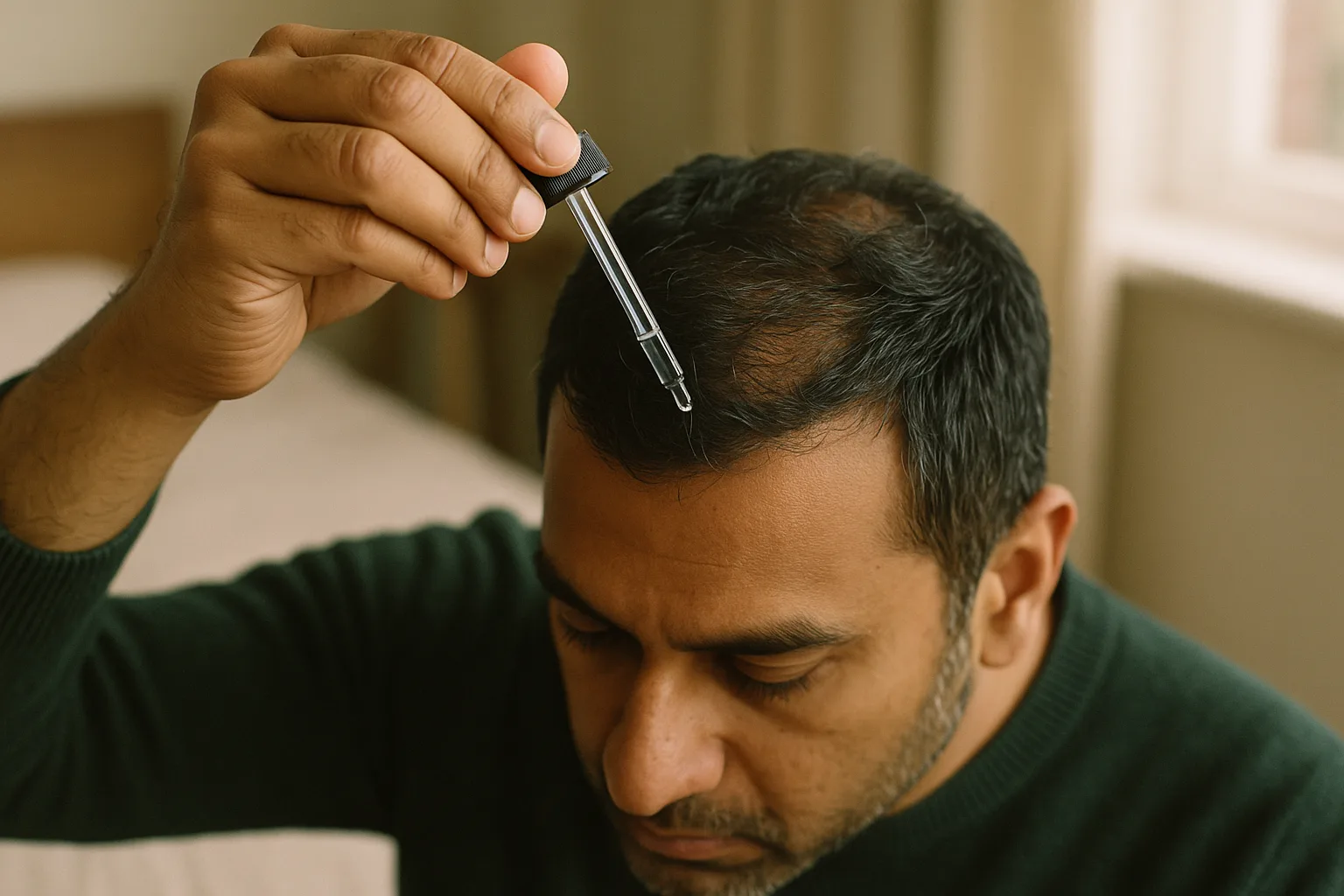
Quick answerTwo investigational options — PP405, a topical aiming to reawaken dormant follicles, and an extended‑release oral minoxidil tablet — showed encouraging early data, according to Men’s Health UK and forhair.com. Neither is approved or available yet.
Timeline
June 2025
Pelage reports positive Phase 2a data for PP405 with density gains in some participants.
March 2026
At the AAD meeting in Denver, new PP405 findings and Veradermics posters are presented.
2026
Blinded retrospective analysis suggests VDPHL01 improves visible outcomes by two months.
Two pipeline treatments for androgenetic alopecia — PP405 and an extended‑release oral minoxidil tablet — were highlighted at the American Academy of Dermatology (AAD) meeting in Denver, with early findings that have caught clinicians’ attention, according to Men’s Health UK and forhair.com.
The investigational topical PP405 is pitched as a regenerative approach intended to stir inactive follicles back into growth, while the oral tablet VDPHL01 aims to deliver minoxidil in a steadier, longer‑lasting way than standard tablets. Both remain in clinical trials and are not yet available.
What happened
Scientists at Pelage Pharmaceuticals described PP405 as a new small molecule developed to act on dormant follicles, a target area current medicines do not directly address. Pelage’s Phase 2a study in 78 adults with androgenetic alopecia reported that PP405 users showed higher odds of early density gains compared with placebo, with 31% passing a 20% improvement threshold at an eight‑week check, while no one on placebo did, according to Men’s Health UK and Pelage trial summaries relayed by forhair.com.
The same trial reported PP405 was well tolerated and not detected in the bloodstream, which researchers presented as a helpful safety indicator for a scalp‑applied drug. The company has discussed biopsy data suggesting rapid follicular changes in early‑stage testing, adding to interest in whether this pathway can consistently restart growth in resting follicles.
At the same AAD meeting, Veradermics presented posters on VDPHL01, a once‑daily extended‑release oral minoxidil designed to smooth out the sharp peaks and troughs typical of standard minoxidil tablets. In blinded retrospective assessments shared at the meeting, investigators reported visible improvement at two months with the extended‑release tablet compared with the six‑month mark often seen with currently used topical or oral minoxidil, according to Men’s Health UK.
Veradermics says the formulation is in Phase 3 trials and, across its posters, indicated signs of faster onset and stronger efficacy versus current oral minoxidil. Dermatologists who work with hair loss told Men’s Health UK they are particularly interested in whether a steadier blood level might reduce tolerability problems that prompt some patients to stop standard oral minoxidil.
Both treatments are still investigational, and timelines to approval remain uncertain. Men’s Health UK reported clinicians’ expectations that it could take a year or more before either option might reach patients, pending trial outcomes and regulatory review.
The background
Androgenetic alopecia — male or female pattern hair loss — is the most common chronic hair loss diagnosis, driven by genetic sensitivity of follicles to hormones and ageing. Many people notice gradual thinning across the crown or a receding hairline; women often experience widening part lines or diffuse thinning. Our explainer on male pattern baldness: signs, treatment and when to seek help outlines the usual course and current options.
Current first‑line medicines try to preserve existing follicles or nudge miniaturised hairs to grow thicker. Minoxidil, available as a topical solution or foam and sometimes used orally off‑label, is a mainstay, though researchers still debate its exact mechanism. Finasteride, a dihydrotestosterone (DHT) blocker, can help many men but may not suit everyone. For context on benefits and cautions, see our guide to finasteride for hair loss: benefits, risks and UK advice.
PP405 is portrayed as a different strategy. According to forhair.com, it is being studied as an activator of the Wnt/β‑catenin signalling pathway, which is central to hair‑follicle stem cell activity. The goal is to coax resting follicles back into the growth (anagen) phase, rather than merely energising those that are already active.
A key detail from Pelage’s Phase 2a data, as reported by Men’s Health UK and forhair.com, is the short treatment window before an eight‑week assessment, contrasting with the months typically needed to detect changes from standard therapies. Whether these early gains are maintained over longer follow‑up will be an important question for future trials.
Extended‑release oral minoxidil is intended to address a pharmacokinetic limitation of immediate‑release pills. Men’s Health UK reported that standard oral minoxidil produces a quick spike in blood levels that fades within hours, whereas follicles likely benefit from steadier exposure. A sustained‑release tablet could, in theory, deliver a more consistent signal to follicles while potentially reducing peak‑related side effects.
Beyond these two candidates, forhair.com notes other non‑hormonal approaches under study, including ET‑02 and AMP‑303, and broader targets such as TGF‑β signalling and adenosine receptor pathways. These remain earlier in development with limited public data, and none are approved treatments.
Away from pharmaceuticals, clinics also offer procedures such as platelet‑rich plasma (PRP). Evidence is mixed and varies by protocol; our overview of PRP for hair loss: what Harvard Health says about the evidence explains current findings and uncertainties. Low‑level laser therapy is another non‑drug option with supportive but modest evidence; see our review of laser treatment for hair loss: benefits, limits and UK advice.
What people are saying
Clinicians interviewed by Men’s Health UK said a smoother minoxidil profile could help people who discontinue the immediate‑release pill due to palpitations, chest tightness or headaches, which they report seeing from time to time in practice. They stressed that proof of better tolerability will need to come from larger, controlled studies.
Dermatologists also told Men’s Health UK they are cautiously optimistic about PP405 because it is topical, engineered to penetrate the scalp, and designed to be unstable in blood — features intended to limit systemic exposure. Early biopsy signals of follicle reactivation in short‑term testing were mentioned as a reason to continue studying the pathway.
Pelage’s CEO has highlighted the potential to prompt growth in previously quiet areas, describing study photos that showed “hair growing where there was never hair before,” as quoted by Men’s Health UK. Independent replication and longer follow‑up will be critical to confirm the durability and clinical relevance of these images.
Dermatologists generally advise people not to abandon established treatments while waiting for pipeline drugs. Stopping too early is a common pitfall; many approved options take several months to show visible change. Our guide to how much hair loss is normal — and when to worry sets out when to consider treatment and when to seek assessment.
Specialists also suggest addressing contributory factors, such as scalp inflammation or nutrition gaps, alongside any core treatment plan. For women, hormonal life stages can influence shedding patterns; our interview with a trichologist on women’s hair loss: causes and what helps runs through practical steps that support medical care.
What happens next
For PP405, the next milestones are larger, longer studies to test whether early density gains translate into meaningful, sustained coverage and patient‑reported benefit. Safety will be tracked closely over extended use to detect uncommon adverse effects that short trials may miss.
For VDPHL01, Phase 3 results will need to show consistent advantages over current oral or topical minoxidil in both speed and scale of regrowth, while documenting a clear safety and tolerability profile. Regulators will assess whether any benefits justify approval and guide labelling.
If either therapy progresses, practical questions will follow: who is most likely to benefit, how they compare with existing options, and how the NHS and private providers might position them. Costs and availability in the UK are unknown at this stage and will depend on regulatory outcomes and pricing decisions.
People considering treatment changes should speak to a GP, dermatologist or trichologist for personalised advice. Clinicians can confirm diagnosis, rule out other causes of shedding, and set realistic expectations about timelines, side effects and the role of combination approaches alongside lifestyle and scalp care.
Related: Hair + Me review: personalised minoxidil plan shows early gains
Related: Dermaroller for hair growth: what the evidence and experts say
Why this matters
Many readers are weighing up whether to hold out for new options or start what is available now. These early data suggest genuine innovation — a topical aiming to reawaken dormant follicles and a pill designed for steadier delivery — but both remain unapproved. If you notice persistent thinning or sudden shedding, it is sensible to speak with a GP, dermatologist or trichologist for diagnosis, current treatment choices and timing. Our overview of laser therapy benefits and limits can also help frame expectations alongside medical treatments.
Common questions
- what is pp405 for hair loss
- PP405 is an investigational topical molecule aiming to reactivate dormant hair follicles via Wnt/β‑catenin signalling, according to forhair.com. Early Phase 2a data showed density gains in some participants, but it is not approved.
- is pp405 available in the uk
- No. PP405 remains in clinical trials and is not approved or available in the UK. Timelines depend on larger studies and regulatory review, according to Men’s Health UK and forhair.com.
- how effective is pp405 so far
- In a Phase 2a trial cited by Men’s Health UK, 31% using PP405 achieved over 20% hair‑density improvement at eight weeks; none on placebo did. Longer studies are needed.
- what is extended release oral minoxidil vdphl01
- VDPHL01 is an investigational sustained‑release oral minoxidil tablet from Veradermics. It aims to provide steadier drug levels than current tablets and is in Phase 3 trials.
- does extended release minoxidil work faster than standard minoxidil
- Blinded retrospective analyses presented at the AAD meeting reported visible improvement at two months with VDPHL01 versus about six months for current minoxidil, according to Men’s Health UK.
- will extended release minoxidil have fewer side effects
- Dermatologists told Men’s Health UK a steadier blood level could improve tolerability, but this must be proven in larger, controlled trials before any claims can be made.
- are there other non hormonal hair loss treatments in trials
- Yes. forhair.com notes ET‑02 and AMP‑303 among non‑hormonal candidates, targeting pathways like adenosine or TGF‑β. These are earlier in development with limited published data.
- should i wait for pp405 or start current treatments
- Clinicians generally advise not delaying proven options while research continues. Speak to a GP, dermatologist or trichologist to confirm diagnosis and discuss current treatments.
Sources
- Men's Health UK: New Men's Hair Loss Treatments in 2026: What Works for Regrowth
- forhair.com: Beyond Finasteride: What’s Next for Non-Hormonal Hair Loss Treatment
This article was written by Thicker Thinking using the sources listed above. It is for general information and is not medical advice. Speak to your GP, a dermatologist or a qualified trichologist about your own situation.