Treatments in the News
Laser treatment for hair loss: benefits, limits and UK advice
Low-level light therapy offers a non-surgical option for pattern hair loss, but suitability, ongoing costs and realistic expectations matter.
By the Thicker Thinking Editorial Team
Published · 6 min read
Quick answerLaser treatment for hair loss can improve growth in some people with hereditary thinning, but results vary. It works on existing follicles rather than creating new ones, and evidence about lasting benefits is more limited.
Laser treatment can help some people with hereditary hair thinning, but it should not be mistaken for a way to rebuild a completely bald scalp. Research has found improvements in hair growth, with important questions remaining about who benefits most and how well those gains last.
For UK readers considering a home device or private clinic treatment, the decision involves more than whether light can stimulate hair. Establishing the cause of the loss, checking the evidence for the particular device and understanding the ongoing commitment are essential before spending money.
What happened
Low-level laser therapy, often shortened to LLLT, is offered as a non-surgical treatment for hair loss. According to Healthline and Austin Hair Clinic, it can benefit some people, particularly those with hereditary thinning, but responses differ and it is less promising for advanced baldness.
One small study from 2013, described by Healthline, involved 41 men aged 18 to 48 and reported a 39% increase in hair growth over 16 weeks. That finding is encouraging, but a percentage measured in a study is not a promise of visibly restoring that proportion of someone's hair.
The distinction matters because studies assess growth in defined areas using specific measurements. A change in hair count does not automatically translate into the same improvement in scalp coverage, which also depends on the thickness, colour and distribution of the remaining hair.
Healthline also cites favourable 2014 research on low-level laser therapy in men and women. Taken together, these findings support its potential, rather than establishing that every device or every person will achieve a worthwhile result. Small studies and short follow-up cannot settle questions about years of treatment.
Some devices have clearance from the US Food and Drug Administration for particular uses. Clearance applies to a device and its intended purpose; it is not a guarantee of regrowth, a UK recommendation or proof that the device outperforms established medicines.
The background
What the light is intended to do
This treatment directs low-energy light towards the scalp, rather than using the stronger laser energy associated with hair removal. The proposed effect is to influence activity within existing hair follicles, the small structures in the skin that produce hair. The precise mechanisms remain under investigation.
Austin Hair Clinic describes the aim as supporting follicles that have become less productive, not generating new follicles. That is an important biological limit: stimulating a follicle that still produces fine hair is different from replacing one that has been permanently destroyed by scarring.
The main condition considered for treatment is androgenetic alopecia, the medical name for hereditary pattern hair loss. In this condition, susceptible follicles gradually produce finer, shorter hairs. Men commonly develop temple recession or crown thinning, while women often notice a widening parting.
Our guide to female pattern baldness and its treatment options explains why gradual thinning needs to be distinguished from other causes. More than one process can occur at once: someone with pattern loss may also develop temporary shedding after illness or another physical stress.
Why the diagnosis changes the decision
Telogen effluvium is temporary increased shedding caused by more hairs than usual entering the resting stage of their growth cycle. It can follow a significant illness, childbirth or surgery. Addressing the trigger and allowing recovery may matter more than buying a device intended for hereditary thinning.
The timing can be confusing because shedding often starts months after the triggering event. Our explanation of hair loss after surgery and when to seek help covers this delayed response. A consultation should therefore consider recent health events as well as what the scalp looks like today.
Patchy loss, scalp pain, inflammation or scaling needs a different assessment. Some inflammatory conditions can damage follicles permanently, making timely medical advice important. Light treatment should not delay investigation of these symptoms or be assumed to address an underlying thyroid disorder or nutritional deficiency.
What people are saying
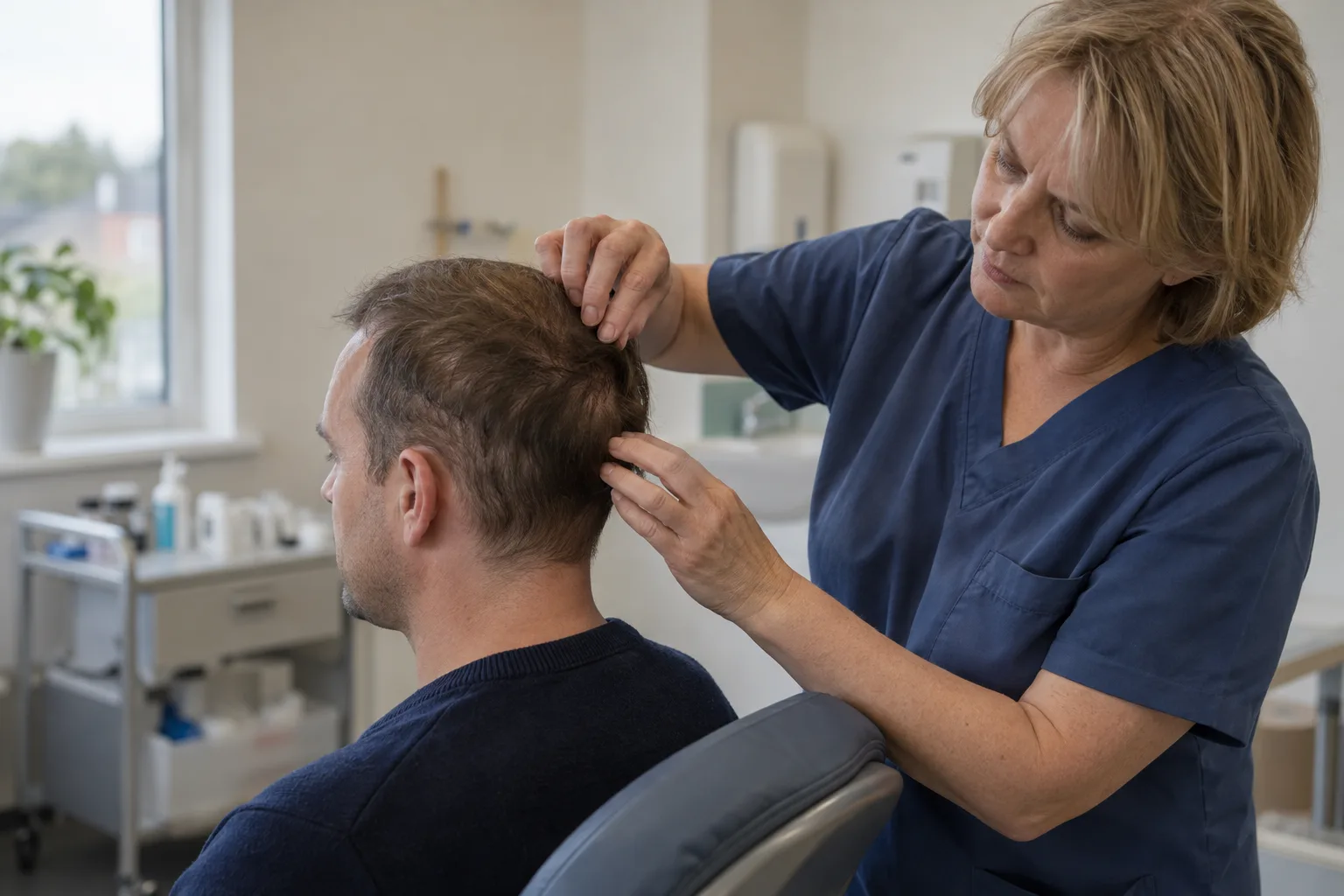
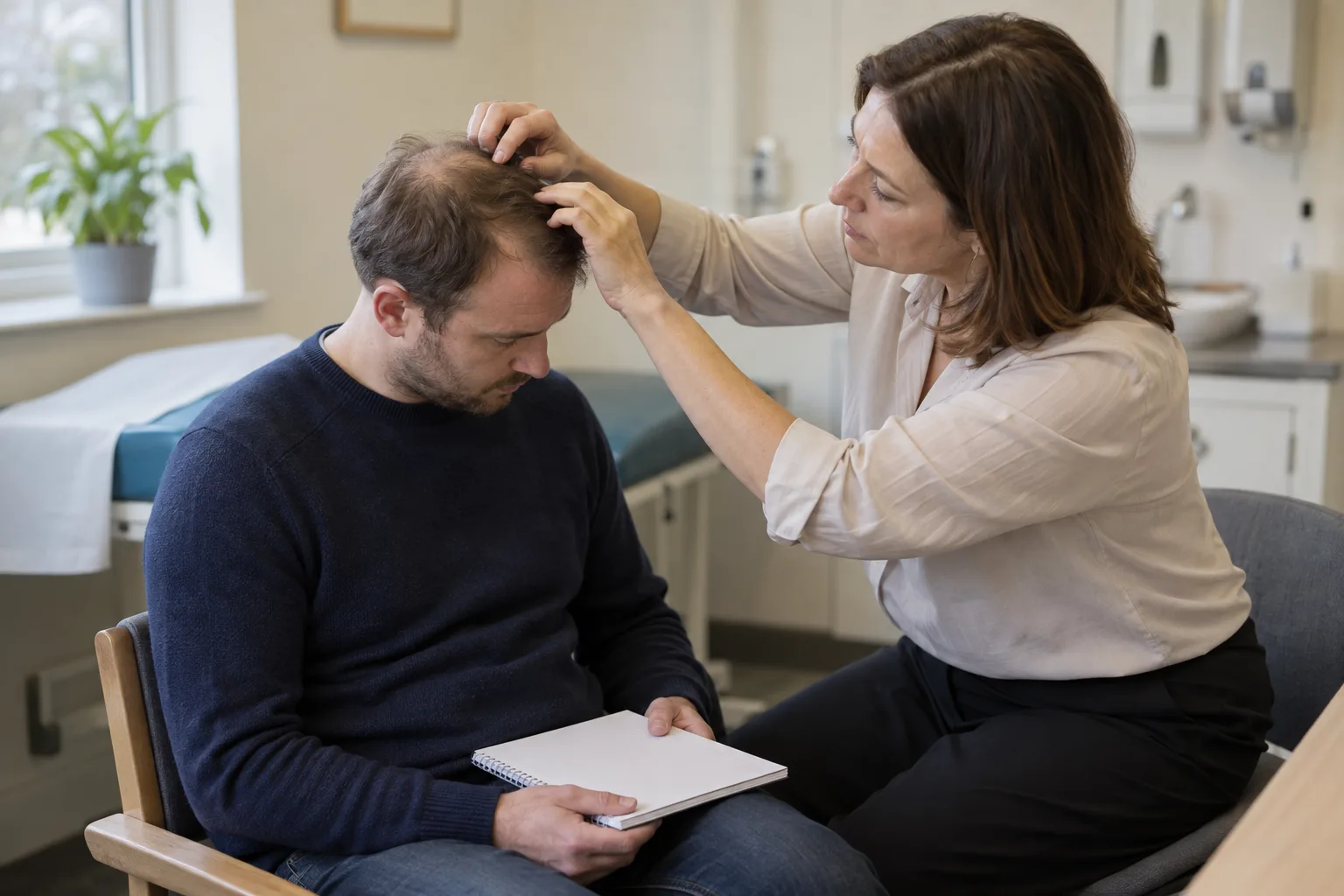
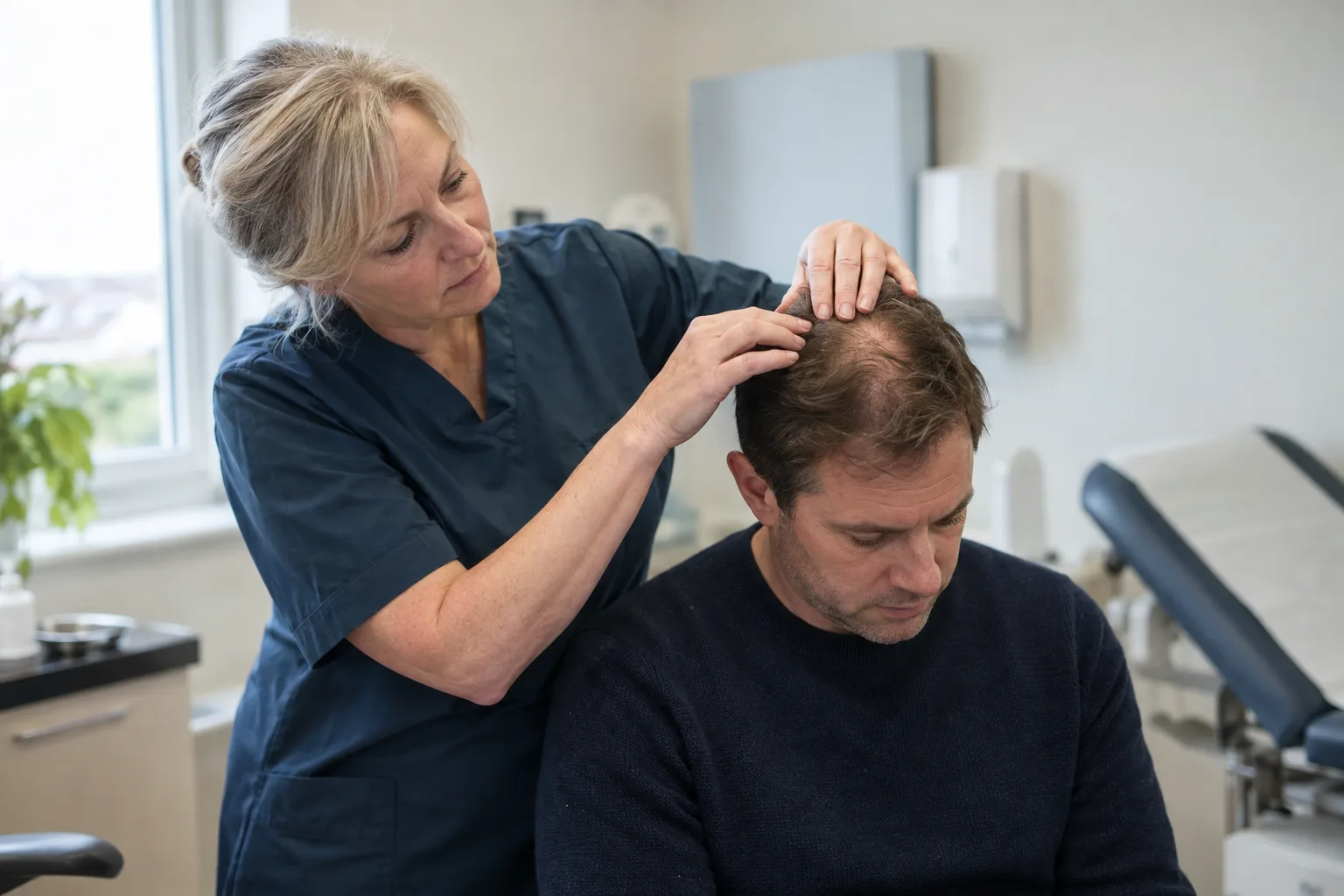
Dermatologists generally advise matching treatment to the diagnosis rather than choosing by the appeal of a device. A useful assessment includes the pattern and speed of loss, family history, medicines and scalp examination. Blood tests may be appropriate when symptoms or history suggest an underlying problem, rather than automatically for everyone.
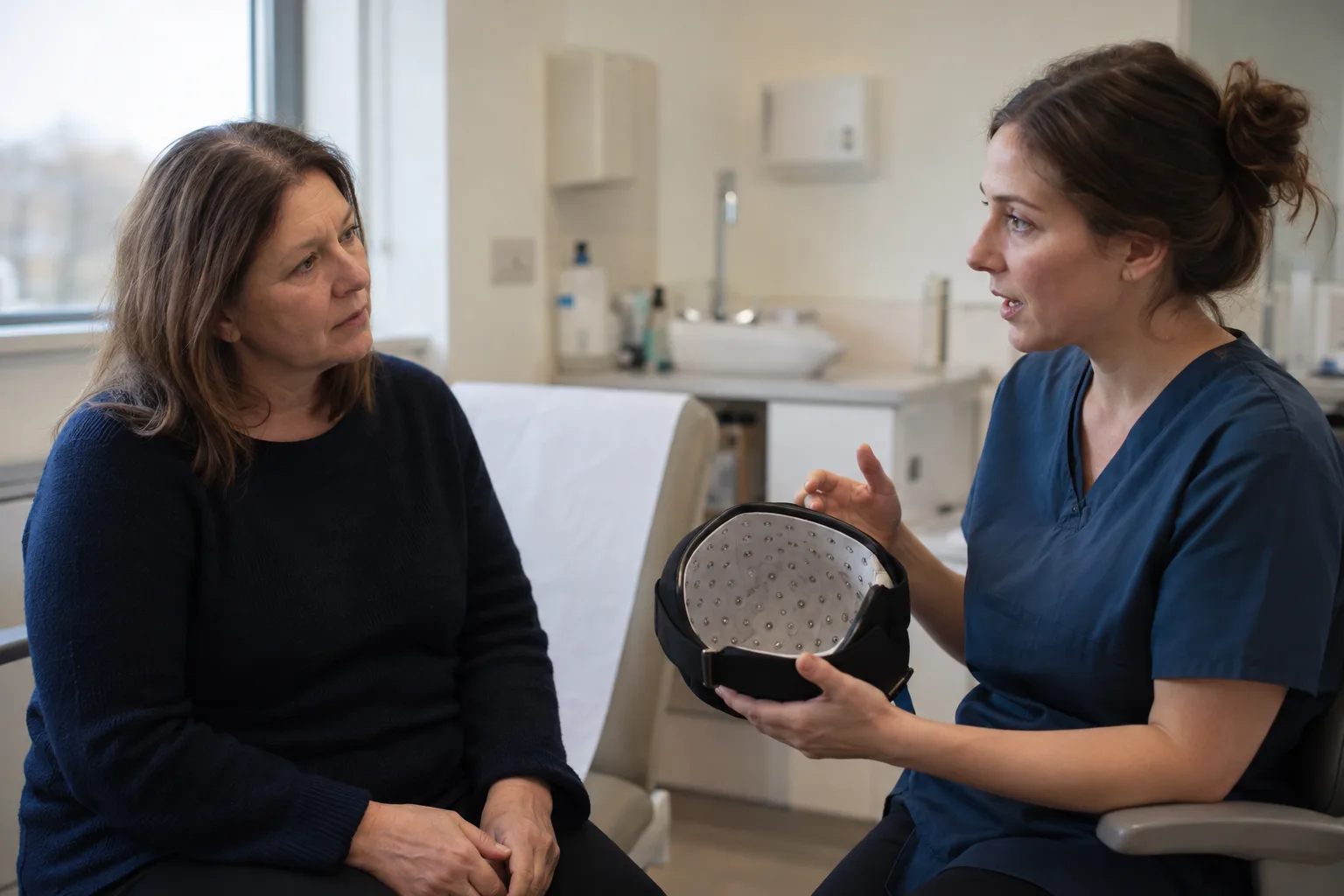
For people who want to avoid surgery, the attraction is understandable. Treatment is generally comfortable and does not involve incisions or a surgical recovery period. Austin Hair Clinic describes both clinic-based equipment and home caps, helmets or bands, offering different practical ways to deliver the light.
Convenience does not mean risk-free. Medicines that cause photosensitivity — increased sensitivity to light — warrant particular attention before treatment. A pharmacist or prescribing clinician can check whether a medicine creates a concern; people should not stop prescribed treatment simply to use a hair-growth device.
Device instructions also matter, including any eye-safety precautions and restrictions on use. Evidence from relatively short studies offers less certainty about very long-term safety and effectiveness. Claims that a treatment has no side effects are therefore less useful than a clear explanation of its known risks and remaining uncertainties.
Specialists may discuss laser therapy alongside medicines rather than as a replacement for them. Minoxidil is an established option for pattern hair loss, while finasteride is used for male pattern loss in suitable patients. Our guide to finasteride's benefits, risks and UK advice explains why that choice requires its own safety discussion.
Adding treatments makes it harder to identify which one helped. It also increases expense and the effort needed to continue the plan. A package containing several interventions is not automatically better supported by evidence than a simpler approach tailored to the person's diagnosis and priorities.
What happens next
Questions before paying
Ask a provider which diagnosis they are treating and what research supports the exact device being offered. Different products can vary in their light output and design. Evidence for one studied device should not be assumed to apply to every cap, comb or red-light product sold online.
Request the full financial picture, including purchase or appointment costs, follow-up, maintenance and any recommended additional treatments. In the UK, treatment for pattern hair loss is generally paid for privately. A low initial price can be misleading if the proposed plan involves prolonged clinic attendance or extra products.
Agree how progress will be assessed before starting. Photographs taken with consistent hair positioning, distance and lighting can be more informative than frequent mirror checks. Hair length, styling and wetness can otherwise make apparent changes in coverage difficult to interpret.
Discuss when the plan will be reviewed and what would justify continuing, changing or stopping it. Hair growth is slow, so assessment usually takes months. Continued use may be needed to sustain benefits, but committing to treatment indefinitely without reviewing the outcome is not a substitute for follow-up.
Other paid procedures deserve the same scrutiny. Our coverage of PRP for hair loss and the evidence behind it examines another option: platelet-rich plasma, prepared from a person's blood. Comparing evidence and total costs can help separate a reasonable additional treatment from unnecessary spending.
Choosing not to pursue regrowth treatment is also valid. Styling changes, concealers, wigs or leaving hair loss untreated can suit different preferences. A good consultation should make room for those choices, without presenting an expensive device as an essential purchase.
Related: Hair transplant recovery: risks and when to seek help
Why this matters
Hair loss treatment can become a recurring household expense, so UK readers need a clear diagnosis and a realistic way to judge value before committing. Our guide to male pattern baldness, treatment and when to seek help can help explain a common pattern. Speak to a GP about sudden, patchy or painful loss, or shedding alongside other symptoms. A dermatologist can investigate scalp disease and treatment suitability; a suitably qualified trichologist can also offer hair and scalp advice. Distress about hair loss is itself a valid reason to seek support.
Common questions
- Does laser treatment for hair loss actually work?
- It can improve hair growth in some people with hereditary thinning, but results vary. Small studies have reported benefits, while longer-term outcomes and the likelihood of a worthwhile response remain less certain.
- Can laser treatment regrow hair on a bald scalp?
- It is unlikely to restore meaningful coverage in an area of advanced baldness. The treatment aims to support existing follicles, not create new ones or replace follicles permanently destroyed by scarring.
- How long does laser hair treatment take to work?
- Assessing a response usually takes months because hair grows slowly. A small 2013 study measured results over 16 weeks, but that is not a guaranteed timetable for visible improvement.
- Is laser treatment for hair loss safe?
- It is generally well tolerated, but it should not be described as risk-free. Check device precautions and discuss medicines that increase light sensitivity with a pharmacist or clinician; evidence about very long-term use is more limited.
- Can women use laser treatment for hair loss?
- Women with hereditary pattern thinning may benefit, although results are not guaranteed. A widening parting can suggest female pattern loss, but other causes of shedding should be considered before choosing treatment.
- Can you use laser treatment with minoxidil?
- Laser therapy may be considered alongside minoxidil as part of an individual treatment plan. A clinician should assess suitability, and combining treatments makes it harder to tell which is responsible for any improvement.
- Do you have to keep using a laser hair device?
- Continued use may be needed to maintain benefits. Agree review points with your provider so that ongoing treatment and expense depend on the outcome rather than an open-ended commitment.
- Is laser hair loss treatment available on the NHS?
- Treatment for pattern hair loss is generally paid for privately in the UK. A GP can still help assess the cause of hair loss and investigate symptoms that suggest an underlying medical condition.
Sources
- Healthline: Laser Treatment for Hair Loss: Does It Work?
- austinhairclinic.com: Laser Therapy for Hair Loss: Does It Work? - Austin Hair Clinic
This article was written by Thicker Thinking using the sources listed above. It is for general information and is not medical advice. Speak to your GP, a dermatologist or a qualified trichologist about your own situation.