Treatments in the News
PRP for hair loss: what Harvard Health says about the evidence
Blood-derived scalp injections have shown promise for pattern hair loss, but an archived Harvard Health overview highlights important limits for anyone considering treatment.

By Sophie Clarke, Features Writer
Published · 6 min read
Quick answerPRP for hair loss may help some people with hereditary pattern thinning, but it is not a proven cure. Harvard Health’s 2020 overview describes promising evidence alongside uncertainties about preparation methods, suitability and benefits for other types of hair loss.
Scalp injections made from a patient’s own blood may offer some benefit for hereditary hair thinning, according to Harvard Health. However, its overview of platelet-rich plasma, known as PRP, does not establish the procedure as a cure or show that it works across different causes of hair loss.
The article, published on 11 May 2020, remains useful for understanding the treatment’s rationale and limitations. Its age matters: this is an examination of an archived clinical explanation, not news of a fresh trial, regulatory approval or updated recommendation for UK patients.
What happened
Writing for Harvard Health, dermatologists Dr Neera Nathan and Dr Maryanne Makredes Senna assessed where PRP might fit into hair loss care. Their account describes a possible additional treatment for androgenetic alopecia — hereditary pattern hair loss — rather than a replacement for established options.
The authors reported that evidence suggested PRP might work best alongside topical minoxidil, a medicine applied to the scalp, or oral finasteride, which reduces the effects of a hormone involved in male pattern baldness. This does not mean that either medicine, or the combination, is suitable for every patient.
Pattern hair loss can affect men and women, although its appearance often differs. Men commonly notice recession at the front and thinning over the top of the head; women may first see a widening parting. Our guide to male pattern baldness, treatment and when to seek help explains the usual signs in men.
Importantly, the Harvard article does not supply an overall success rate, a dependable estimate of how much hair someone might regain, or a way to predict who will respond. Readers cannot use it to calculate their personal chances of a worthwhile improvement.
Nor is this a report of one experiment with a defined group of participants and a single treatment protocol. It is an expert overview drawing on published evidence. That distinction matters when assessing claims that Harvard has proved a particular clinic’s PRP package works.
The background
PRP begins with a blood sample, usually taken from the arm. A centrifuge, a machine that spins samples rapidly, separates the blood into different components. The clinician collects a platelet-enriched portion of the plasma, the liquid part of blood, for injection into areas of scalp thinning.
Platelets are small blood components best known for helping blood clot. They also release growth factors, proteins involved in signalling between cells during tissue repair. Harvard Health describes platelet concentrations in PRP as generally around five times those in ordinary blood, although preparation methods differ.
The proposed hair-growth mechanism involves dermal papilla cells, a specialised group of cells at the base of a hair follicle. Follicles are the structures in the skin that produce hair. Researchers believe platelet-derived signals may influence these cells, but a plausible biological explanation does not by itself establish a reliable clinical benefit.
PRP is not a hair transplant: no follicles are moved from one part of the scalp to another. It is also distinct from microneedling, which makes tiny punctures in the skin. Although PRP and microneedling can appear together in cosmetic treatments, they are separate procedures, and evidence for one should not automatically be assigned to the other.
Why the diagnosis changes the decision
Hair shedding is a symptom with several possible causes. Telogen effluvium is increased shedding after more hairs than usual enter the resting stage of their growth cycle. Illness, childbirth, substantial physiological stress and some medicines can trigger it. Assessing the trigger may therefore be more useful than immediately choosing a procedure.
Medication history can be particularly relevant when shedding starts after a treatment change. Our explanation of isotretinoin-associated hair loss covers one example. A suspected connection should be discussed with the prescriber rather than used as a reason to stop prescribed medicine without advice.
Alopecia areata is different again: the immune system attacks hair follicles, often causing patches of hair loss. Scarring alopecias involve inflammation that can permanently damage follicles. The Harvard authors found insufficient evidence to draw conclusions about PRP’s effectiveness for these conditions or telogen effluvium; findings in pattern thinning cannot simply be transferred to them.
What people are saying
The Harvard dermatologists’ assessment combines interest in PRP with concern about consistency. They describe variation in how clinicians collect, prepare and inject the material. That makes the treatment name less precise than it may sound: two services advertising PRP may not be delivering an identical preparation or procedure.
For patients comparing clinic claims, this raises a practical question: does the research being quoted actually match the treatment offered? A study using one preparation method cannot automatically validate another. Equally, results from people receiving additional medicines cannot show how much benefit came from PRP alone.
The population studied also matters. Evidence in adults does not establish suitability for children, and a procedure marketed for hair loss generally may have been studied only in one diagnosis. Similar caution about applying findings too broadly runs through our coverage of expert guidance on minoxidil for children.
On safety, the authors describe PRP as generally safe when delivered by a trained medical professional, while listing pain, redness, headaches and temporary shedding among possible effects. Using someone’s own blood does not remove the need for sterile handling, appropriate injection technique and a clear plan for dealing with complications.
They also flag bleeding disorders and autoimmune disease as reasons PRP may be inappropriate. These are matters for individual medical assessment, not a checklist that someone can use to clear themselves for treatment. A clinician needs to know about existing conditions and medicines before recommending injections.
Cost is another limitation in the source. Harvard’s 2020 article quoted around US$1,000 per session in its American context. That historical figure is not a current UK price estimate and should not be converted into an assumed local treatment cost.
What happens next
The research questions identified by the authors include how best to prepare PRP, how to administer it and how it influences follicle activity. Their overview does not announce an upcoming trial or a date when these questions will be settled.
Stronger comparisons would need clearly described methods and meaningful outcome measures. Hair counts, hair thickness and patients’ own assessment of visible coverage answer different questions. Longer follow-up is also important because an early change does not establish how long any benefit lasts.
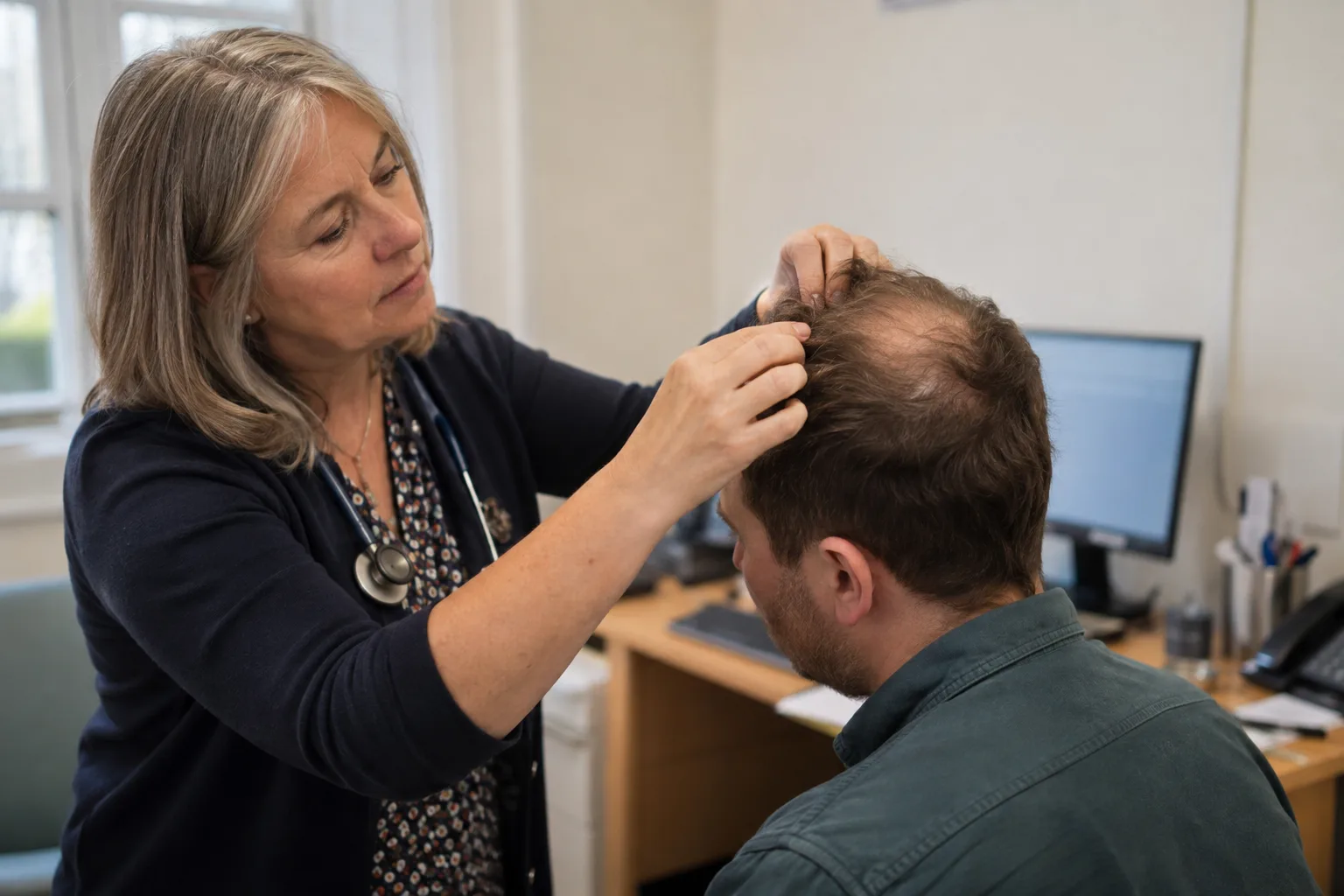
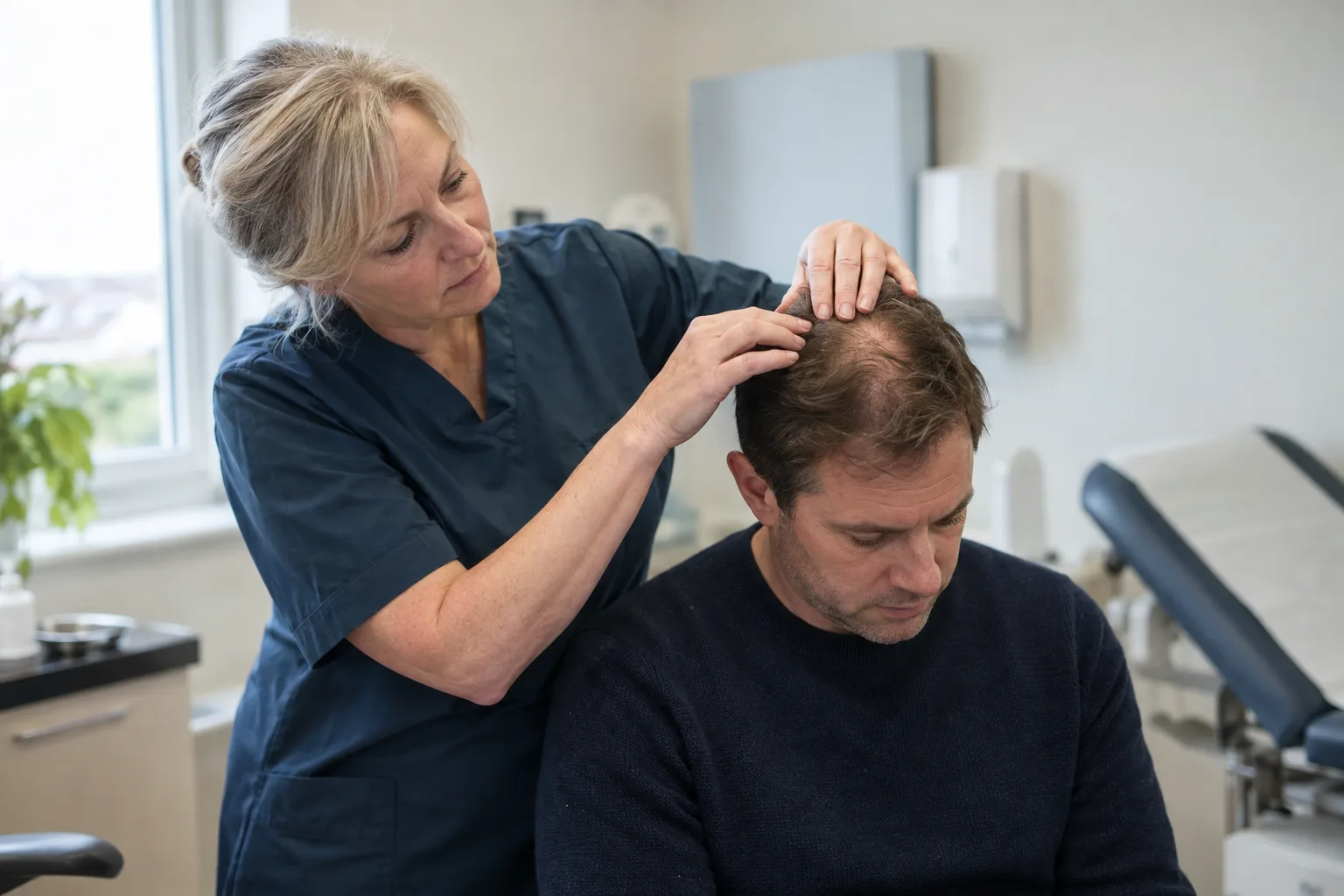
For someone considering treatment now, the first appointment should establish what is causing the loss. A history of its timing and pattern, a scalp examination and, where indicated, further investigations can help distinguish hereditary thinning from shedding or inflammatory disease.
Before paying, ask for a written explanation of the expected benefit, uncertainties, possible adverse effects and total anticipated cost. The Harvard article describes repeat and maintenance visits, so the price of an initial appointment may not represent the full financial commitment. Ask what happens if there is no meaningful improvement.
Agreeing how progress will be assessed can also make decisions clearer. Photographs taken with consistent positioning and hair styling are more useful for comparison than unrelated promotional pictures. If several treatments begin together, any improvement may be difficult to attribute to one of them.
A GP or dermatologist can assess unexplained hair loss and discuss medical options; a trichologist can offer advice on hair and scalp concerns within their qualifications. Sudden loss, scalp pain, inflammation or suspected scarring warrants medical assessment rather than proceeding straight to a cosmetic treatment package.
Why this matters
For people in the UK paying privately for hair loss care, uncertainty about PRP is also a question of informed spending. A treatment may have a plausible basis without offering a predictable result for an individual. Understanding the diagnosis and established options for male pattern baldness can help put clinic offers in context. Speak to a GP or dermatologist if loss is sudden, patchy, painful or unexplained, and seek personalised advice from an appropriately qualified professional before committing to injections.
Common questions
- Does PRP for hair loss actually work?
- PRP may help some people with hereditary pattern hair loss, but results are not guaranteed. Harvard Health’s 2020 overview suggests potential benefit, particularly alongside established treatments, without providing a reliable overall success rate.
- What is injected into the scalp during PRP?
- The clinician injects a platelet-enriched preparation made from your own blood. A blood sample is spun in a centrifuge to separate its components before the selected plasma is collected.
- Is PRP the same as a hair transplant?
- No, PRP does not move or transplant hair follicles. It uses injections intended to influence activity around existing follicles, whereas a transplant relocates follicles from another area.
- What are the side effects of PRP for hair loss?
- Possible side effects include scalp pain, redness, headaches and temporary shedding, according to Harvard Health. Medical assessment and a trained practitioner are important; using your own blood does not make injections risk-free.
- Can PRP treat alopecia areata?
- The Harvard Health overview found insufficient evidence to draw conclusions about PRP for alopecia areata. Evidence concerning hereditary pattern thinning does not establish effectiveness for this immune-related condition.
- How much does PRP for hair loss cost in the UK?
- The source does not establish a current UK price. Its approximately US$1,000-per-session figure relates to an American article published in 2020. Ask a UK provider for the full anticipated cost, including follow-up and maintenance.
- Who should get medical advice before having PRP?
- Anyone considering PRP should have their diagnosis and medical history assessed first. Harvard Health particularly flags bleeding disorders and autoimmune disease as potential suitability concerns. A GP or dermatologist can advise on personal risks and alternatives.
About the writer
Sophie ClarkeFeatures Writer · Bristol
Sophie writes features and personal stories about living with hair loss, plus practical guides to styling, wigs and camouflage.
More from SophieSources
This article is original reporting by Thicker Thinking based on the sources above. Last reviewed 7 October 2026. It is for general information and is not medical advice. Speak to your GP, a dermatologist or a qualified trichologist about your own situation.