Women's Thinning
Female pattern baldness: signs, causes and treatment options
A widening parting can signal inherited hair loss, but identifying the cause matters before choosing treatment.

By Daniel Okafor, Senior Health Reporter
Published · 6 min read
Quick answerFemale pattern baldness is inherited thinning that usually becomes noticeable around the parting and crown. Treatment such as minoxidil can help some women retain or regrow hair, but sudden shedding or patchy loss may have a different cause.
Women noticing a broader parting or less coverage over the crown may have female pattern hair loss, a condition that can respond to treatment but needs to be distinguished from temporary shedding. Healthline’s medically reviewed guide highlights how inherited thinning differs from hair loss associated with illness, nutritional deficiencies or stressful events.
That distinction affects both the treatment offered and the likely recovery. A scalp examination and medical history are often more useful starting points than buying supplements or assuming that every change in hair density is caused by menopause.
What happened
Healthline’s explainer, updated in February 2023, brings together information on women’s hair loss rather than reporting a new trial or treatment approval. Its central clinical issue is that similar-looking changes can have different explanations, and therefore need different management.
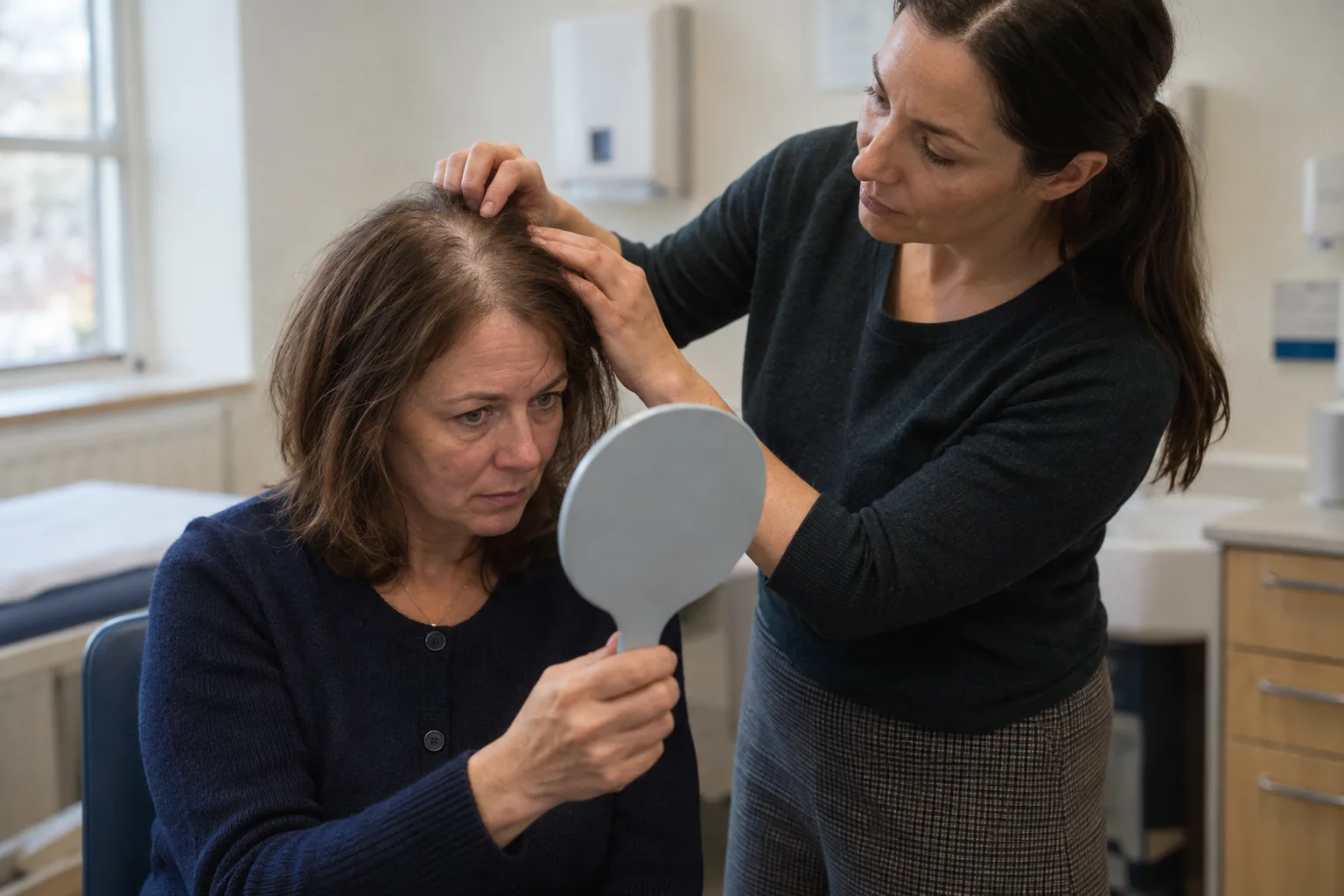
Female pattern baldness, also called female pattern hair loss or androgenetic alopecia, typically produces gradual thinning around the central parting and upper scalp. The word “baldness” can be misleading: complete loss of scalp hair is unusual in women with this condition.
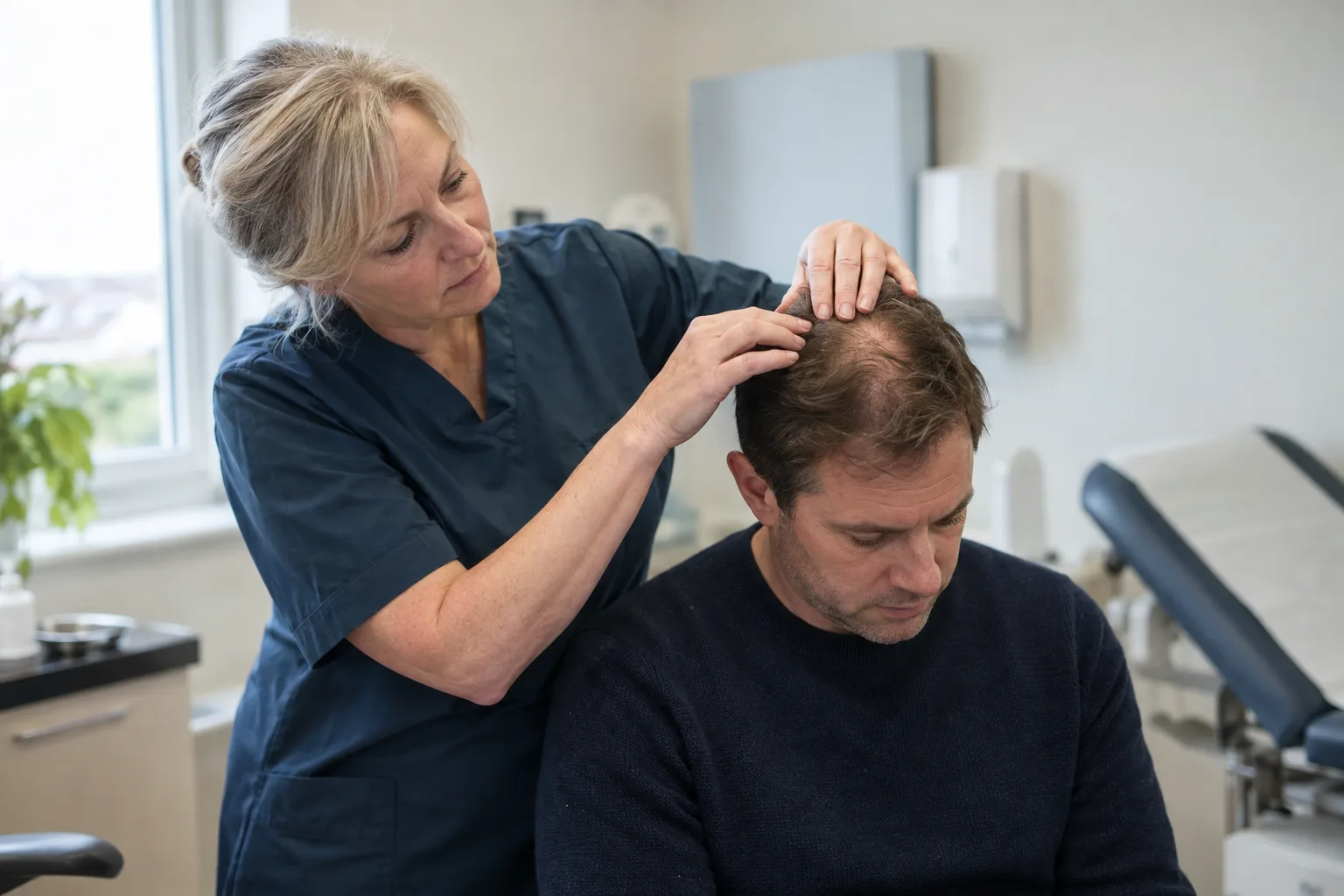
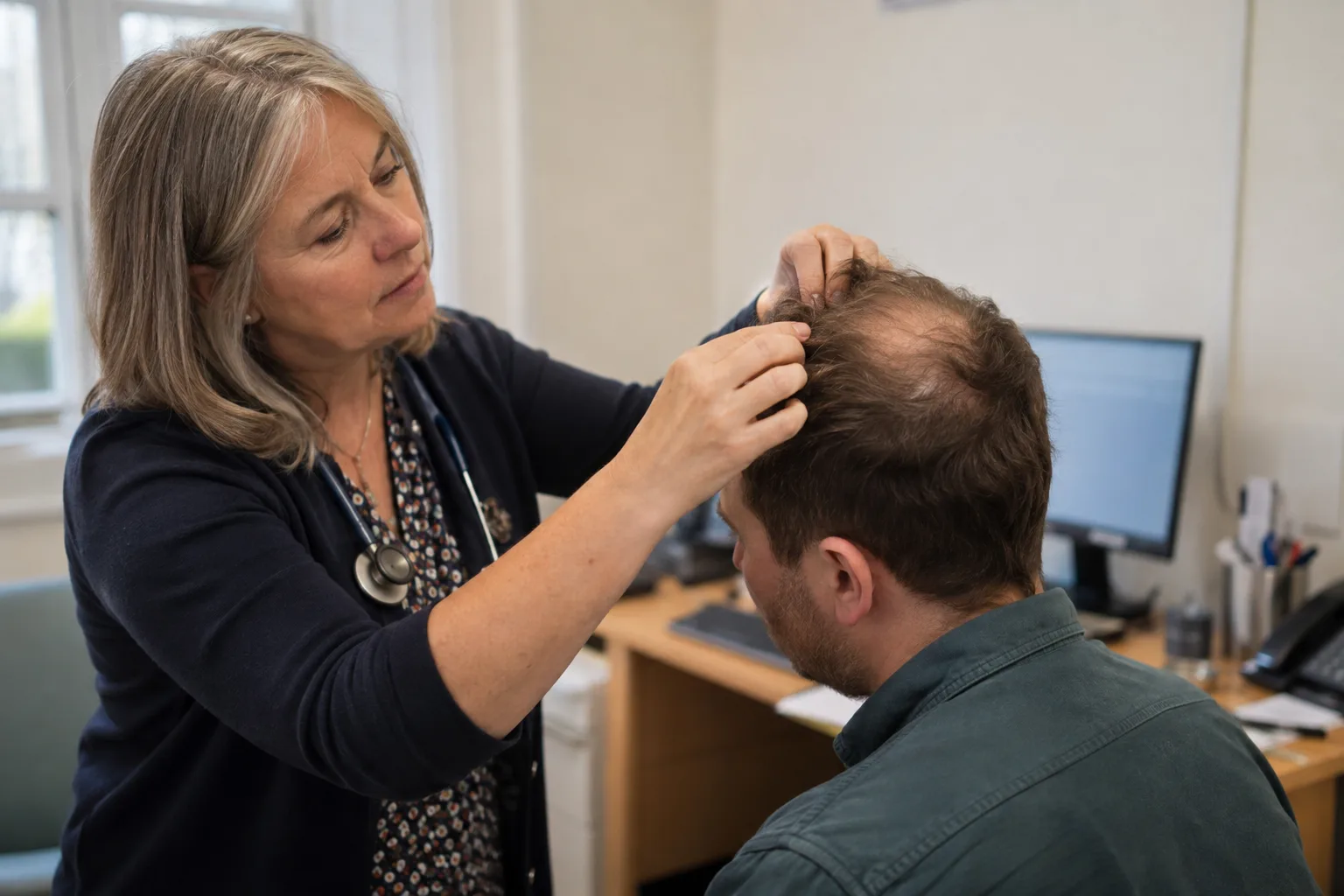
During assessment, a clinician looks at where density has changed, whether hairs are becoming finer and whether the scalp appears healthy. A widening parting without obvious inflammation suggests a different problem from sharply defined patches, broken hairs or a sore, scaly scalp.
The history adds information that appearance alone cannot provide. A recent illness, childbirth, restrictive eating or a major emotional strain may help explain increased shedding. Family history and the pace of change can help identify an inherited pattern, although more than one cause can occur together.
Medicines also belong in that conversation. Some can disrupt the hair-growth cycle, but a suspected connection is not a reason to stop prescribed treatment without advice. Our report on isotretinoin and possible hair shedding explores one example of this distinction between a medicine’s benefits and its potential adverse effects.
If the history suggests another underlying problem, targeted blood tests may be appropriate. Healthline identifies iron levels, thyroid function and androgen hormones among the possible checks; these are not a standard shopping list of tests that every woman with thinning hair needs.
The background
Hair follicles, the small structures in skin that produce hair, alternate between growth and rest. In female pattern hair loss, the growth period becomes shorter and affected follicles gradually produce finer strands. The resulting reduction in coverage can develop over years rather than appearing suddenly.
Genetic susceptibility involves several genes and can come from either side of the family. The inherited biology overlaps with that described in our guide to male pattern baldness and its early signs, but women more often retain their front hairline while losing density further back.
Age and hormones influence the picture. The condition becomes more common after menopause, when oestrogen levels fall, but it can also begin in younger adults. Having female pattern hair loss does not, by itself, mean that someone has unusually high levels of androgens, hormones present in women as well as men.
Irregular periods, significant acne or new coarse facial hair alongside scalp thinning warrant a broader assessment. These symptoms can occur with conditions such as polycystic ovary syndrome, or PCOS, which affects ovarian function and hormone balance. They are clues for a clinician, not proof of a particular diagnosis.
A different process, telogen effluvium, occurs when more hairs than usual enter the resting phase and subsequently shed. It can follow childbirth, illness, major weight loss or severe stress, often with a delay of a few months. Recovery is possible after the trigger resolves, although visible thickness takes time to return.
Mechanical damage is another consideration. Repeated tension from tight hairstyles can cause traction alopecia, meaning hair loss caused by pulling. Early changes may improve when the tension stops, but prolonged pulling can permanently damage follicles. Heat and chemical processing can also break strands without causing inherited follicle changes.
What people are saying
Healthline’s guide was written by Lauren Sharkey and medically reviewed by dermatologist Dr Sharleen St. Surin-Lord. It describes treatment as a way to limit further loss and potentially recover some density, not a promise of restoring every lost hair. The prospects differ between treatments and between individuals.
Where treatment evidence is strongest
Topical minoxidil, a medicine applied to the scalp, is an established option for female pattern hair loss. Healthline puts the time needed to judge visible benefit at roughly six to 12 months. Continued treatment is generally needed to maintain gains; stopping usually allows the underlying thinning process to resume.
Possible side effects include dryness, itching, redness and unwanted hair growth on nearby skin. Increased shedding can also occur early in treatment. A pharmacist or clinician can discuss suitability, particularly if the scalp is irritated or the diagnosis is uncertain. Minoxidil is generally avoided during pregnancy and breastfeeding.
Specialists sometimes consider prescription medicines such as spironolactone, which reduces the effects of androgen hormones, or finasteride. Their use for women’s hair loss may be off-label, meaning outside the medicine’s licensed indication. Healthline describes mixed findings for finasteride, so evidence and suitability should not be assumed to match those for topical minoxidil.
These medicines also require different safety discussions. Spironolactone can affect blood pressure and potassium, a mineral needed for normal nerve and muscle function, and monitoring may be necessary. Pregnancy plans are especially important because anti-androgen treatments can harm a developing baby.
Where uncertainty remains
Platelet-rich plasma, or PRP, involves injecting a concentrated component of a person’s own blood into the scalp. Small studies suggest possible benefits, but treatment methods and results vary. Our assessment of Harvard Health’s discussion of PRP evidence explains why encouraging findings do not establish a guaranteed outcome.
Low-level light devices are also marketed for thinning hair, although questions remain about their longer-term benefits and the best treatment approach. Nutritional products need similar scrutiny: correcting a confirmed deficiency is different from taking supplements without one. Healthline cites a small body of supplement research, which does not establish that general hair vitamins reverse inherited thinning.
What happens next
For someone seeking help in the UK, a GP appointment is a practical first step when thinning persists or the cause is unclear. Bring a short account of when it began, any recent health changes, medicines and supplements, and whether relatives have similar hair loss.
Photographs taken over time can help show progression that is difficult to remember accurately. Images of the same parting under comparable conditions are more informative than repeatedly counting shed hairs, because washing frequency, brushing and hair length all affect what appears in a brush or shower.
Sudden patches, scalp pain, marked redness, crusting or areas that look smooth and scarred deserve prompt medical assessment. Some inflammatory forms of hair loss can permanently damage follicles, so they should not be treated as routine pattern thinning without an examination.
NHS treatment availability is another consideration. Minoxidil for pattern hair loss is generally bought privately rather than prescribed on the NHS. Before committing to any longer-term option, ask about ongoing costs, likely benefits, adverse effects and how progress will be reviewed.
Cosmetic support can sit alongside medical care rather than being a last resort. A different cut, hair fibres, a topper or a wig may make reduced coverage easier to manage. Choosing camouflage, treatment, both or neither is a personal decision, and distress about hair loss is a valid reason to ask for support.
Why this matters
For UK readers, the practical challenge is navigating an often privately funded treatment market while the cause of thinning may still be uncertain. A GP can investigate possible health contributors, a dermatologist can assess difficult or inflammatory cases, and a suitably qualified trichologist can offer hair and scalp advice. Seek help if loss is persistent, sudden, painful or affecting your wellbeing. For those considering cosmetic support, our guide to NHS wigs and help with charges explains the financial assistance that may be available, depending on eligibility.
Common questions
- What does female pattern baldness look like?
- It usually appears as gradual thinning around the parting and crown. The front hairline is often preserved, and complete loss of scalp hair is unusual.
- Can female pattern baldness happen in your 20s?
- Yes, it can begin in younger adults, although it becomes more common with age and after menopause. Thinning at a younger age still needs assessment rather than an assumption about its cause.
- Does female pattern baldness mean my hormones are too high?
- No, female pattern hair loss does not necessarily mean androgen levels are unusually high. Irregular periods, significant acne or new coarse facial hair alongside thinning are reasons to discuss hormonal assessment with a GP.
- How long does minoxidil take to work for women?
- Visible benefits may take six to 12 months, according to Healthline. Results vary, and continued treatment is generally needed to maintain any improvement.
- Can stress cause hair shedding months later?
- Yes, severe stress can trigger telogen effluvium, with increased shedding often appearing a few months later. This differs from inherited pattern thinning and may recover once the trigger resolves.
- Do hair vitamins help female pattern baldness?
- General hair supplements have not been established as a way to reverse inherited thinning. Treating a confirmed nutritional deficiency is different, and a clinician can advise whether testing or supplementation is appropriate.
- Can I get minoxidil for female pattern hair loss on the NHS?
- Minoxidil for pattern hair loss is generally bought privately rather than prescribed on the NHS. A GP can still help investigate the cause of thinning and discuss appropriate care.
About the writer
Daniel OkaforSenior Health Reporter · Manchester
Daniel covers treatments, medicines and regulation, with a particular interest in how new therapies reach NHS patients.
More from DanielSources
- Healthline: Hair Loss in Women: Female Pattern Baldness and More
- Healthline: Baldness Gene: How Genetics Influence Hair Loss
This article is original reporting by Thicker Thinking based on the sources above. Last reviewed 8 October 2026. It is for general information and is not medical advice. Speak to your GP, a dermatologist or a qualified trichologist about your own situation.