Treatments in the News
Finasteride for hair loss: benefits, risks and UK advice
The prescription treatment can help preserve scalp hair, but understanding its limitations, safety warnings and ongoing costs is essential before starting.
By the Thicker Thinking Editorial Team
Published · 6 min read

Quick answerFinasteride can slow male pattern hair loss and help some men regrow hair, but benefits usually take at least three months. It is a prescription treatment with potential sexual and mental health side effects, so suitability needs a medical assessment.
Finasteride offers men with pattern hair loss a way to slow further thinning, with some also seeing regrowth. But choosing the prescription tablet means weighing a gradual, potentially useful benefit against side effects and the prospect of continuing treatment to maintain results.
For UK readers, access is another consideration: finasteride for male pattern hair loss is generally paid for privately, rather than supplied on the NHS. The consultation should establish both whether the diagnosis is right and whether the medicine is suitable.
What happened
According to Healthline and Drugs.com, oral finasteride treats male pattern hair loss and is also used for an enlarged prostate. These are separate prescribing situations. Propecia is the brand associated with hair loss, while Proscar is used for prostate enlargement; generic versions are also available.
The expected benefit is measured in months, not days. Drugs.com states that improvement may take three months or longer, and that the effect is reversed within 12 months of stopping. This makes finasteride an ongoing treatment rather than a course that permanently resets hair growth.
The safety information identifies reduced sexual desire, difficulty getting or keeping an erection, and changes in ejaculation as possible adverse effects. Breast tenderness or swelling can also occur. These are potential outcomes to discuss before treatment, not symptoms that everyone taking finasteride will experience.
Drugs.com also notes that sexual symptoms may persist after the medicine is stopped. Evidence remains limited on how often persistent symptoms occur and how to predict who will experience them. That uncertainty matters during consent: a prescriber should neither promise that every symptom will resolve nor suggest persistence is inevitable.
Depression and suicidal thoughts require particular attention. UK safety advice is to stop finasteride prescribed for hair loss and contact a doctor immediately if these develop. Anyone who feels at immediate risk of harming themselves should call 999 or attend A&E.
Other warning signs need a different response. A new breast lump, nipple discharge or persistent breast pain warrants prompt medical assessment, although these symptoms do not automatically mean cancer. Difficulty breathing or swelling of the tongue, lips or throat can indicate a serious allergic reaction and needs emergency help.
The background
Male pattern hair loss, also called androgenetic alopecia, is influenced by inherited susceptibility and hormones. In affected scalp follicles — the structures from which hairs grow — successive hairs become finer and shorter. The typical pattern involves recession at the temples, thinning over the crown, or both.
Finasteride blocks an enzyme called 5-alpha-reductase, which converts testosterone into dihydrotestosterone, or DHT. Lowering DHT can reduce its effect on susceptible follicles. It does not remove the inherited tendency to hair loss, and it cannot be relied upon to restore a completely bald area.
Diagnosis matters because not all shedding follows this process. Sudden, widespread shedding after an illness or operation may be telogen effluvium, a temporary disruption of the hair cycle. Our guide to hair loss after surgery explains why the timing of a trigger can help distinguish it from gradual pattern thinning.
Patchy loss, scalp soreness, marked scaling or shiny areas without visible follicle openings also deserve assessment rather than an automatic finasteride prescription. Some inflammatory conditions can damage follicles permanently. A clinician may examine the scalp closely and arrange further investigation if the appearance is not typical.
Finasteride is not licensed for female pattern hair loss or for children. Specialists sometimes consider it outside its licence for selected women, but evidence is more limited and pregnancy risks are central to that decision. Our guide to female pattern baldness and its treatment options covers the different assessment needed.
What people are saying
Dermatologists generally assess success more broadly than visible regrowth. Keeping existing hair can be a worthwhile result in a condition that otherwise progresses. Someone whose crown looks unchanged after treatment may have achieved stabilisation, although a clinician needs to consider the overall course before judging the response.
For that reason, consistent photographs can be more useful than checking a mirror every morning. Images taken with similar hair length, positioning and lighting make comparisons easier. Wet hair, a new haircut or a different camera angle can make density appear to change without reflecting a treatment effect.
A common pitfall is treating every hair in the shower as evidence of failure. Normal hair cycling continues during treatment, and shedding counts vary with washing and styling habits. A review should consider the pattern of thinning, scalp findings and photographs rather than an isolated day's hair fall.
Safety discussions should include personal priorities, not just a checklist. Someone trying to conceive may want to discuss fertility concerns, because finasteride has been associated with reduced semen quality in some men. Testicular pain or blood in semen should be reported to a doctor rather than assumed to be harmless.
A history of depression also belongs in the consultation, even if symptoms are currently well controlled. With the person's agreement, a partner or trusted friend can help notice changes in mood or behaviour. Private or embarrassing symptoms still deserve the same attention as visible scalp changes.
Cost is part of an informed choice, too. Because treatment may continue for years, the relevant expense is not simply the first prescription. Readers should check whether a private service includes follow-up, access to a prescriber when problems arise, and a clear process for reviewing benefit.
What happens next
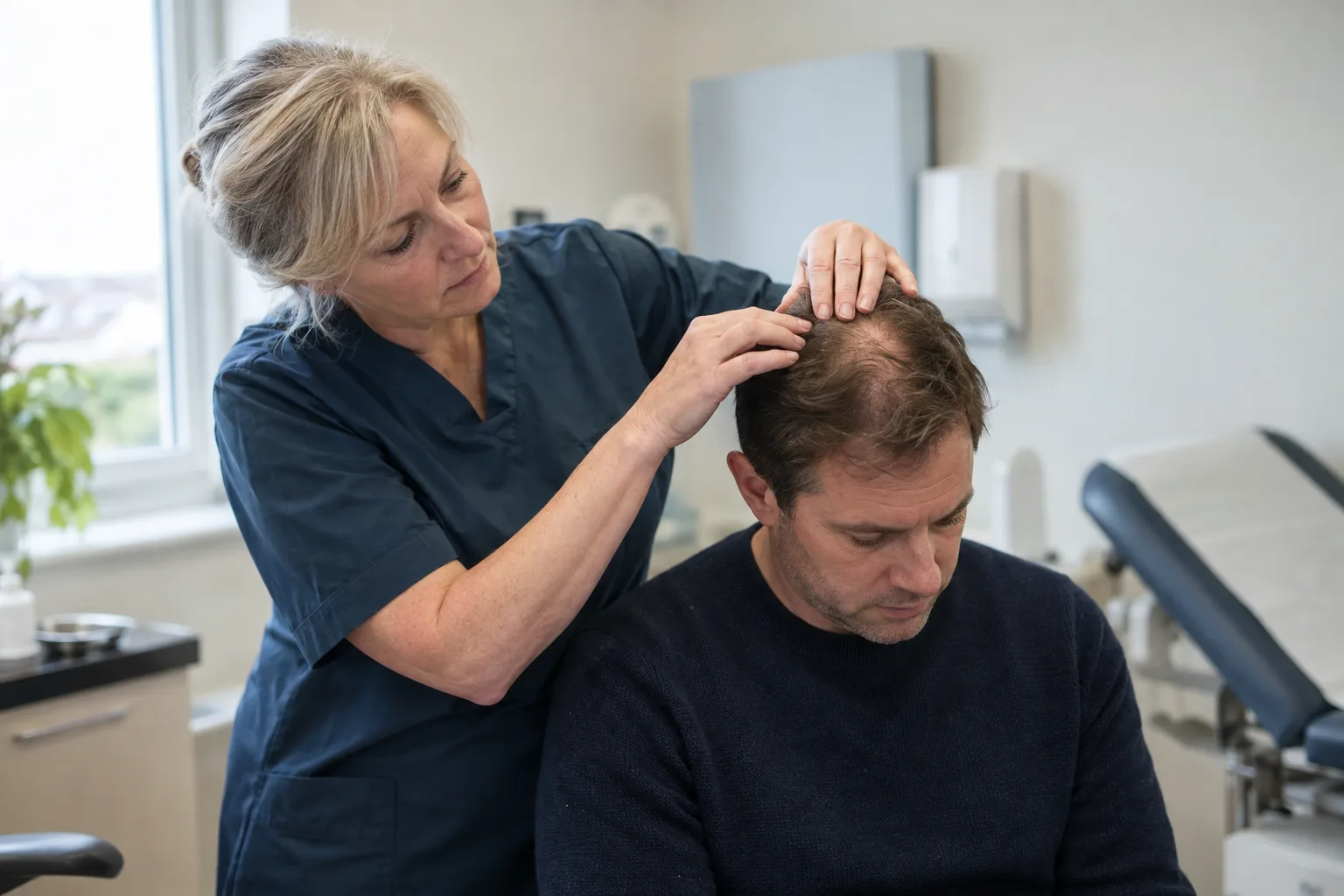
Before prescribing, a doctor should review medical history and all other medicines, including non-prescription products and supplements. Liver disease is relevant because the liver processes finasteride. Previous allergic reactions and a history of prostate disease should also be disclosed; an online purchase does not remove the need for assessment.
Finasteride can lower prostate-specific antigen, or PSA, a substance measured in blood tests used to assess prostate health. Tell any clinician interpreting a PSA result that you take, or have recently stopped, finasteride. Not everyone using it for hair loss needs routine PSA testing; this depends on their circumstances.
Product information also carries a warning about high-grade prostate cancer, meaning cancers that look more abnormal and may behave more aggressively. This arose from prostate-prevention research and needs clinical context: it is not a direct estimate of risk for a younger man taking finasteride for hair loss.
Household handling matters during pregnancy. Someone who is pregnant or could become pregnant should not handle broken or crushed tablets because finasteride can be absorbed through the skin and harm a developing male fetus. Intact coated tablets prevent contact during normal handling; accidental contact with broken tablets should be washed off immediately with soap and water, followed by medical advice.
If finasteride is unsuitable, topical minoxidil — a treatment applied to the scalp — is another established option for pattern hair loss. More expensive procedures need separate scrutiny. Our examination of PRP for hair loss and the evidence behind it explains the limitations of research into platelet-rich plasma injections.
Agreeing a review plan before starting helps establish when photographs, tolerability and personal goals will be reassessed. Bring new symptoms to the prescriber promptly rather than waiting for a scheduled appointment. Suspected medicine reactions can also be reported through the UK's Yellow Card scheme, which supports ongoing drug safety monitoring.
Related: Finasteride and depression: what the evidence means
Why this matters
For people living with hair loss in the UK, a private prescription can become a long-term financial and personal commitment. Knowing what follow-up is included helps distinguish access to tablets from access to appropriate care. Speak to a GP or dermatologist if hair loss is sudden, patchy, painful or affecting your wellbeing; a qualified trichologist can also help assess hair and scalp concerns, but prescribing requires an authorised clinician. Choosing not to take medicine is valid, and our guide to NHS wigs and help with charges explains another potential source of support.
Common questions
- Does finasteride work for hair loss?
- Finasteride can slow male pattern hair loss and produce regrowth in some men. Maintaining existing hair can also count as a benefit. It is not a treatment for every cause of shedding, so diagnosis matters.
- How long does finasteride take to work?
- Benefits may take three months or longer to become noticeable. Consistent photographs and a planned clinical review are more useful than daily mirror checks for assessing gradual changes.
- Is finasteride hair growth permanent?
- No, the benefit generally depends on continued treatment. Drugs.com states that stopping leads to reversal of the effect within 12 months, because finasteride does not remove the underlying tendency to male pattern hair loss.
- Can finasteride side effects last after stopping?
- Sexual side effects have been reported to persist after finasteride is stopped. Evidence is limited on how often this happens and who is most likely to be affected. Discuss symptoms and concerns with your prescriber.
- Can pregnant women touch finasteride tablets?
- Pregnant women, or those who could become pregnant, should not handle broken or crushed tablets. Intact coatings prevent contact during normal handling. After accidental contact with broken tablets, wash the area immediately with soap and water and seek medical advice.
- Can I get finasteride for hair loss on the NHS?
- Finasteride for male pattern hair loss is generally obtained through a private prescription, not the NHS. Check whether the price includes a medical assessment, follow-up and help if side effects develop.
- What should I do if finasteride affects my mood?
- If depression or suicidal thoughts develop while taking finasteride for hair loss, stop treatment and contact a doctor immediately. If you feel at immediate risk of harming yourself, call 999 or attend A&E.
Sources
- Healthline: Finasteride: Side Effects, Dosage, Uses, and More
- drugs.com: Propecia: Uses, Dosage & Side Effects - Drugs.com
This article was written by Thicker Thinking using the sources listed above. It is for general information and is not medical advice. Speak to your GP, a dermatologist or a qualified trichologist about your own situation.