Treatments in the News
Herbs for hair growth: what the evidence actually shows
Herbal rinses feature in online haircare experiments, but softer strands, less breakage and new growth are different outcomes.
By the Thicker Thinking Editorial Team
Published · 6 min read

Quick answerHerbs for hair growth have limited supporting evidence, much of it from animal studies. Some preparations may help condition hair, but homemade rinses are not proven treatments for thinning or bald patches and can cause irritation.
Herbs for hair growth sit at the boundary between cosmetic haircare and medical treatment. Ingredients such as fenugreek, rosemary and ginseng feature in traditional remedies and online experiments, but evidence that a plant can condition strands is not evidence that it can reverse hair loss.
A YouTube experiment involving a homemade herbal rinse illustrates that distinction. Creator Deborah Boms is testing a mixture while tracking her hair’s length and texture. According to Healthline, meanwhile, much of the research behind herbal growth claims comes from animal studies: an important limitation for anyone deciding what to put on a thinning scalp.
What happened
Boms describes wanting longer, softer natural hair after previously experiencing heat damage and cutting it. Her water-based preparation contains cinnamon, cloves, fenugreek seeds and rosemary. She presents it as a personal experiment and acknowledges that research supporting some ingredients is limited.
The distinction between water and oil matters here. Small human studies have investigated rosemary oil, but those findings cannot establish that rosemary steeped in water has the same effect. Different preparations extract different substances, and their concentration, stability and ability to reach the skin can vary substantially.
Fenugreek also needs careful interpretation. Healthline cites research involving a food supplement containing fenugreek and micronutrients that reported improvements in hair volume and thickness. Results from a combined oral supplement cannot show that fenugreek alone works, or that putting the seeds into a rinse produces comparable benefits.
Other findings sit further from everyday treatment. Research discussed by Healthline found hair-growth effects from false daisy in mice and night-flowering jasmine in rats. These experiments can help researchers identify promising substances, but animal hair cycles and experimental conditions differ from those of people with long-standing thinning.
Nor is this evidence that a herbal mixture performs like an established medicine. For pattern hair loss, treatments such as minoxidil have a stronger clinical evidence base, although they do not help everyone. Our guide to female pattern baldness and its treatment options explains how the cause and pattern of thinning influence the choices available.
The background
Hair grows from follicles, the small structures within the skin that produce each strand. Follicles move through periods of growth, transition and rest. A treatment intended to change that cycle must be distinguished from a conditioner that acts mainly on the hair already visible above the scalp.
Conditioning can still be useful. By making strands easier to detangle and reducing friction, suitable products can limit breakage and help preserve length. This is particularly relevant to tightly curled hair, where shrinkage can also make changes in length less obvious. Neither effect necessarily means more hairs are growing.
Hair loss itself has several causes. Androgenetic alopecia, or inherited pattern hair loss, gradually produces finer hairs. Telogen effluvium is increased shedding that can follow illness, childbirth or other physical stresses. Alopecia areata involves an immune attack on follicles, while some inflammatory conditions can scar them permanently.
That variety explains why one botanical ingredient is unlikely to suit every problem. Our guide to alopecia types, causes and warning signs sets out how gradual thinning differs from sudden patches and changes accompanied by scalp symptoms.
Some herbal claims focus on 5-alpha reductase, an enzyme that helps convert testosterone into dihydrotestosterone, or DHT. This hormone contributes to pattern hair loss in susceptible follicles. Laboratory evidence that a plant extract affects the enzyme does not establish that a finished hair product delivers a useful effect in people.
Finasteride targets this pathway and has clinical evidence for male pattern hair loss, alongside recognised risks and prescribing considerations. Describing a herb as acting on the same enzyme does not make it an equivalent substitute. Our explanation of finasteride’s benefits, risks and UK use covers that separate treatment decision.
What people are saying
Boms’s account reflects a familiar concern: hair can seem stuck at one length even when the goal is healthier, fuller-looking growth. Personal tracking can clarify someone’s experience, but an individual improvement cannot separate the effects of a new rinse from changes in detangling, heat exposure, styling or the normal hair cycle.
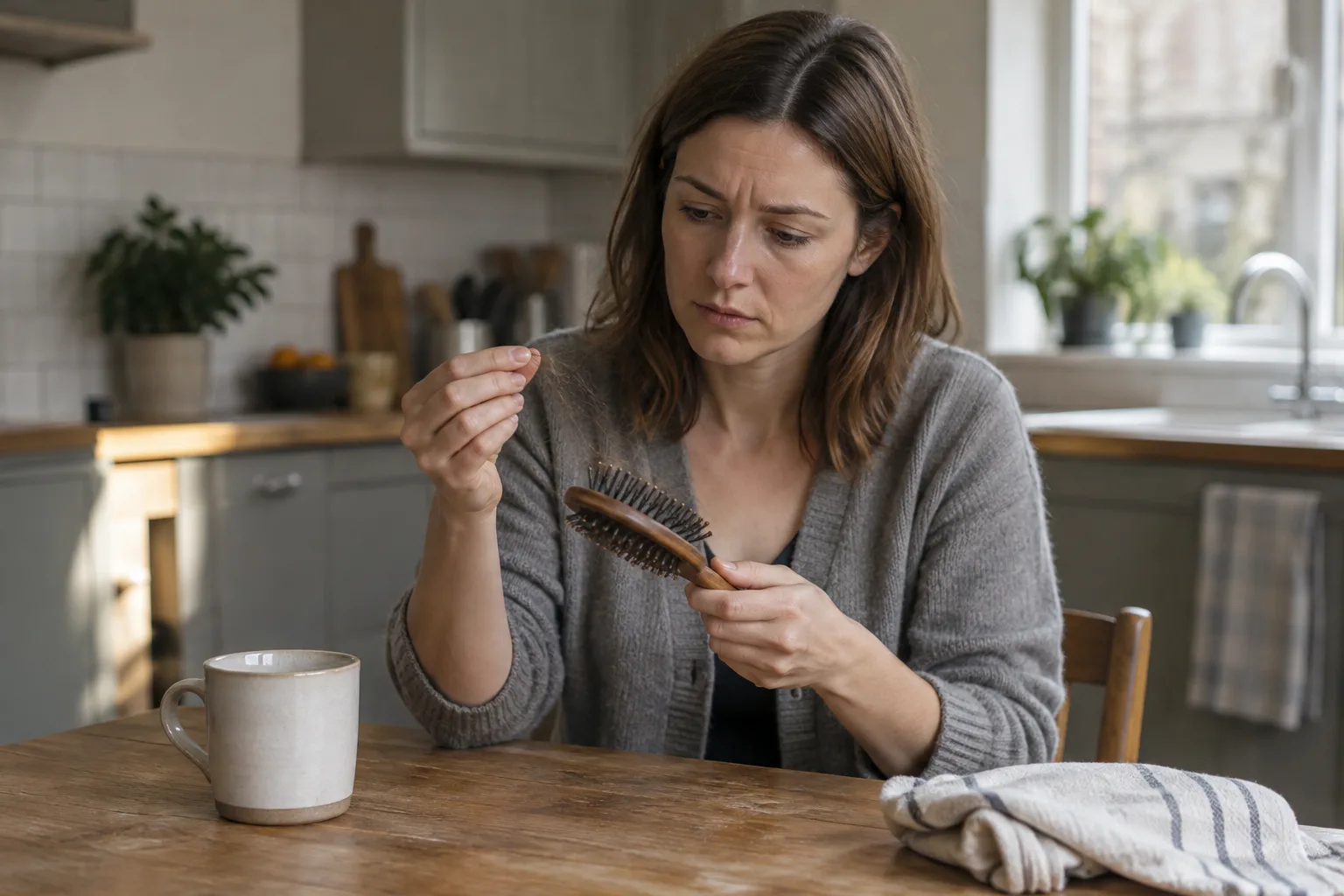
Dermatologists generally distinguish between shedding from the follicle and breakage along the strand. Short, snapped hairs may suggest damage, whereas increased shedding or widening areas of visible scalp require a different assessment. More than one process can happen at once, so appearance alone does not always settle the question.
For people wearing tight braids, extensions or repeatedly pulled-back styles, reducing tension may be more important than adding another ingredient. Traction alopecia means hair loss caused by repeated pulling; it can become permanent if prolonged. Our guide to spotting hair loss caused by tight styles explains the early signs.
Claims about antioxidants or antimicrobial properties also need context. A substance may show biological activity in a laboratory without treating a scalp condition in practice. Persistent dandruff, itching or redness should not automatically be interpreted as a need for herbal stimulation; established scalp treatments may be more appropriate.
Safety is another concern. Cinnamon, fragrances and essential oils can irritate skin or trigger allergic contact dermatitis, an itchy inflammatory reaction. A product that feels warming or tingly is not necessarily stimulating useful growth. Stop using a preparation if it causes burning, redness, swelling or a rash.
A small-area test performed according to product instructions may reveal irritation, but it cannot guarantee that a later reaction will not occur. Dermatologists can arrange formal patch testing when an allergy is suspected. Breathing difficulty or sudden swelling of the lips, tongue or throat requires emergency help.
What happens next
For researchers, the next step is better human testing of clearly defined preparations. Useful trials need appropriate comparison groups, objective measures such as hair counts, and enough follow-up to assess a slow growth cycle. They must also record adverse effects rather than treating plant origin as evidence of safety.
For consumers, the immediate question is what problem they are trying to address: dryness, breakage, excessive shedding or progressive thinning. Photographs taken with a consistent parting and similar conditions can help document change. They cannot diagnose the cause, but may make a clinical appointment more informative.
Homemade water-based mixtures bring an additional issue: microbial contamination. Without suitable preservation and testing, a rinse has no established safe shelf life, even if it looks and smells normal. An online storage routine should not be taken as assurance that a mixture remains safe to apply.
Swallowing a herb is a separate decision from applying a cosmetic product. Herbal supplements can interact with medicines, and oral Polygonum multiflorum, sometimes marketed for hair, has been linked to liver injury. Check with a pharmacist or clinician before taking supplements, particularly during pregnancy or breastfeeding or alongside prescribed treatment.
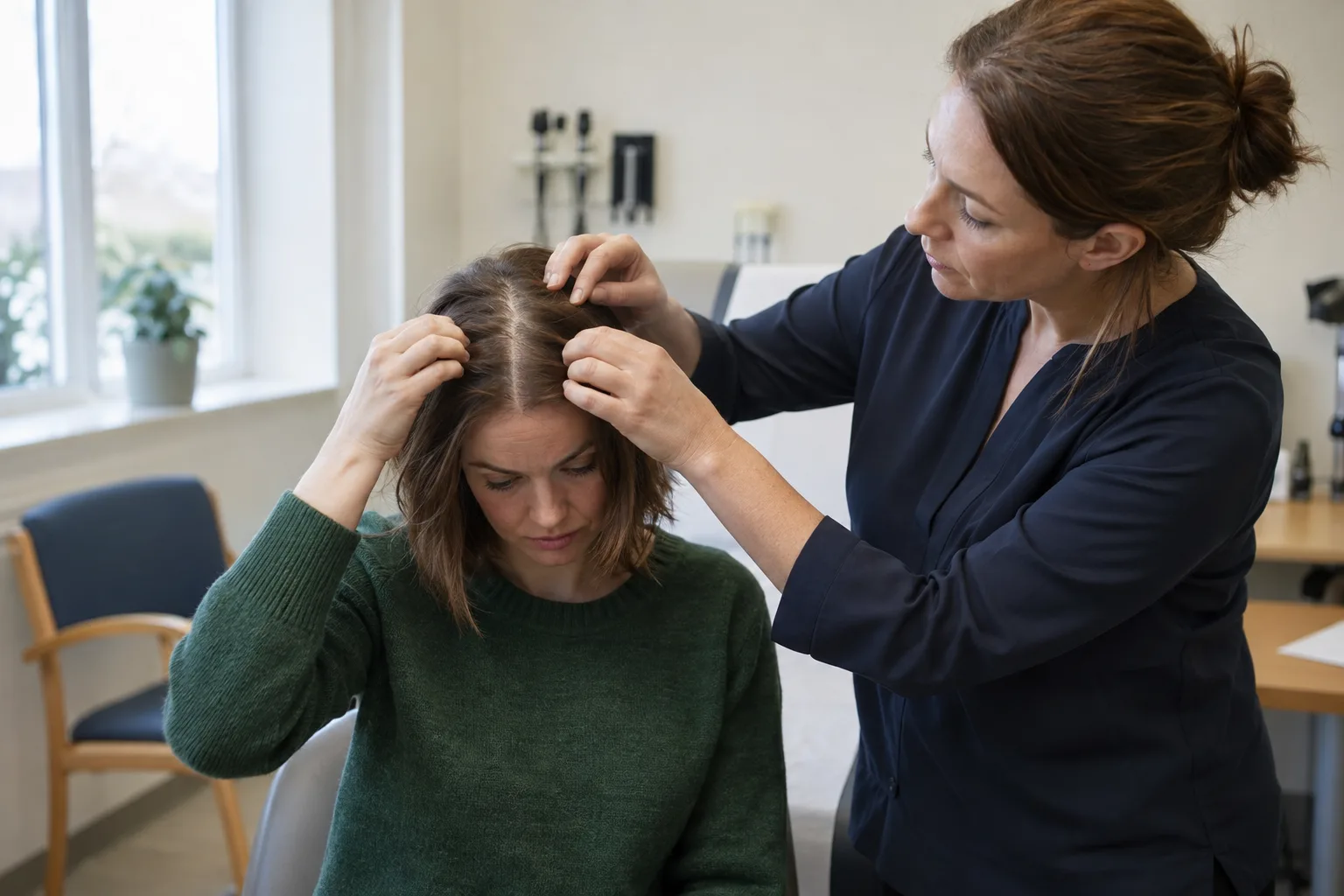
Arrange a GP assessment for unexplained or persistent loss, sudden patches, or scalp pain, crusting and inflammation. Examination and, where appropriate, targeted blood tests can identify problems such as iron deficiency or thyroid disease. A dermatologist can investigate suspected inflammatory or scarring conditions; a suitably qualified trichologist can advise on hair and scalp care without replacing medical assessment.
Why this matters
For UK readers, choosing between a cosmetic product and a medical assessment affects both spending and access to appropriate care. A disappointing rinse can mean lost time as well as money, particularly if an inflammatory condition needs treatment. Speak to a GP or dermatologist about sudden, painful or progressive loss; a suitably qualified trichologist can help assess everyday haircare and breakage. Appearance support is also a valid choice while investigating the cause, and our guide to NHS wigs and help with charges explains one practical option.
Common questions
- Do herbs really help hair grow?
- Some herbs have shown promising effects, but reliable human evidence remains limited. Much of the research involves animals or specific extracts, which cannot establish that a homemade rinse treats hair loss.
- Does rosemary water work like rosemary oil for hair growth?
- Rosemary water has not been established as equivalent to rosemary oil. Different preparations contain different substances and concentrations, so findings from small studies of the oil cannot be transferred to a water rinse.
- Can fenugreek seeds make hair thicker?
- Fenugreek seed rinses are not established treatments for thicker hair. Research involving a supplement containing fenugreek and micronutrients cannot show that fenugreek alone works or that applying it to the scalp has the same effect.
- Why does my hair stay the same length if it is growing?
- Breakage can offset new growth, making hair appear to stay the same length. Tightly curled hair also shrinks, which can obscure length changes. Conditioning and gentler handling may help retain strands without speeding up follicle growth.
- Can herbal hair rinses irritate your scalp?
- Yes, herbal ingredients can cause irritation or allergic reactions. Stop using a preparation if it causes burning, redness, swelling or a rash. A small-area test cannot guarantee that a reaction will never develop.
- How long can you keep homemade herbal hair water?
- There is no established safe shelf life for an untested homemade water-based rinse. Microbes can grow without obvious changes in smell or appearance, so an online storage recommendation is not proof of safety.
- When should I see a GP about hair loss?
- See a GP for unexplained or persistent hair loss, sudden bald patches, or scalp pain, crusting and inflammation. Assessment can help distinguish breakage from shedding and identify conditions that need medical treatment.
Sources
- Healthline: 19 Herbs for Hair Growth
- youtube.com: Everyone Swears by These Herbs for 4c Hair Growth… So I Tried Them | African herbs for natural hair - YouTube
This article was written by Thicker Thinking using the sources listed above. It is for general information and is not medical advice. Speak to your GP, a dermatologist or a qualified trichologist about your own situation.