Hair Loss Causes
Traction alopecia: spotting hair loss caused by tight styles
Scalp discomfort and broken hairs can signal excessive tension, making changes to styling an important first step before thinning becomes established.

By James Whitaker, News Reporter
Published · 5 min read
Quick answerTraction alopecia is hair loss caused by repeated pulling on the hair, often from tight or heavy hairstyles. Removing the tension early can allow regrowth, but longstanding damage may scar the follicles and make hair loss permanent.
A hairstyle that repeatedly pulls at the scalp can cause more than discomfort. Traction alopecia, the medical term for hair loss caused by sustained tension, can initially be reversible but may become permanent if the strain continues.
According to Healthline, tight buns, ponytails, braids and added hair can all contribute. For anyone noticing thinning around a frequently pulled area, the immediate priority is to reduce that tension rather than start a hair-growth product while keeping the same style.
What happened
Healthline’s guidance highlights a distinction that matters for treatment: early traction-related hair loss does not necessarily mean the hair-producing structures are permanently damaged. Continued pulling, however, can lead to scarring of the follicles — the small structures in the skin from which hairs grow.
Warning signs before a visible gap
Small raised spots, tenderness or a stinging sensation may appear before obvious thinning. Itching, flaking and inflammation can also occur. These symptoms are not unique to traction alopecia, but their appearance around tightly secured hair should prompt a check of the hairstyle and scalp.
Short, snapped hairs may be another clue. Breakage affects the hair shaft, the visible strand above the skin, and is not the same as losing a functioning follicle. Both problems can occur together, so the appearance of short hairs alone cannot establish how much damage has happened.
The distribution often reflects where the pulling occurs. The forehead and temples are common sites, but attachments elsewhere can produce thinning in other areas. A clinician will therefore look at the whole scalp rather than assume that traction only affects the hairline.
Not every widening parting or receding edge is caused by styling. Female pattern baldness has different underlying causes and treatment options, and more than one condition can be present. Hair loss extending beyond areas under tension deserves assessment rather than an automatic diagnosis of traction alopecia.
The background
Risk depends on how much force is applied, how long it lasts and how often it recurs. A loosely arranged bun is not equivalent to one pulled firmly against the scalp each day. The name of a hairstyle alone does not tell someone whether it is safe for their hair.
Added length and weight can increase the load on individual strands. Extensions, weaves and heavy locs may create particular pressure at their attachment points. Healthline also identifies very long natural hair and sleeping in tightly wound rollers as possible sources of repeated tension.
Chemical straightening and excessive heat can weaken the hair shaft, making breakage more likely when the hair is also pulled. This is a separate process from scarring inside a follicle, although both can contribute to a thinner appearance. Reducing chemical and heat damage therefore supports, rather than replaces, tension reduction.
Healthline describes traction alopecia as common among African-American women, while noting that anyone can develop it. In UK consultations, advice should be sensitive to the cultural importance of hairstyles and the needs of textured hair. The concern is mechanical strain, not a person’s ethnicity or hair texture alone.
Repeated styling for work or sport can also matter. Ballet dancers and gymnasts are among the groups Healthline identifies because tightly secured hair may be part of their routine. Discussing alternative ways to meet practical requirements can make changes more achievable than simply telling someone to stop tying their hair up.
A different process, telogen effluvium, causes increased shedding when more hairs than usual enter the resting phase of their growth cycle. It can follow illness, surgery or childbirth. Our guide to postpartum hair loss and when to seek advice explains this more widespread shedding, which should not automatically be blamed on a ponytail.
What people are saying
Dermatologists generally advise that a hairstyle should not hurt. Pain during styling or afterwards is a reason to loosen or remove it, not something to tolerate until the scalp becomes accustomed to the pull. Equally, the absence of pain does not guarantee that repeated tension is harmless.
Practical changes without abandoning personal style
A useful discussion with a hairdresser focuses on the areas carrying the load: whether the hairline is pulled tightly, whether added hair is too heavy and whether the same small sections repeatedly support attachments. Changing styles only helps if it actually reduces the force on vulnerable hairs.
Overnight habits count too. A gentler daytime arrangement offers less protection if the hair is then tightly secured for sleep. Dermatologists generally encourage low-tension handling throughout the routine, including careful detangling and avoiding repeated tugging when removing accessories or extensions.
People may be offered oils, scalp massage or supplements as a way to restore thinning edges. These approaches cannot reliably reverse established follicle scarring. Biotin deficiency is uncommon, and evidence that biotin supplements improve hair growth in people without a deficiency is weak; supplements should not substitute for identifying the cause.
Minoxidil, a medicine used for some forms of hair loss, may sometimes be considered to support regrowth where follicles remain viable. Evidence specifically for traction alopecia is limited. It cannot remove the mechanical cause or recreate destroyed follicles, and suitability should be discussed with a GP or dermatologist rather than assumed from advertising.
What happens next
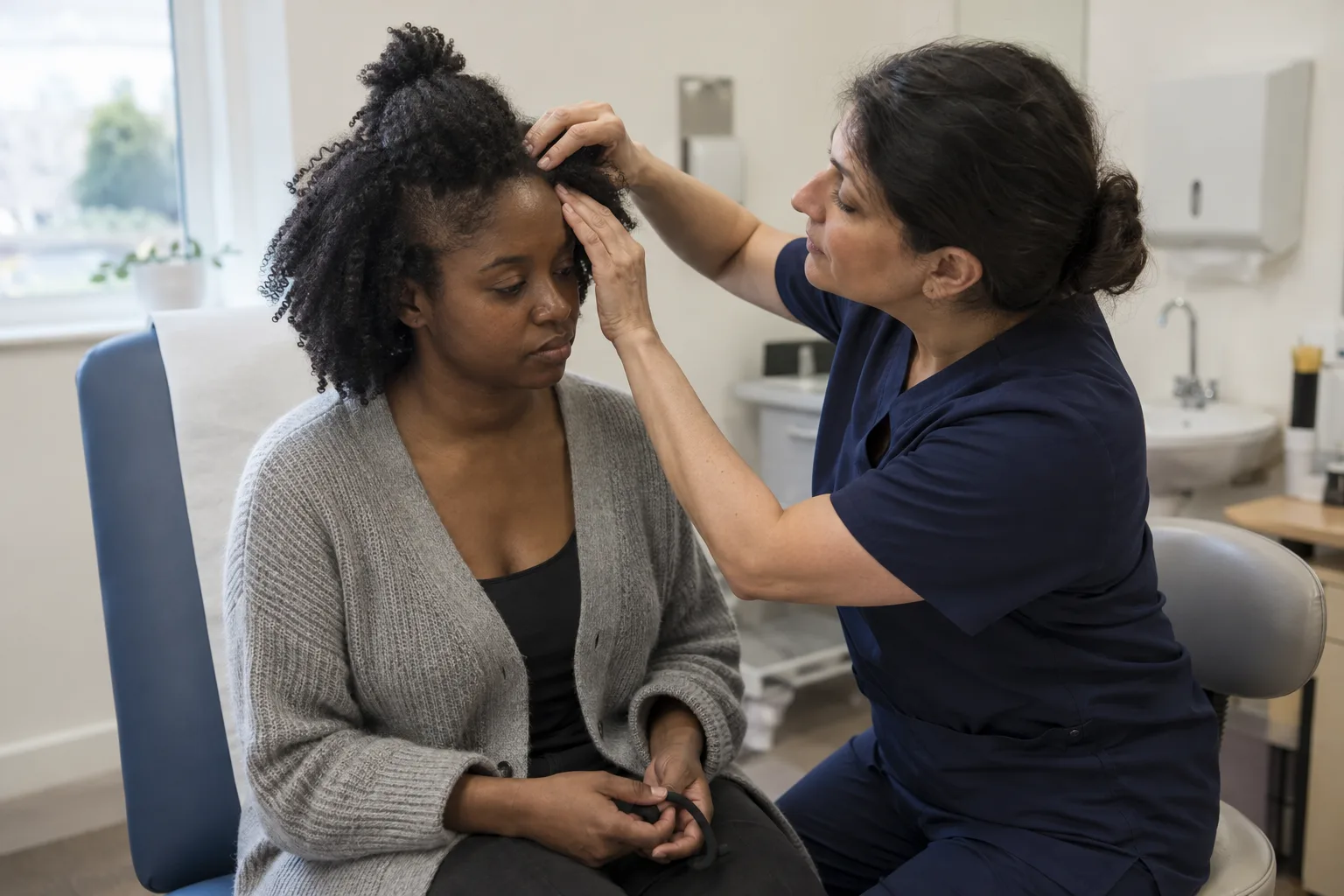
An assessment usually begins with a history of hairstyles, symptoms and the timing of hair loss, followed by examination of the scalp. Photographs showing earlier changes can help. A dermatologist may occasionally recommend a biopsy — taking a small skin sample — if the diagnosis or extent of scarring is uncertain.
Treatment beyond styling changes depends on the findings. A clinician may use anti-inflammatory treatment for an inflamed scalp or treat an identified infection. Antibiotics and antifungal products are not routine solutions for every thinning hairline, and using them without a diagnosis can miss the actual problem.
Recovery is measured over months rather than days because hair grows slowly. Taking occasional photographs with the same parting and similar conditions can make gradual changes easier to judge. Continuing deterioration despite gentler styling is a reason to seek reassessment, not simply wait longer for a product to work.
Arrange a GP appointment for persistent thinning, uncertainty about the cause or ongoing scalp discomfort. Seek prompt medical advice for pus, open sores, spreading redness or significant pain. A trichologist can advise on hair and scalp care, but suspected infection or scarring needs medical assessment.
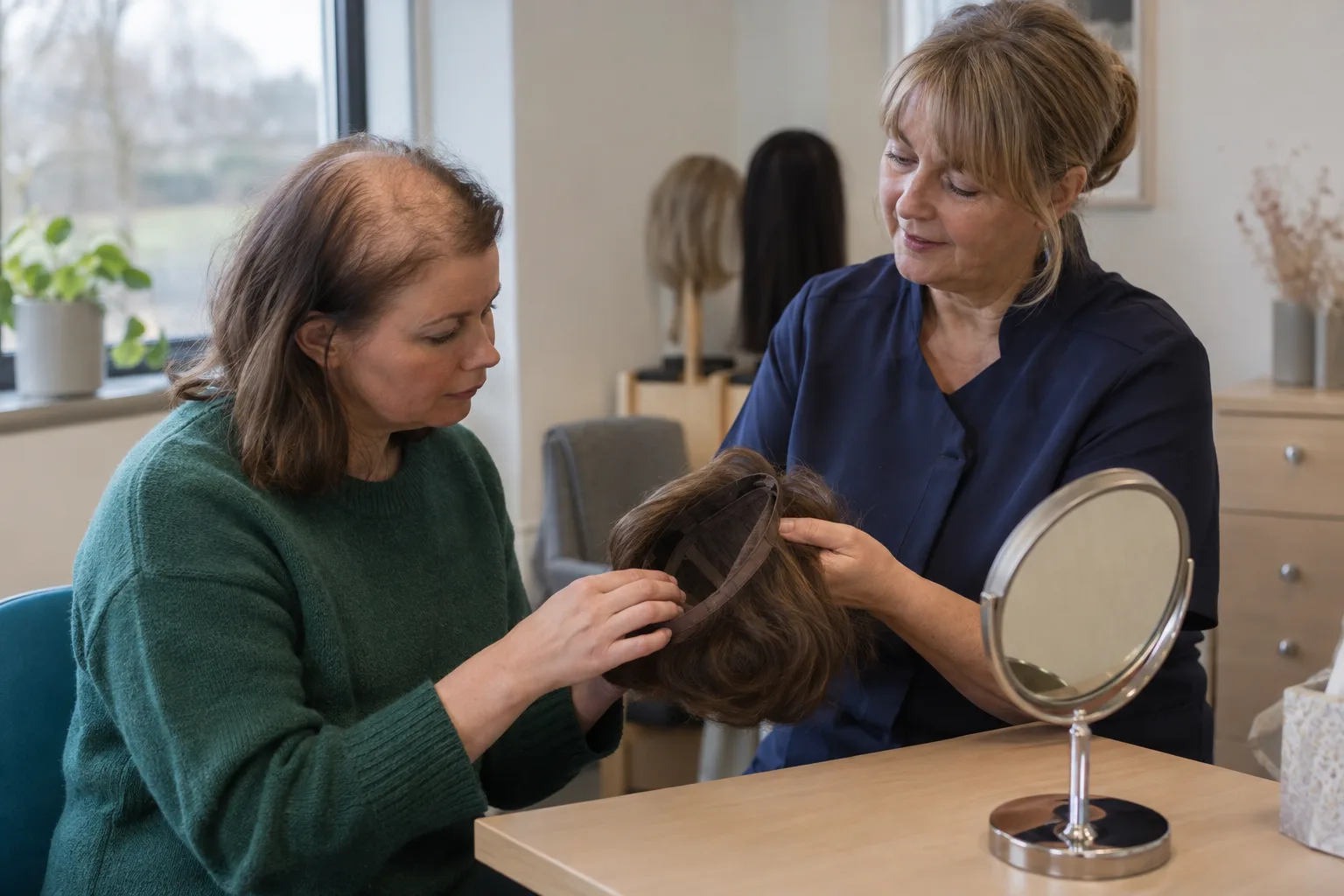
If permanent loss is confirmed, a specialist can discuss camouflage or, for selected people with stable disease, whether hair restoration surgery is appropriate. Coverage must not introduce new pulling through tight clips or attachments. Our guide to NHS wigs, eligibility and help with charges explains possible support for people considering a wig.
Why this matters
Hair can be closely connected to identity, faith, work and confidence, so advice about traction alopecia needs to fit someone’s life rather than imply blame. A GP, dermatologist or trichologist can help turn general warnings about tight styles into a practical plan; persistent symptoms or possible scarring warrant medical assessment. For UK readers facing lasting loss, knowing about NHS wig entitlement and help with costs may also make decisions about coverage more manageable.
Common questions
- Can traction alopecia grow back?
- Hair can regrow if tension is removed before follicles are permanently damaged. Longstanding pulling can cause scarring that prevents regrowth, so an assessment is useful if thinning persists or worsens.
- What are the first signs of traction alopecia?
- Early signs can include tenderness, small bumps, stinging and broken hairs around areas under tension. Itching or flaking may also occur, although these symptoms can have other causes.
- Can a ponytail cause hair loss?
- A repeatedly tight ponytail can cause traction alopecia by pulling on hair follicles. The risk depends on tension, duration and repetition, rather than simply wearing the hair in a ponytail.
- Do hair extensions cause traction alopecia?
- Extensions can contribute if their weight or attachment puts repeated strain on the hair. Thinning may develop around attachment points, particularly when the same sections repeatedly carry the load.
- Does minoxidil help traction alopecia?
- Minoxidil may help some people whose follicles remain viable, but evidence specifically for traction alopecia is limited. It cannot reverse established scarring or replace removing tension. Discuss suitability with a GP or dermatologist.
- How long does traction alopecia take to improve?
- Visible recovery can take months after tension is removed, and regrowth is not guaranteed. The outlook depends on whether follicles have been permanently damaged; worsening loss needs reassessment.
- When should I see a doctor about traction alopecia?
- See a GP for persistent thinning, ongoing scalp discomfort or uncertainty about the cause. Pus, open sores, spreading redness or significant pain need prompt medical advice, and suspected scarring may require a dermatologist.
About the writer
James WhitakerNews Reporter · Leeds
James covers the latest hair loss news, from new guidance and surveys to the everyday causes behind shedding and thinning.
More from JamesSources
This article is original reporting by Thicker Thinking based on the sources above. Last reviewed 9 October 2026. It is for general information and is not medical advice. Speak to your GP, a dermatologist or a qualified trichologist about your own situation.