Women's Thinning
Postpartum hair loss: what helps and when to seek advice
Hair shedding after birth usually settles without treatment, but cosmetic care and medical assessment have different roles in helping women through it.

By Eleanor Marsh, Health Editor
Published · 6 min read
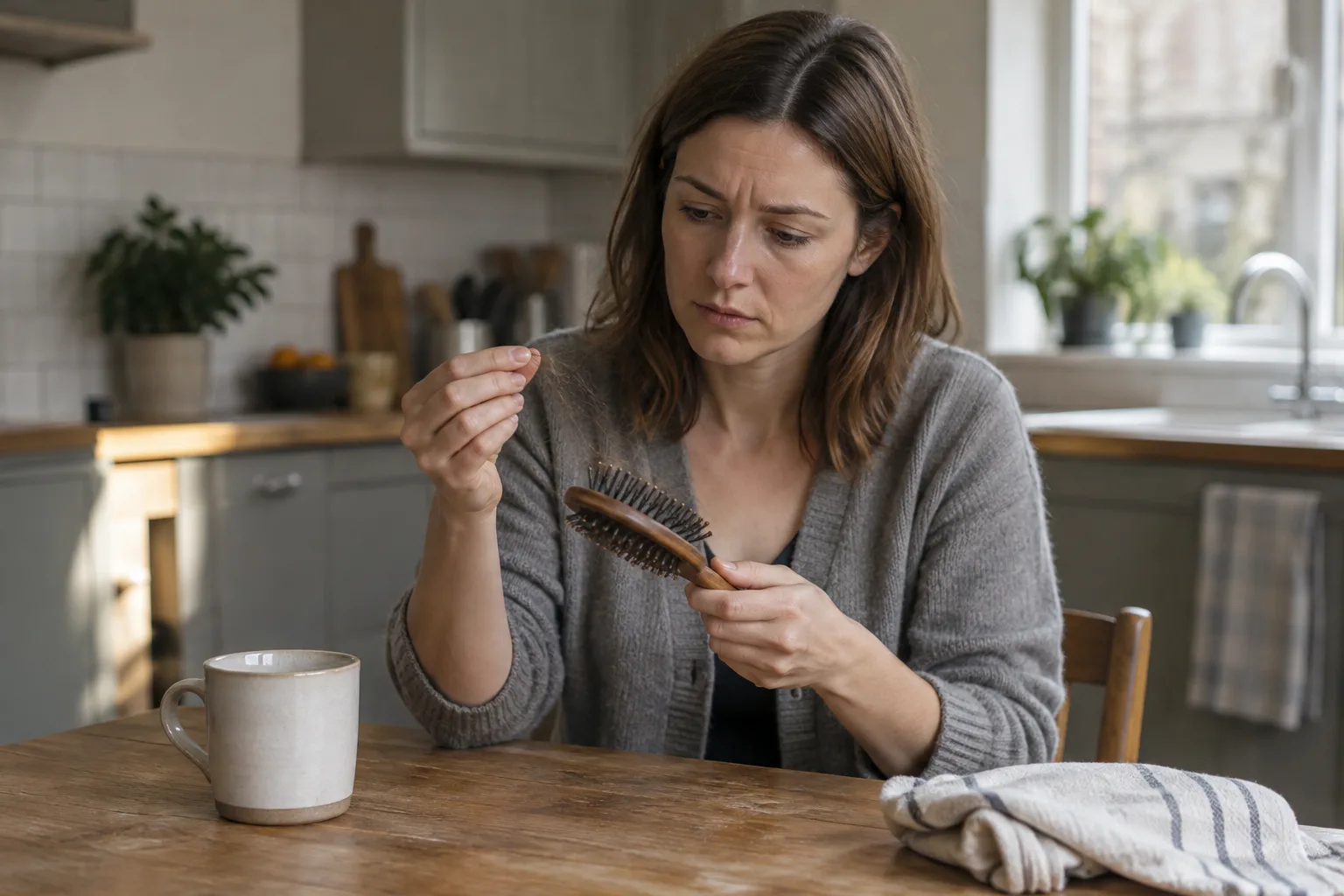
Quick answerPostpartum hair loss is usually temporary shedding caused by hormonal changes after birth, often peaking around four months. Gentle hair care can limit breakage, but there is no established treatment that reliably stops the normal shedding process.
Women looking for treatments for postpartum hair loss face an important distinction: making thinning hair easier to manage is not the same as stopping it falling out. Healthline’s guidance on shedding after childbirth describes practical care measures, while acknowledging that none has been shown to prevent or slow the normal process.
The advice concerns a usually temporary change rather than permanent baldness. However, childbirth does not rule out other causes of hair loss, and the pattern of thinning, accompanying symptoms and length of time it continues can help determine whether medical assessment is needed.
What happened
Healthline’s explainer, written by Lisa C. Baker and medically reviewed by Karen Gill, was updated in November 2016. It is patient information, not a new treatment trial. Its recommendations should therefore be understood as supportive advice rather than evidence that a particular routine produces faster regrowth.
Although the article presents its suggestions as treatments, several are better described as cosmetic measures. A volumising shampoo may give individual strands more body, while a heavy conditioner can leave fine hair looking flatter. Neither effect demonstrates a change in the number of hairs growing from the scalp. Healthline also acknowledges limited evidence behind its shampoo advice.
There is a separate role for reducing damage to existing hair. Frequent high heat, forceful detangling and rough handling can contribute to breakage along the hair shaft. Gentle care can help preserve those strands, but breakage and shedding from the root are different processes. Avoiding a hairdryer cannot prevent hairs already at the end of their cycle from being released.
For women whose shedding is typical and not troubling them, Healthline says treatment is unnecessary. Choosing not to buy a product is therefore a reasonable option, rather than a missed opportunity to protect future hair growth. The source offers no basis for promising that a shampoo, supplement or styling routine will shorten recovery.
The background
Postpartum means after childbirth. The shedding associated with this period is a form of telogen effluvium: an increase in hair loss when more hairs than usual enter the resting stage of their growth cycle. The follicles, the small structures in the skin that produce hair, are generally still capable of growing new strands.
During pregnancy, higher oestrogen levels can keep more hairs in their growing phase, making hair feel thicker. After delivery, falling hormone levels allow more of those hairs to move towards resting and shedding. Because this cycle takes time, noticeable loss commonly appears a few months after birth rather than immediately.
According to Healthline, shedding often reaches its greatest intensity around four months after delivery and can sometimes continue for up to a year. These are broad expectations, not a timetable every woman must follow. Reduced shedding and restored fullness are also different milestones: new hair needs time to grow long enough to contribute to overall volume.
Typical telogen effluvium produces diffuse thinning, meaning hair is lost across the scalp. A smaller ponytail or more visible scalp may be noticeable without a clearly defined bald area. Smooth, separate patches, or areas accompanied by inflammation, are less characteristic and should not automatically be attributed to the recent pregnancy.
Postpartum shedding can also make an existing tendency towards patterned thinning more apparent. Female pattern hair loss involves progressive changes in hair thickness, often around the central parting, rather than simply a temporary increase in shedding. Our guide to female pattern baldness, its signs and treatment options explains that distinction. More than one type of hair loss can occur at the same time.
Childbirth is not the only possible trigger for telogen effluvium. Significant illness, major physical stress and substantial dietary restriction can also disturb the hair cycle. These additional factors matter when the history does not fit a straightforward postnatal pattern; the timing of a trigger may be more informative than what happened on the day shedding became visible.
What people are saying
Healthline emphasises hormonal changes as the main explanation for pregnancy-related shedding. That is a useful counterweight to the assumption that losing hair means a new mother is not coping. Psychological stress can contribute to some episodes of telogen effluvium, but postpartum shedding alone is not evidence of poor emotional health or inadequate self-care.
On nutrition, the source recommends a varied diet and says vitamins should not replace food. The important clinical distinction is between correcting a deficiency and adding supplements when nutrient levels are already adequate. Iron deficiency can contribute to hair loss, but taking extra iron without an identified need is not an established treatment for normal postpartum shedding.
Routine postnatal nutritional advice, including advice during breastfeeding, has a different purpose from a hair-growth claim. A supplement recommended for general health should not be taken as proof that it will stop shedding. A GP, midwife or pharmacist can help distinguish those needs, particularly when someone is already taking several preparations with overlapping ingredients.
Biotin, a B vitamin frequently promoted for hair, illustrates why apparently simple purchases still deserve care. High-dose biotin supplements can interfere with some laboratory tests, including certain thyroid tests. Anyone taking them should tell the clinician arranging blood tests rather than assuming that a hair supplement is irrelevant to their medical history.
Evidence for one hair-loss condition also cannot simply be transferred to another. Platelet-rich plasma, or PRP, involves injections of a preparation made from a person’s blood and is marketed for some forms of thinning. Our report on Harvard Health’s assessment of PRP evidence examines its limitations; it should not be interpreted as establishing a treatment for routine postpartum shedding.
What happens next
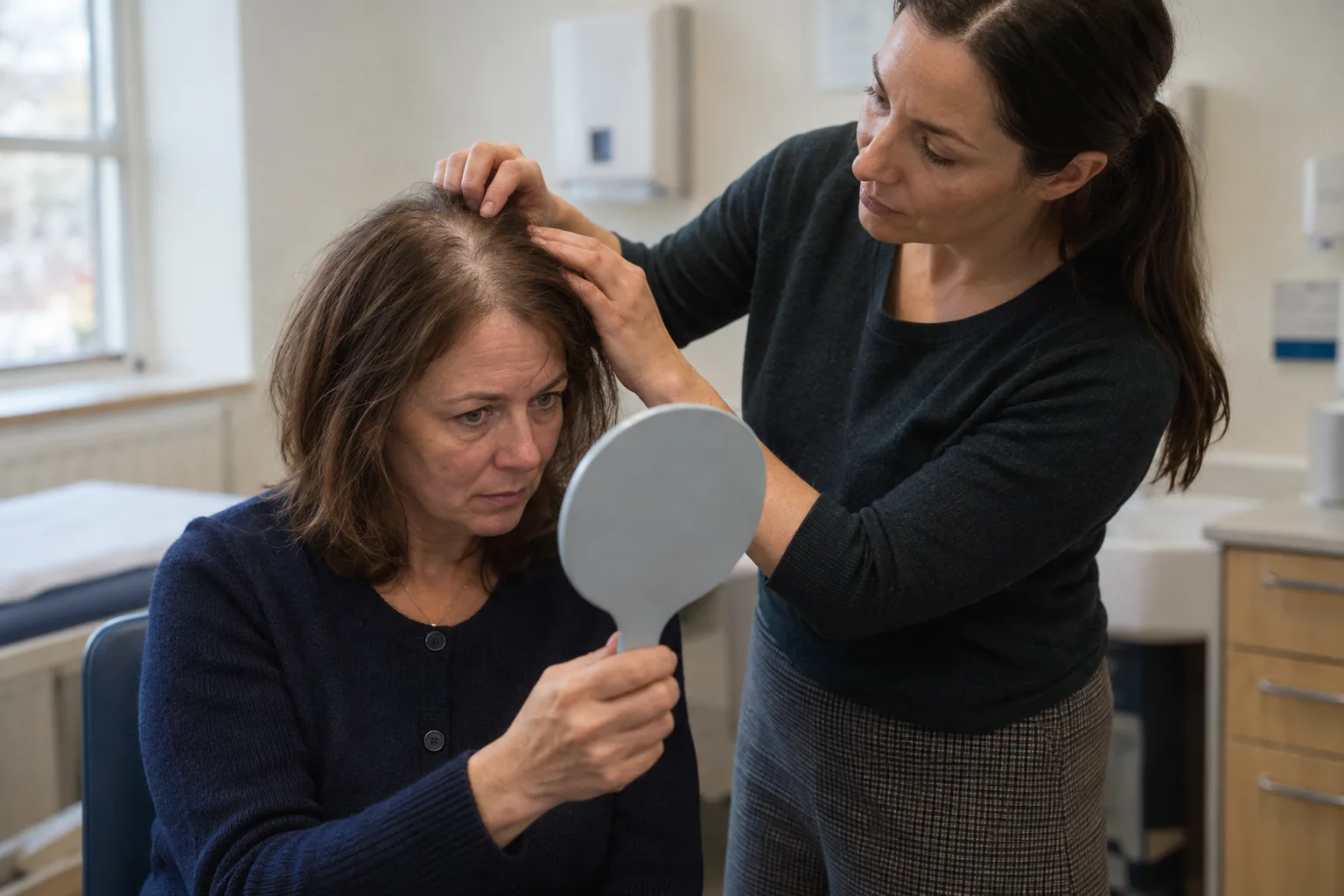
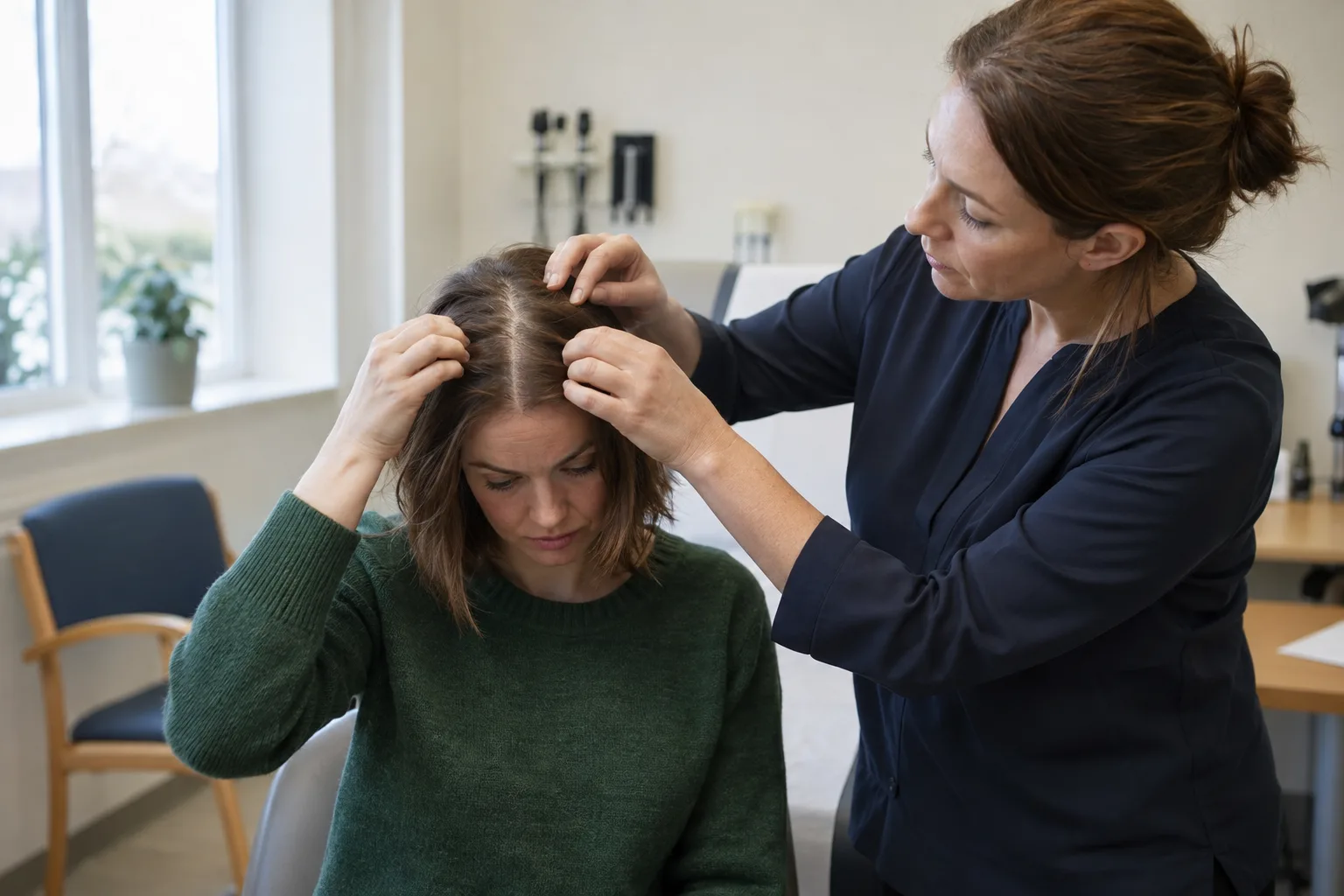
For someone seeking help in the UK, a GP can start by reviewing when shedding began, whether it is widespread or patchy, and what else has changed. Relevant details include significant blood loss during delivery, recent illness, dietary restrictions, medicines and a family history of patterned thinning. This history helps guide assessment rather than assuming every postnatal case needs identical tests.
Blood tests may be appropriate if symptoms or the history suggest another cause. Iron deficiency and thyroid disorders are among the possibilities a GP may consider. Postpartum thyroiditis, an inflammation of the thyroid gland after childbirth, can affect thyroid function; hair changes alongside palpitations, unusual temperature sensitivity or unexplained weight changes deserve discussion.
Medicines should also be included in that review, including treatments started or stopped around pregnancy. Our explanation of hair shedding associated with isotretinoin describes one medication-related example. Do not stop a prescribed medicine because of suspected hair loss without speaking to the prescriber, who can assess the timing and alternatives.
Healthline advises dermatology assessment if substantial shedding persists beyond the child’s first birthday. That is not a requirement to wait: seek advice sooner for bald patches, scalp pain, redness, scaling, rapidly worsening loss or significant distress. A dermatologist can investigate suspected scalp disease or uncertainty about the diagnosis.
Before considering a medicated hair-loss treatment such as minoxidil, discuss whether it is appropriate for the diagnosed condition and your circumstances, especially while breastfeeding or planning another pregnancy. A trichologist can also offer hair and scalp advice, but suspected nutritional, hormonal or inflammatory problems need medical assessment. The next step should follow the cause, not simply the amount of hair left in the brush.
Why this matters
For UK women managing recovery from childbirth, distinguishing a temporary hair-cycle change from a condition needing treatment can prevent unnecessary spending and delayed care. Hair loss can affect confidence even when it is medically benign, and that impact is a valid reason to ask for support. Speak to a GP about persistent shedding, scalp symptoms or feeling unwell; a dermatologist or trichologist may help clarify ongoing concerns. If a widening parting remains after shedding eases, our guide to female pattern hair loss explains another possible cause.
Common questions
- When does postpartum hair loss peak?
- Postpartum shedding often peaks around four months after birth, according to Healthline. The timing varies because hairs take time to move through the resting and shedding stages.
- How long does postpartum hair loss last?
- Shedding can sometimes continue for up to a year after birth. Restoring fullness takes additional time as new strands lengthen; substantial shedding beyond the first birthday should be assessed.
- Can you stop postpartum hair loss?
- There is no established treatment that reliably stops normal postpartum shedding. Gentle handling can reduce breakage, while cosmetic products may improve appearance without changing the underlying hair cycle.
- Do vitamins help postpartum hair loss?
- Vitamin supplements have not been shown to treat normal postpartum shedding. Correcting an identified deficiency is different, and a GP can assess whether testing or nutritional treatment is appropriate.
- Does volumising shampoo help postpartum hair loss?
- Volumising shampoo may make hair appear fuller, but it has not been shown to stop postpartum shedding or speed regrowth. Its potential benefit is cosmetic.
- When should I see a GP about hair loss after pregnancy?
- Seek advice for patchy loss, scalp pain, redness, scaling, rapidly worsening thinning or significant distress. Persistent heavy shedding beyond a year also needs assessment, and other symptoms may justify an earlier appointment.
- Can I use minoxidil for postpartum hair loss while breastfeeding?
- Ask a clinician before using minoxidil while breastfeeding. Whether it is appropriate depends on the cause of hair loss and your circumstances; routine postpartum shedding usually does not require medication.
About the writer
Eleanor MarshHealth Editor · London
Eleanor leads the Thicker Thinking newsroom and has spent more than 15 years reporting on health and medical research for UK readers.
More from EleanorSources
This article is original reporting by Thicker Thinking based on the sources above. Last reviewed 8 October 2026. It is for general information and is not medical advice. Speak to your GP, a dermatologist or a qualified trichologist about your own situation.