Hair Loss Causes
Alopecia types: causes, warning signs and what can help
The pattern, timing and condition of the scalp offer clues to hair loss, but similar-looking changes can need very different care.
By the Thicker Thinking Editorial Team
Published · 6 min read
Quick answerAlopecia means hair loss, not one specific disease. Different alopecia types involve inherited changes, immune activity, temporary shedding, repeated pulling or scarring, so the cause determines whether hair can regrow and which treatment may help.
Hair loss that appears as a widening parting, a smooth patch or sudden shedding can have very different causes — and different prospects for recovery. The distinction matters because a treatment intended for inherited thinning will not necessarily address inflammation or an immune-related condition.
Alopecia is the medical term covering these changes, rather than a diagnosis explaining why they happened. For people deciding whether to wait, change their hair care or seek medical help, the useful starting points are when the loss began, where it occurs and whether the scalp feels different.
What happened
Healthline describes a range of alopecia conditions involving inheritance, immune activity, hormones and damage to the scalp. Advancedhair.com also identifies illness, childbirth, operations and repeated tension from styling as possible causes. These belong to different biological processes, even when the visible result looks similar.
One important distinction is between hair follicles — the structures in the skin that produce hair — temporarily changing their activity and being permanently destroyed. In non-scarring hair loss, follicles remain present, leaving potential for regrowth. Scarring conditions replace damaged follicles with scar tissue.
Another distinction is between shedding and breakage. Full-length hairs falling out may suggest a change in the growth cycle, while short, broken hairs can reflect physical damage, pulling or scalp disease. Appearance alone cannot reliably settle the diagnosis.
Repeated tension is a particularly actionable cause. Tight ponytails, braids or heavy extensions can strain follicles, especially around the hairline. Our guide to recognising traction alopecia from tight hairstyles explains why loosening styles early matters: continued pulling can eventually produce permanent damage.
The background
Inherited thinning and temporary shedding
Androgenetic alopecia, also called pattern hair loss, involves inherited susceptibility and gradual shrinking of follicles. Dihydrotestosterone, or DHT, is a hormone involved in male pattern loss through its effects on susceptible follicles; the problem is not simply having too little of it.
A receding hairline and thinning crown are typical male-pattern signs. Female pattern loss more often produces reduced density over the top of the scalp and a widening parting, usually without complete baldness. Our explanation of male pattern baldness and its treatment options explores this gradual process.
Telogen effluvium is different: an increased proportion of follicles enter the resting phase, leading to widespread shedding. It commonly becomes noticeable around two to three months after illness, an operation, childbirth, significant weight loss or another substantial physical or psychological stressor. The delay can obscure the connection.
After a trigger resolves, shedding often settles over several months, although visible fullness takes longer to return. Persistent shedding needs assessment rather than an assumption that stress explains everything. As our guide to hair loss after surgery explains, recovery may also involve addressing nutritional or medical factors.
Postpartum shedding is a form of telogen effluvium associated with hormonal changes after birth. More hairs remain in the growing phase during pregnancy; afterwards, many move into the resting and shedding phases. Density commonly recovers during the first year, but the pace varies.
Immune-related patches and scarring
Alopecia areata is an autoimmune condition, meaning the immune system mistakenly targets part of the body. It often causes smooth, round or oval patches, but can affect eyebrows, eyelashes and beard hair. Nail changes, including small pits, sometimes accompany it.
The names used for more extensive forms describe the distribution, not a separate styling problem. Alopecia totalis means loss across the whole scalp; alopecia universalis involves scalp and body hair. Ophiasis describes a band-like pattern around the sides and back of the head. Regrowth and recurrence are difficult to predict.
Diffuse alopecia areata can cause widespread thinning without obvious round patches. It is not another name for telogen effluvium: one involves immune activity, while the other involves a shift in the hair cycle. Distinguishing them may require a dermatologist's examination and occasionally further tests.
Scarring alopecia includes inflammatory conditions such as lichen planopilaris and frontal fibrosing alopecia, which often affects the frontal hairline and eyebrows. Central centrifugal cicatricial alopecia usually starts around the crown and disproportionately affects Black women. These conditions are not necessarily caused by hairstyling, and symptoms can be subtle.
Other diagnoses require different support. Trichotillomania involves recurrent hair pulling and may produce uneven patches with broken hairs; it is not simply a bad habit. Temporal triangular alopecia usually forms a stable patch near a temple from childhood, while loose anagen syndrome involves growing hairs that are unusually loosely anchored.
What people are saying
Dermatologists generally advise establishing the cause before choosing a treatment. A common pitfall is buying a product because it helped someone with a similar-looking patch. Family history, medicines, recent illness, scalp symptoms and the distribution of loss all help guide the assessment.
Temporary shedding can also reveal previously less noticeable pattern hair loss. That means regrowth after an illness may not completely restore earlier density if inherited thinning is happening alongside it. A mixed diagnosis can explain why one treatment addresses only part of the change.
For pattern hair loss, topical minoxidil can help some people maintain or improve density, but continued treatment is usually needed to retain benefits. Finasteride is another option for some men, with suitability and potential adverse effects requiring discussion. Neither medicine should be treated as a universal alopecia remedy.
For alopecia areata, corticosteroids — medicines that reduce inflammation and immune activity — may be applied to the skin or injected into patches. Extensive disease may need specialist treatments. In scarring alopecia, the central aim is to control inflammation and preserve remaining follicles, rather than promise regrowth in scarred areas.
Evidence for procedures also needs separating by diagnosis. Research into platelet-rich plasma injections and microneedling is more developed for pattern loss than for many other conditions, but study methods and results vary. Our assessment of PRP evidence for hair loss explains why these procedures should not come with guaranteed outcomes.
What happens next
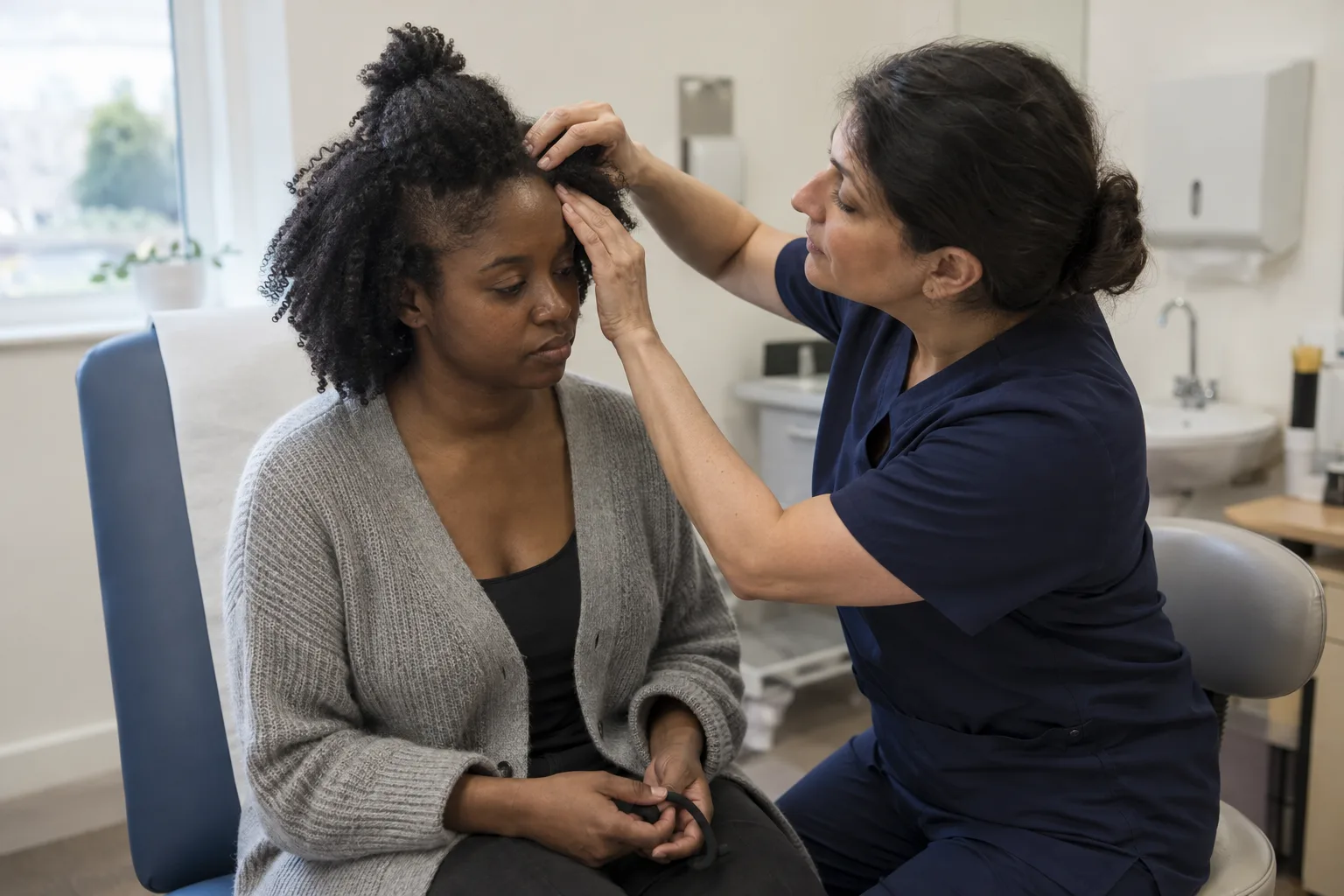
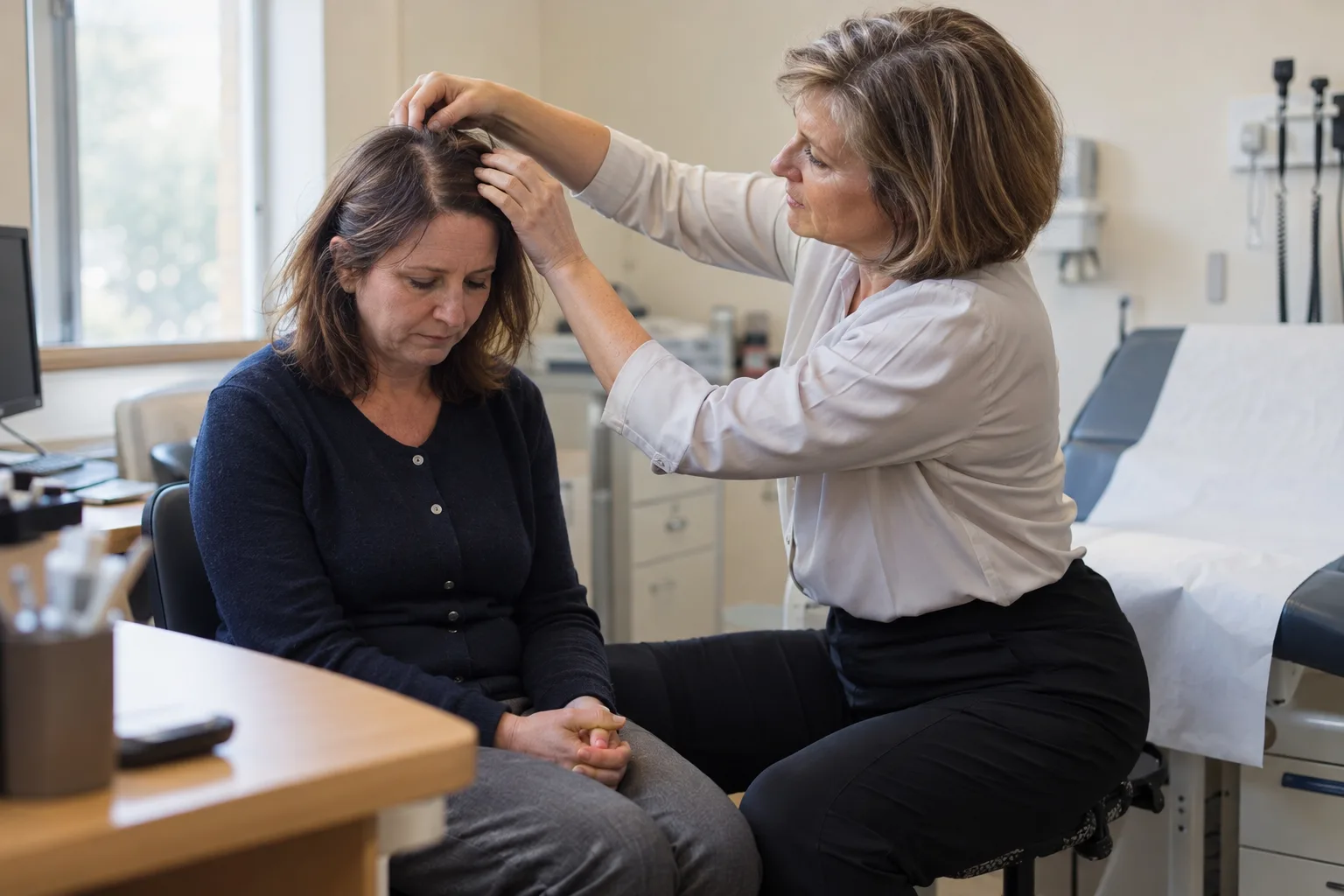
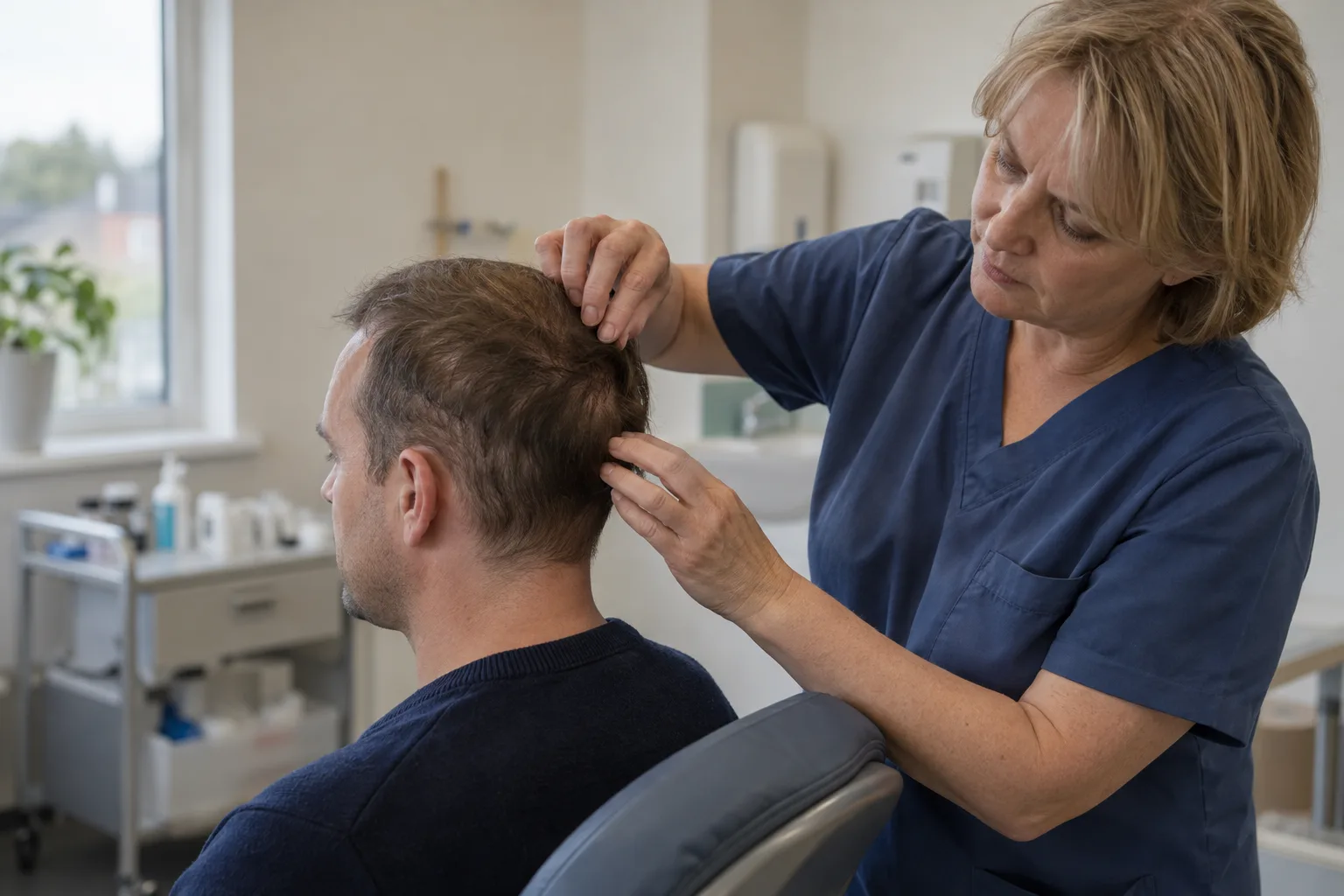
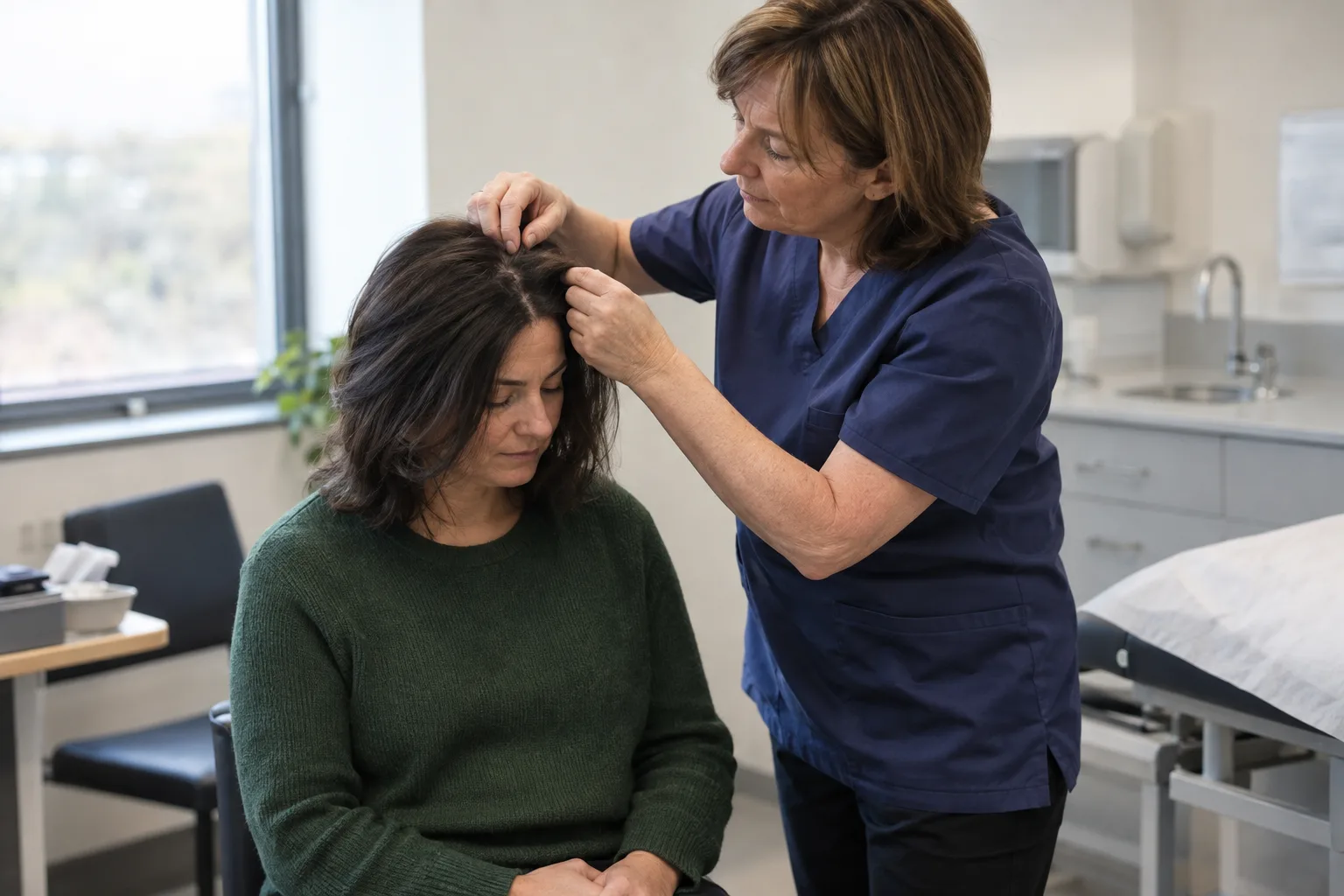
A GP can assess new or unexplained hair loss and arrange further investigation where appropriate. Blood tests may be useful when the history suggests iron deficiency or thyroid disease, but everyone does not need the same panel. Dermatologists may examine the scalp with magnification or take a small skin sample if the diagnosis remains uncertain.
Seek prompt assessment for pain, burning, persistent redness, scaling, pustules or rapidly expanding areas of loss. These signs can indicate inflammation or infection, including conditions where delay risks permanent damage. Some scarring disorders cause little discomfort, so progressive hairline recession with eyebrow loss also deserves attention.
Bring a list of medicines and supplements, a rough timeline and, if available, photographs showing change. Do not stop prescribed medicines without speaking to the prescriber. Supplements are not a substitute for investigating a deficiency, and excessive amounts of some nutrients can themselves contribute to hair loss.
A transplant redistributes existing follicles rather than treating every underlying cause. It is generally unsuitable for active alopecia areata or active inflammatory scarring disease. For individual advice, consult a GP or dermatologist; a trichologist can also advise on hair and scalp care, but medical diagnosis or prescribing may require a doctor.
Why this matters
For UK readers, identifying the cause can prevent spending on treatments that do not fit the problem and help protect hair where inflammation threatens follicles. Support need not depend on pursuing regrowth: camouflage, headwear and NHS wig provision and help with charges may also be relevant. Speak to a GP if loss is unexplained, progressing or affecting your wellbeing, and seek prompt assessment for scalp symptoms. A dermatologist can investigate complex conditions, while a trichologist may help with hair-care concerns.
Common questions
- What are the main types of alopecia?
- The main groups include pattern hair loss, alopecia areata, telogen effluvium, traction alopecia and scarring alopecia. They differ in cause, progression and potential for regrowth.
- Is alopecia always permanent?
- No. Temporary shedding often recovers, and early traction alopecia may improve once tension stops. Alopecia areata can regrow but may recur; scarring alopecia permanently destroys affected follicles.
- Is diffuse alopecia areata the same as telogen effluvium?
- No. Diffuse alopecia areata involves immune activity against follicles, while telogen effluvium involves more hairs entering the resting phase. Both can cause widespread thinning, so a dermatologist may need to distinguish them.
- How long after stress does hair fall out?
- Telogen effluvium commonly becomes noticeable around two to three months after a substantial stressor. Triggers can include illness, surgery, childbirth or severe psychological stress, rather than everyday worry alone.
- Can tight hairstyles cause permanent hair loss?
- Yes, prolonged tension can permanently damage follicles. Early traction alopecia may improve when pulling stops, so loosening hairstyles before damage progresses is important.
- When should I see a GP about hair loss?
- See a GP for unexplained, progressing or distressing hair loss. Pain, burning, redness, scaling, pustules or rapidly expanding patches warrant prompt assessment because inflammation or infection may need treatment.
- Can a hair transplant fix every type of alopecia?
- No. A transplant moves existing follicles and does not remove every underlying cause. It is generally unsuitable for active alopecia areata or active inflammatory scarring disease, where the condition may damage transplanted hair.
Sources
- Healthline: Alopecia Types, Causes, Symptoms, and Treatment
- advancedhair.com: What Is Alopecia? Types and Causes of Hair Loss
This article was written by Thicker Thinking using the sources listed above. It is for general information and is not medical advice. Speak to your GP, a dermatologist or a qualified trichologist about your own situation.