Hair Loss Causes
Hair loss after surgery: why it happens and when to seek help
Shedding can appear months after an operation, while patchy loss may have a different cause. Identifying the pattern helps guide care.

By Tom Fairbairn, Men's Health Reporter
Published · 6 min read
Quick answerHair loss after surgery is often caused by telogen effluvium, a temporary increase in shedding following physical stress. It usually improves as the body recovers, but bald patches, scalp pain or persistent thinning need medical assessment.
Hair shedding that begins months after an operation can feel disconnected from recovery, particularly when wounds have healed and everyday routines have resumed. Yet surgery can interrupt the hair growth cycle, causing a delayed change that becomes noticeable in the shower, on a brush or around the parting.
The most common explanation is telogen effluvium, according to Healthline: increased shedding after a physical or emotional trigger. This is usually temporary. The important distinction is between generalised shedding and localised hair loss, because pressure on the scalp, inflammation and other conditions may require a different response.
What happened
Healthline identifies surgery as a possible trigger for telogen effluvium, rather than an inevitable cause of hair loss. There is no well-established overall figure for how many people experience it after an operation, and individual circumstances differ considerably.
Hair grows from follicles, the small structures in the skin that produce each strand. These normally move through growing, transitional and resting phases at different times. After a substantial physical disturbance, more follicles can enter the resting phase together, with extra shedding appearing later.
The American Skin Association places shedding after a major stressful event within a three-to-six-month window, as reported by Healthline. That delay matters when discussing symptoms: an operation several months earlier may be more relevant than a shampoo bought last week.
Why bald patches need a closer look
A less common complication is pressure-related, or positional, alopecia. Alopecia simply means hair loss. Keeping the head in one position for a prolonged period can reduce blood flow to the area under pressure, potentially affecting the follicles there.
Long operations and extended periods of immobility are relevant settings for this problem. Unlike widespread shedding, pressure-related loss is concentrated in a particular area. Significant pressure injury can sometimes scar the skin, so a painful or damaged patch should not be dismissed as routine recovery.
An operation involving the scalp can also affect hair around an incision. Hair may not regrow within scar tissue where follicles have been destroyed. The surgical team can help distinguish expected changes near a wound from a separate hair or scalp condition.
The background
The body can encounter several overlapping triggers around surgery. The illness that prompted the procedure, fever, blood loss, reduced food intake and rapid weight change can all be relevant to subsequent shedding. It may not be possible to attribute the change to one factor alone.
Telogen effluvium does not usually destroy follicles. Once a short-lived trigger has passed, shedding often settles over several months, although restoring visible fullness takes longer because new strands need time to grow. Continued illness or nutritional problems can prolong the process.
The same type of delayed shedding can happen after childbirth, although hormonal changes are central in that setting. Our guide to postpartum hair loss and recovery explains why a trigger and its visible effect may be separated by months.
Does the anaesthetic cause hair loss?
The evidence needs careful interpretation. Healthline describes a 2023 study in which researchers found a higher risk of alopecia areata among people who had general anaesthesia than among those who did not. The association became stronger with longer anaesthetic duration.
Alopecia areata is an autoimmune condition, meaning the immune system mistakenly attacks the body's own tissues — in this case, hair follicles. It often produces smooth bald patches and is different from the diffuse shedding of telogen effluvium.
An association does not establish that an anaesthetic drug directly caused the condition. Surgery, underlying illness and other differences between patients can complicate interpretation. Evidence for a direct causal link remains limited; it is not a reason to avoid necessary surgery or request an unsafe anaesthetic change.
Another possibility is that temporary shedding makes existing pattern hair loss more apparent. This inherited form of thinning can coexist with telogen effluvium. A gradually widening parting, for example, may warrant assessment for female pattern baldness, rather than assuming every change will resolve with surgical recovery.
What people are saying
Dermatologists generally advise establishing the diagnosis before buying treatment. The distribution of loss, appearance of the scalp and timing of symptoms help distinguish shedding from breakage, patchy autoimmune loss or a condition that damages follicles permanently.
A medication review can be useful. Healthline lists some anti-seizure medicines, medicines for an overactive thyroid and beta-blockers among drugs associated with telogen effluvium. These links do not mean everyone taking them will lose hair, and shedding is not, by itself, evidence of an allergy.
Do not stop prescribed treatment without speaking to the prescriber. They can assess when a medicine was started or changed and whether an alternative is appropriate. Our explanation of isotretinoin-associated hair shedding explores another example of why drug-related hair changes need individual assessment.
Food matters, but supplements are not insurance
Adequate protein and iron support normal hair growth, according to the American Academy of Dermatology, cited by Healthline. If appetite remains poor after surgery, or the operation changes how nutrients are absorbed, advice from the surgical team or a dietitian may be useful.
Blood tests can identify some treatable contributors, but testing should follow the clinical history rather than a blanket shopping list. A GP may consider checks for iron deficiency or thyroid problems when symptoms or circumstances suggest them.
Taking extra nutrients without evidence of a deficiency is not a reliable way to prevent shedding. Excess vitamin A or selenium can themselves cause hair loss. Biotin supplements can also interfere with some laboratory tests, so tell the clinician about any hair supplements before testing.
Gentle hair care can limit avoidable breakage while recovery continues. Avoid tight hairstyles and excessive heat, but there is no need to abandon normal washing: hairs already released from their follicles will eventually fall out whether they are washed away or not.
What happens next
If you are awaiting a lengthy operation or intensive care treatment, raise previous pressure injuries or post-operative hair loss at the pre-operative assessment. Ask how the team protects pressure points. Positioning and any movement during surgery must remain decisions for the clinical team.
Afterwards, keep a simple record of when shedding began, recent illnesses, medication changes and difficulties eating. Occasional photographs of the same area can help show a trend. Counting every loose hair is less useful because washing frequency and hair length affect what you notice.
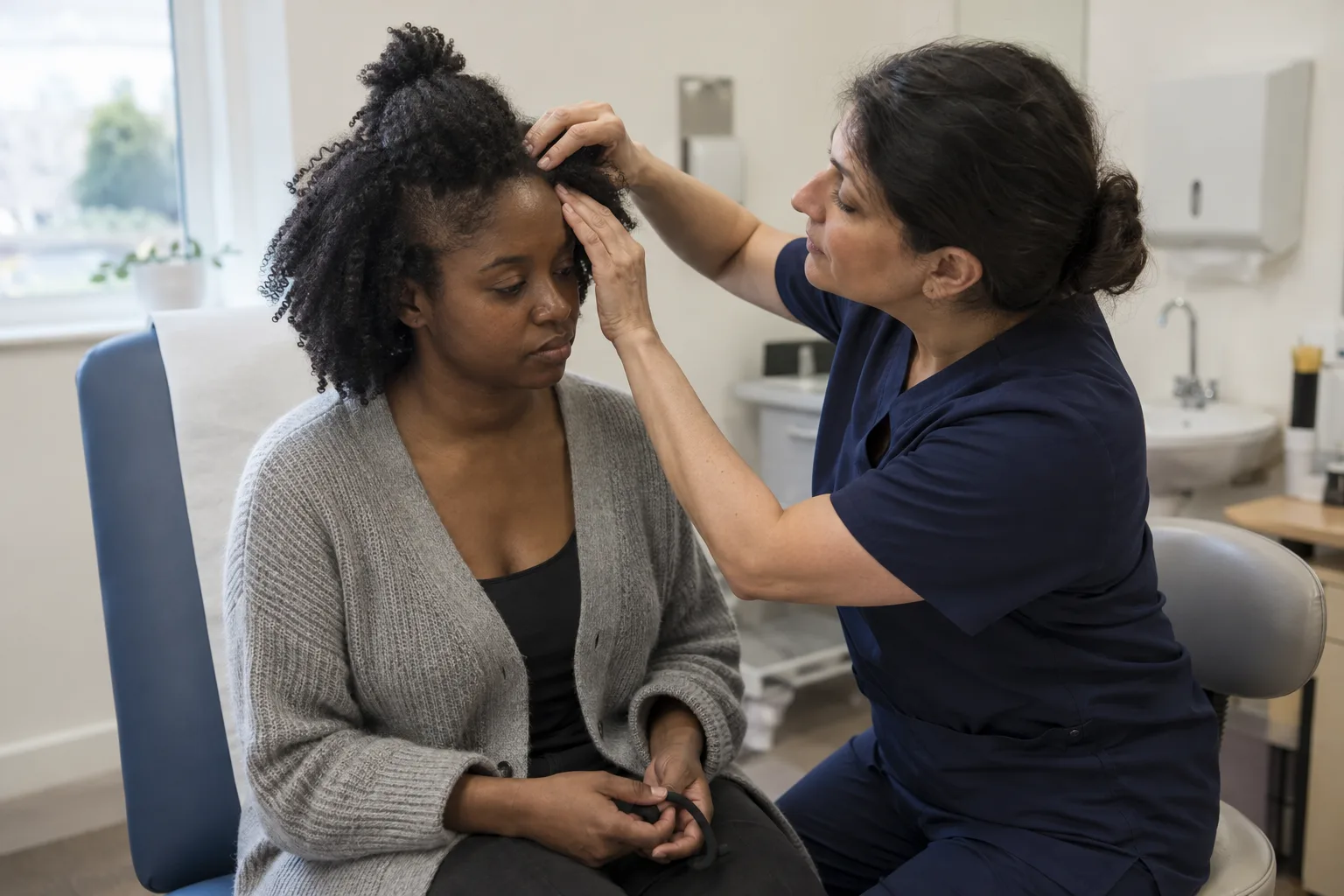
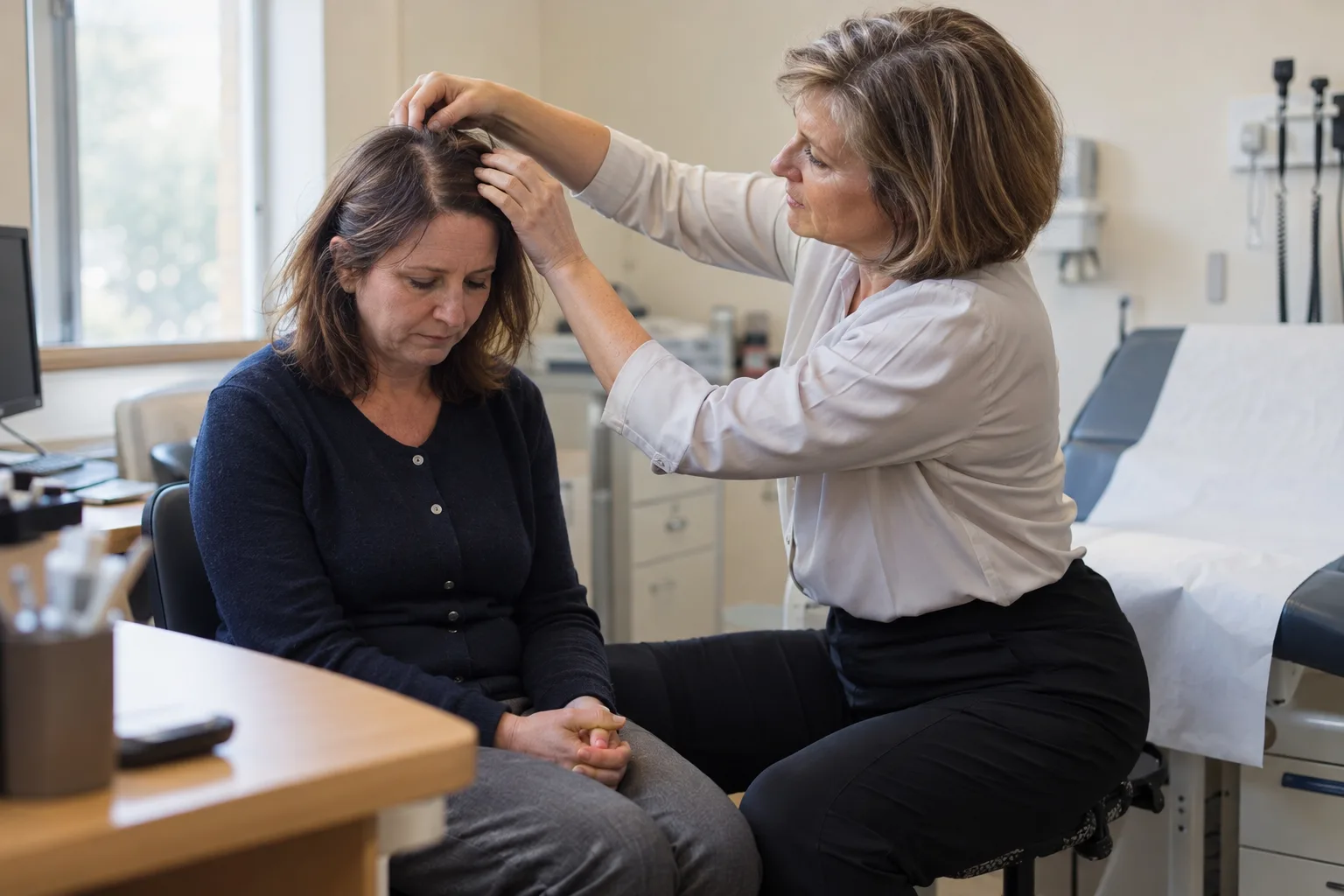
Contact a GP or the surgical team promptly for a sore, broken or inflamed area of scalp, particularly after prolonged immobility. Arrange assessment for sudden bald patches or continuing thinning; shedding lasting longer than six months also deserves review rather than indefinite watchful waiting.
For uncomplicated, short-lived telogen effluvium, treatment usually focuses on addressing the trigger and allowing recovery. Minoxidil, a medicine used for some forms of hair loss, is not automatically necessary. Its suitability depends on the diagnosis, medical history and whether another condition is present.
Be cautious about paying for procedures before that assessment. Evidence for platelet-rich plasma injections, which use a concentrated portion of a person's blood, is limited specifically for post-surgical shedding. Our review of PRP evidence for hair loss explains why findings for one diagnosis cannot simply be applied to another.
A GP can investigate medical contributors and consider referral to a dermatologist, a doctor specialising in skin and hair conditions. A trichologist can offer hair and scalp advice, but is not necessarily medically qualified; suspected disease or problems with a surgical wound need medical care.
Related: Traction alopecia: spotting hair loss caused by tight styles
Why this matters
Unexpected hair loss can add a visible reminder of illness just as someone is returning to work or social life. In the UK, starting with a GP can help separate a recovery-related change from a condition needing investigation, before money is spent on private treatments. A dermatologist or trichologist can advise on ongoing hair concerns, with medical assessment particularly important for patches, pain or persistent shedding. For people who want temporary coverage, our guide to NHS wigs and help with charges explains eligibility and financial support.
Common questions
- Why is my hair falling out after surgery?
- Surgery can trigger telogen effluvium, where more hairs enter the resting phase and later shed. Illness, blood loss, reduced food intake and medication changes around the operation may also contribute.
- How long after surgery can hair loss start?
- Shedding may become noticeable several months later. The American Skin Association describes a three-to-six-month window after a major stressful event, although timing varies and localised pressure-related loss follows a different process.
- Will my hair grow back after surgery?
- Hair usually regrows when the cause is temporary telogen effluvium and the trigger has resolved. Fullness takes longer to return than shedding takes to settle. Scarring or a separate hair loss condition can change the outlook.
- Does general anaesthetic cause hair loss?
- A direct causal link has not been established. Research has found an association between general anaesthesia and alopecia areata, but surgery and underlying illness complicate interpretation. Prolonged pressure on the head during an operation can also affect follicles.
- Should I take vitamins for hair loss after surgery?
- Supplements are generally appropriate only when a deficiency or specific medical need has been identified. Excess vitamin A or selenium can cause hair loss, and biotin can interfere with some blood tests.
- Do I need minoxidil for hair loss after surgery?
- Minoxidil is not automatically needed for temporary post-operative shedding. Addressing the trigger and allowing recovery is often enough. A clinician can assess whether another diagnosis makes hair-growth treatment appropriate.
- When should I see a doctor about hair loss after surgery?
- Seek prompt advice for scalp pain, broken skin or inflammation. Arrange assessment for sudden bald patches, continuing thinning or shedding lasting longer than six months. A GP can investigate possible contributors and consider a dermatology referral.
About the writer
Tom FairbairnMen's Health Reporter · Edinburgh
Tom covers male pattern hair loss, treatments and the growing online market, cutting through the marketing to the evidence.
More from TomSources
This article is original reporting by Thicker Thinking based on the sources above. Last reviewed 9 October 2026. It is for general information and is not medical advice. Speak to your GP, a dermatologist or a qualified trichologist about your own situation.