Hair Loss Causes
Frontal fibrosing alopecia: receding hairline cause explained
A scarring form of hair loss is being recognised more often in women with a receding hairline, and early action matters.
By the Thicker Thinking Editorial Team
Published · 6 min read
Quick answerFrontal fibrosing alopecia is a scarring hair loss that often starts with eyebrow thinning and a receding hairline. Early diagnosis and treatment can slow or halt further loss; regrowth on scarred skin is unlikely.
Frontal fibrosing alopecia (FFA) is being seen more often in clinics as a cause of a steadily receding hairline, especially in postmenopausal women, according to Mayo Clinic and acibademinternational.com. It can also affect eyebrows early on, which is a key clue for diagnosis.
Doctors describe FFA as a scarring process on the scalp, meaning the immune system’s inflammation damages hair follicles and they do not grow back once replaced by scar tissue. Recognising the signs promptly matters because treatment started early may slow or halt further loss.
What happened
Specialists outline a consistent pattern: gradual movement of the frontal hairline backwards, often preceded or accompanied by thinning or loss of the eyebrows. According to Mayo Clinic, the affected skin may look smooth and shiny where follicles have been destroyed, reflecting underlying scarring.
Patients commonly report itch, burning or tenderness at the hairline or eyebrows, signalling active inflammation. Doctors also note colour changes around follicles — red, purple or brown depending on skin tone — that point to ongoing irritation of the follicular openings.
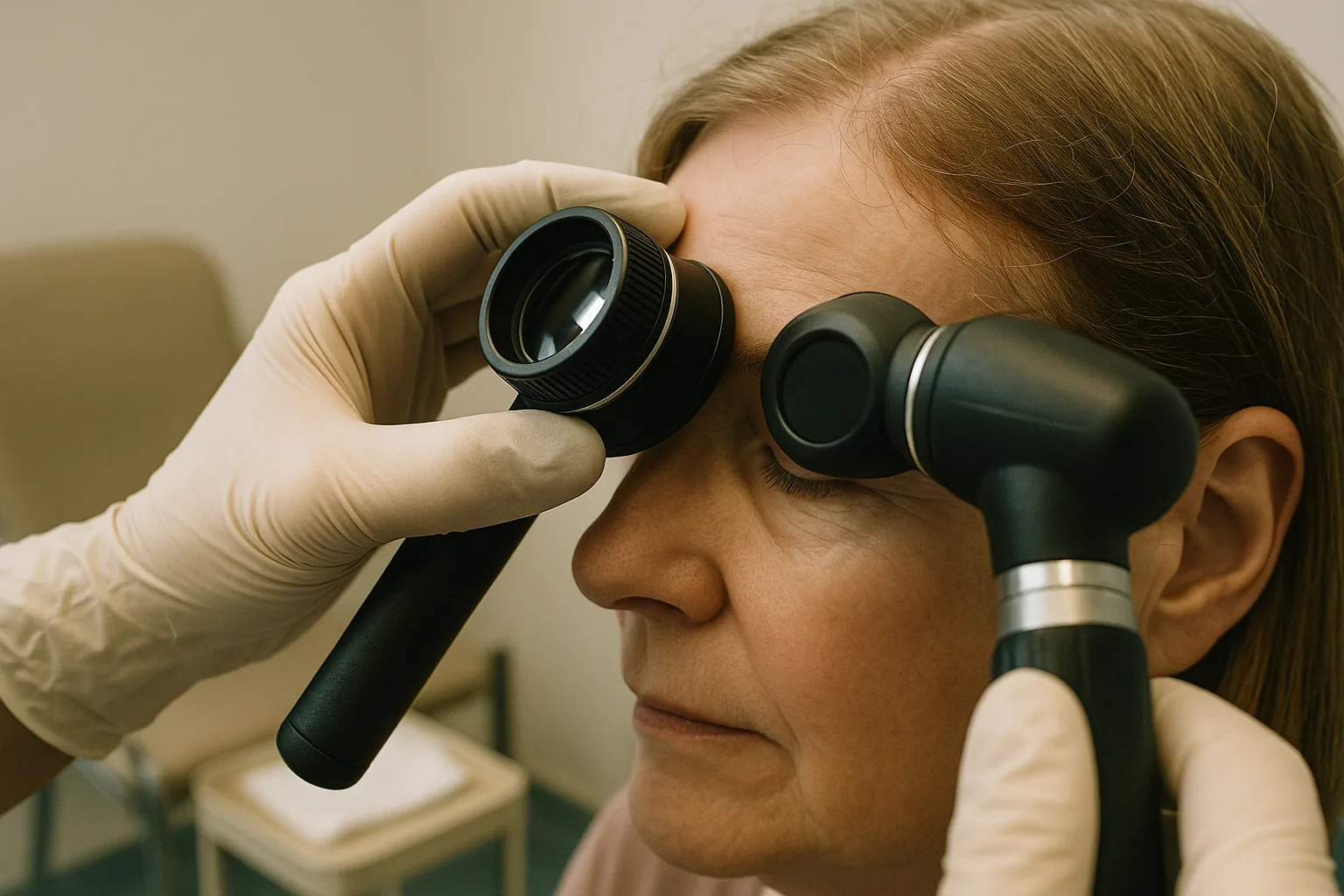
Mayo Clinic explains that diagnosis begins with a close scalp and eyebrow examination and questions about symptoms and medical history. When the picture is unclear or to confirm the scarring process, a small scalp biopsy is often performed and examined under a microscope.
acibademinternational.com adds that clinicians use dermoscopy — a magnified view of scalp and hair — and targeted blood tests to rule out other causes of diffuse shedding. In practice, this helps separate FFA from common non‑scarring conditions that behave differently and are treated in other ways.
Treatment plans are tailored to slow immune‑driven damage. According to Mayo Clinic, topical or injected corticosteroids are used to calm inflammation around follicles, sometimes alongside medicines that modulate the immune response such as hydroxychloroquine, tacrolimus or pimecrolimus.
To support retention in areas at risk, clinicians may add minoxidil to help limit further loss. Prescription anti‑androgen options such as finasteride or dutasteride are also used in selected patients to slow progression, but these are unsafe in pregnancy or when pregnancy is possible.
Some doctors also use antibiotics for their anti‑inflammatory effects on the follicle environment, aiming to reduce perifollicular swelling. Across approaches, the goal is disease control rather than regrowth on scarred skin, and responses vary by individual.
The background
FFA sits within lichen planopilaris, an umbrella for inflammatory scalp diseases that lead to scarring (cicatricial) alopecia. In FFA, immune cells cluster around follicles at the frontotemporal hairline and sometimes at the sides, eventually destroying the follicle’s growth machinery.
The earliest visible change may be eyebrow loss before the hairline shifts, a feature highlighted by Mayo Clinic and acibademinternational.com. In men, the same process can target facial hair, including the beard and sideburns, producing small areas of thinning or loss.
Doctors do not yet have a single confirmed cause. According to Mayo Clinic, genetics, hormonal factors, environmental exposures and immune dysregulation are all suspected contributors, which likely interact in ways that differ from person to person.
Because scarring means permanent loss where follicles are replaced by fibrosis, expectations focus on preventing further recession rather than regrowing hair at sites that have already scarred. This distinguishes FFA from many non‑scarring hair loss conditions that can recover once triggers are removed.
On examination, the scalp may show perifollicular scale or subtle discolouration at the active edge. Dermoscopy can reveal reduced follicle openings and signs of inflammation, helping clinicians separate FFA from pattern hair loss, which shows miniaturisation rather than follicle dropout.
Blood tests are not diagnostic for FFA itself but can exclude other contributors to shedding. acibademinternational.com notes that thyroid function, iron stores and a full blood count are common first checks when hair loss is diffuse or more than one cause is possible.
Differential diagnosis matters because hairline changes occur in several conditions. Traction alopecia from tight styles can recede the hairline but is non‑scarring if caught early; our guide on spotting hair loss caused by tight styles explains warning signs and when to ease tension.
Pattern hair loss can also thin the frontal area but typically preserves the very front edge and shows varying shaft diameters rather than smooth, shiny skin. Our overview of male pattern baldness signs and treatment sets out how clinicians identify miniaturisation.
People often notice extra strands at the hairline and worry about sudden shedding. A refresher on how much hair loss is normal can help frame what counts as expected daily shedding versus a change that merits medical review.
For anyone unsure which type they have, a broad primer on alopecia types, causes and warning signs describes how scarring and non‑scarring conditions differ and why timelines and scalp findings guide the next steps.
What people are saying
Dermatologists generally advise seeking assessment early if the hairline is moving or eyebrows are thinning, because timely anti‑inflammatory treatment has the best chance of limiting further loss. A GP can arrange referral or initial tests while you wait for a specialist.
Clinicians emphasise that FFA management is long‑term. Relapses can occur, and treatment plans are often adjusted over time, balancing benefits and side‑effects while monitoring symptoms such as itch or tenderness as markers of control.
Specialists commonly caution against self‑treating based on internet anecdotes. Medicines used in FFA have specific safety considerations, and finasteride or dutasteride must be avoided in pregnancy or when planning pregnancy, as noted by Mayo Clinic.
Practical care of the exposed hairline can help comfort and skin health. Gentle cleansers, avoiding harsh styling, and using sun protection on the forehead and scalp margin reduce irritation on areas where the protective hair barrier has thinned.
Some people look for cosmetic options while treatment works. Camouflaging powders or hairstyles that reduce visibility of recession can restore confidence, and NHS‑approved options are available for those considering prostheses; our explainer on NHS wigs, costs and help with charges outlines pathways.
Emotional support is part of care because visible hairline change can affect self‑image. Dermatology teams can signpost support groups or psychological services, and it is reasonable to ask for this alongside medical treatment for the condition itself.
As Mayo Clinic puts it, “Starting treatment early may help stop further hair loss.” This reflects the consensus aim across centres: suppress inflammation, preserve remaining follicles and set realistic expectations about regrowth.
What happens next
If you or your GP suspects FFA, expect a detailed scalp and eyebrow examination, photos for monitoring, and possibly dermoscopy at the hairline. A small punch biopsy may be taken from an active edge to confirm the scarring diagnosis under the microscope.
Your clinician will review medicines and health history to check for anything that could interact with treatment. Where shedding seems more general as well, targeted blood tests may be arranged to rule out common contributors and clarify whether more than one cause is present.
Treatment choices are individual. Anti‑inflammatory options such as topical or injected corticosteroids are often first‑line, with add‑on immunomodulators (for example hydroxychloroquine, tacrolimus or pimecrolimus) considered to maintain control, according to Mayo Clinic.
To help retain hair in at‑risk areas, minoxidil may be included. For some, anti‑androgen medicines such as finasteride or dutasteride are considered to slow progression, used with strict pregnancy precautions where relevant and regular review of response and tolerability.
Follow‑up usually tracks symptoms, scalp signs and photographs over months to judge stability. If tenderness, redness or ongoing recession continue, the plan is typically adjusted, which may mean changing medicines or combining approaches to settle inflammation.
Because established scarring does not regrow, discussions often cover styling, camouflage and practical care alongside medical therapy. Our piece on women’s hair loss causes and what helps has tips on everyday routines that are gentle on fragile hairlines.
Research into why FFA develops is ongoing, particularly the roles of hormones, immune pathways and environmental factors, as described by Mayo Clinic. For now, the most effective strategy is early recognition, confirmed diagnosis and a personalised plan to protect remaining follicles.
Why this matters
Frontal fibrosing alopecia can be subtle at first yet lead to permanent recession if missed. Knowing the early signs—especially eyebrow thinning—helps people seek timely assessment. If your hairline is moving or your eyebrows are sparser, speak to a GP, dermatologist or trichologist. Early, tailored treatment aims to calm inflammation and preserve remaining follicles, while supportive options—from styling to NHS wig services—can help with confidence during care.
Common questions
- what is frontal fibrosing alopecia
- Frontal fibrosing alopecia is a scarring hair loss that causes a receding hairline and often eyebrow thinning. Inflammation destroys follicles, and hair does not regrow where scarring has formed.
- does frontal fibrosing alopecia cause eyebrow loss first
- Often yes. According to Mayo Clinic and acibademinternational.com, eyebrow thinning or loss may appear before the hairline starts to recede, which is a key early warning sign.
- is hair loss from frontal fibrosing alopecia permanent
- Hair loss becomes permanent where scarring has replaced follicles. Early treatment may slow or halt further loss, but regrowth on scarred areas is unlikely.
- how do doctors diagnose frontal fibrosing alopecia
- Doctors examine the scalp and eyebrows, often use dermoscopy, and may take a small biopsy from the active edge to confirm scarring under the microscope.
- what treatments are used for frontal fibrosing alopecia
- Plans aim to calm inflammation and preserve follicles. Options include corticosteroids, minoxidil, finasteride or dutasteride, immunomodulators such as hydroxychloroquine, and sometimes antibiotics.
- can men get frontal fibrosing alopecia
- Yes. Men can develop frontal fibrosing alopecia, which may also involve facial hair, including the beard and sideburn areas.
- what causes frontal fibrosing alopecia
- The exact cause is unknown. According to Mayo Clinic, genetics, hormones, environmental factors and immune system changes may all play a role.
- when should i see a doctor about a receding hairline
- Seek advice promptly if your hairline is moving back or your eyebrows are thinning. Early assessment and treatment offer the best chance to limit further loss.
Sources
- Mayo Clinic: Frontal fibrosing alopecia - Mayo Clinic
- acibademinternational.com: What Causes Hair Loss? 10 Medical Reasons Explained
This article was written by Thicker Thinking using the sources listed above. It is for general information and is not medical advice. Speak to your GP, a dermatologist or a qualified trichologist about your own situation.