TrendingHair Loss Causes
Trichotillomania: understanding hair pulling and hair loss
Health guidance highlights why repeated hair pulling needs behavioural support, not blame, and how to get help for the resulting hair loss.
By the Thicker Thinking Editorial Team
Published · 5 min read

Quick answerTrichotillomania is a mental health condition involving repeated hair pulling that can cause thinning or bald patches. Treatment usually centres on habit reversal training, which helps people recognise pulling patterns and practise alternative actions.
Ubie published health guidance on trichotillomania on 7 October 2026, highlighting behavioural treatment for repeated hair pulling. On 11 October, the condition’s Wikipedia page received 816 views, around 36% above its typical daily total of approximately 598.
For people noticing missing lashes, thinning eyebrows or uneven scalp patches, the important distinction is between hair falling out and hair being pulled out. Trichotillomania involves difficulty controlling repeated pulling; recognising that pattern can change which treatment is most useful.
What happened
The advice draws attention to a cause of hair loss that needs a different approach from inherited thinning or temporary shedding. According to ubiehealth.com and acibademinternational.com, structured behavioural therapy is central to treatment, with scalp care and other support added according to the person’s needs.
Habit reversal training is a behavioural treatment often used within cognitive behavioural therapy, or CBT, which addresses patterns in thoughts and behaviour. It helps someone notice the movements, situations or sensations preceding pulling, then practise an action that cannot happen at the same time, such as gently closing their hands.
This is more specific than simply being told to relax. Someone whose hand moves towards their scalp while reading may need help recognising that movement. Someone who searches for hairs that feel coarse or uneven may need a strategy tailored to that sensory trigger.
The distinction also matters when choosing hair-loss products. A treatment aimed at stimulating growth does not, by itself, address the pulling behaviour. An assessment should establish what is happening before money is spent on treatments intended for a different diagnosis.
Patchy loss alone cannot confirm trichotillomania. Alopecia areata, an immune-related condition, and scalp infections can also produce patches. Our guide to alopecia types, causes and warning signs explains why apparently similar changes may need very different care.
The background
Trichotillomania belongs to a group known as body-focused repetitive behaviours: repeated actions directed at the body that become difficult to control. Diagnostic manuals place it alongside obsessive-compulsive and related disorders, but that classification does not mean everyone affected has obsessive-compulsive disorder, or OCD.
Clinicians consider more than appearance. Assessment includes repeated attempts to reduce or stop pulling, the distress or disruption it causes, and whether another medical condition better explains the symptoms. Occasional hair touching or grooming is not automatically a mental health disorder.
Acibadem describes both focused pulling, when someone consciously responds to an urge or uncomfortable sensation, and automatic pulling, which happens with little awareness during another activity. A person can experience both. This helps explain why an instruction to simply stop is rarely an adequate response.
Some people experience tension beforehand and relief afterwards, but that sequence is not universal. Boredom, frustration, anxiety and the feel of an individual hair can all be relevant. Pulling can also happen during otherwise quiet activities, including watching television or using a computer.
The underlying causes are not fully understood. Genetic susceptibility, learning and biological processes may contribute, alongside environmental factors. Stress can increase pulling for some people, but describing every case as stress-related risks overlooking other triggers and treating the person as responsible for controlling them unaided.
Pulling may leave irregular patches and hairs of different lengths, although these signs are not diagnostic on their own. It differs from traction alopecia caused by tight hairstyles, where sustained tension from styling damages hair. Both involve physical forces, but their prevention and treatment differ.
Regrowth depends partly on whether the follicles, the structures in the skin that produce hair, remain healthy. Hair can grow again after pulling reduces or stops. Repeated injury can sometimes cause scarring and lasting loss, so no clinician can promise a fixed recovery time without examining the affected area.
What people are saying
The consistent clinical message is that shame is not a treatment. Mental health professionals generally encourage a practical, non-judgemental discussion of pulling, including what happens before and afterwards. People may conceal patches or avoid appointments because they fear criticism, making the response they receive particularly important.
Families and partners can help by asking what support would be welcome rather than repeatedly checking someone’s hands or hair. For a child or teenager, punishment can increase distress and make disclosure harder. A supportive adult can instead help arrange an age-appropriate assessment and work with the treatment team.
Ubie recommends recording pulling situations to identify patterns. A useful note might include the activity, mood, location and first sign of an urge. The purpose is to guide treatment, not to produce a perfect record or turn every episode into a personal judgement.
Therapists may also suggest stimulus control, meaning changes to surroundings that make pulling less automatic. Keeping a comfortable object within reach during television viewing or using a suitable barrier can help some people. These measures should be tailored to the individual and should not cause discomfort or skin irritation.
Relaxation, physical activity and mindfulness may support treatment when tension is a trigger. They are not substitutes for targeted behavioural work, however. Similarly, an improvement in general anxiety does not necessarily mean that an established pulling pattern will disappear without additional help.
Dermatologists generally advise caution with products promoted as a complete answer to unexplained hair loss. Oils, supplements and growth products do not teach someone how to interrupt pulling. Our review of herbs for hair growth and the evidence behind them explains why product claims need careful scrutiny.
What happens next
In the UK, a GP is a sensible starting point when pulling is hard to control, causes distress or produces visible loss. It can help to explain both the hair changes and the behaviour, even if that feels awkward. A written note can make the conversation easier.
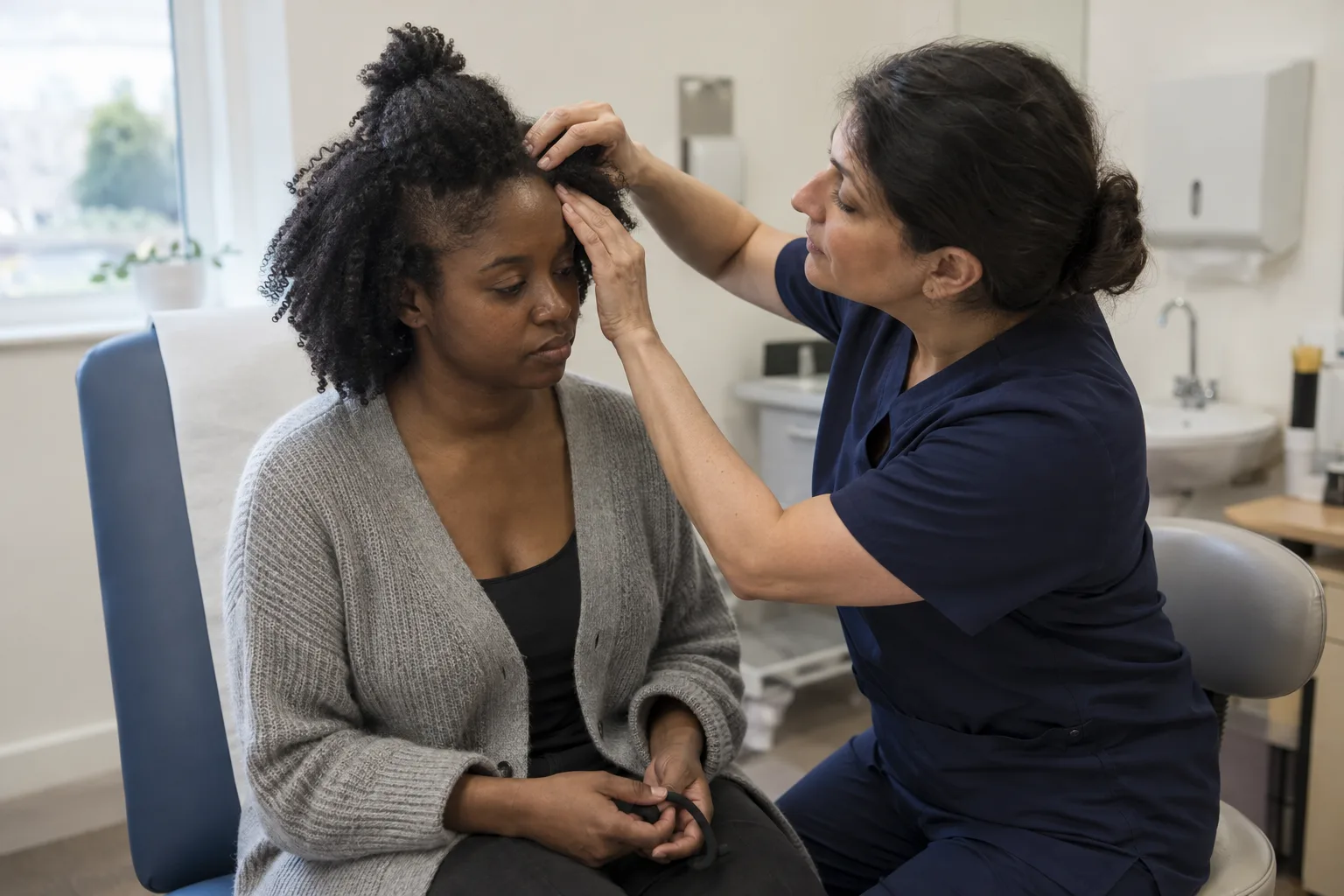
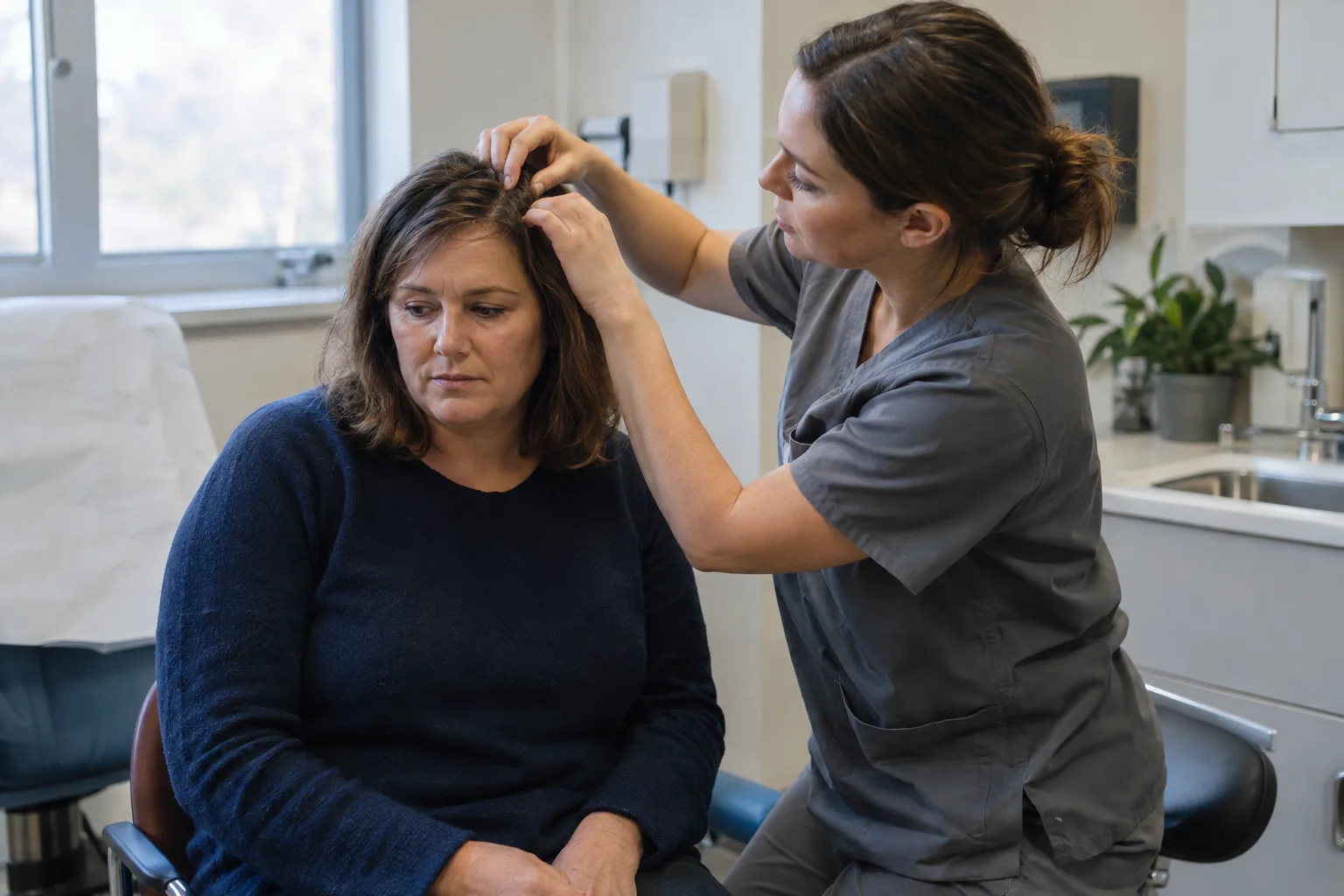
A dermatologist can assess uncertain hair loss, scalp damage and the prospects for regrowth. A trichologist may offer hair and scalp advice, but is not necessarily medically qualified. Persistent pulling also warrants access to a mental health professional with experience in habit reversal training or related behavioural treatment.
Medicines are not a straightforward replacement for therapy. Evidence for drug treatment of trichotillomania remains limited. Antidepressants may be appropriate for accompanying depression or anxiety, but commonly used antidepressants have not shown consistent benefit for the pulling behaviour itself.
N-acetylcysteine, or NAC, is a supplement studied for this condition, with some encouraging but limited findings. Results are not consistent across age groups, and availability without a prescription does not establish suitability. Discuss it with a doctor rather than starting it independently, particularly for a child.
Follow-up can track shorter episodes, earlier recognition of urges and improved daily functioning, not just changes in photographs. Symptoms can fluctuate, and a return to pulling may mean strategies need adjusting. It does not erase earlier progress or rule out further improvement.
Increasing redness, swelling, discharge, pain or fever needs prompt medical assessment because damaged skin can become infected. Severe emotional distress also deserves urgent support. If someone is in immediate danger of harming themselves or cannot stay safe, call 999 or go to A&E.
Why this matters
Hair-loss care can miss an important part of the problem if it focuses only on the scalp. People with trichotillomania may need both behavioural treatment and practical support with visible changes; our guide to NHS wigs and help with costs explains one option where eligibility applies. Speak to a GP if pulling is difficult to control or affects daily life, and seek a dermatologist’s assessment for uncertain patches or damaged skin. A trichologist can offer additional hair-care advice, but does not replace medical or psychological care.
Common questions
- What is trichotillomania?
- Trichotillomania is a recognised mental health condition involving repeated hair pulling that is difficult to control. It can affect scalp or body hair and cause visible loss, distress or disruption to daily life.
- Can you pull your hair out without realising?
- Yes, pulling can happen automatically with little immediate awareness, such as while reading or watching television. Other episodes are more deliberate responses to urges or sensations, and some people experience both patterns.
- What helps you stop pulling your hair?
- Habit reversal training is a central treatment. It teaches you to recognise early signs of pulling and practise an incompatible action, with strategies tailored to your triggers by a trained professional.
- Does hair grow back after trichotillomania?
- Hair can regrow if the follicles remain healthy and pulling reduces or stops. Repeated injury can sometimes cause scarring and permanent loss. A dermatologist can assess the affected area, but recovery times vary.
- Is trichotillomania caused by stress?
- Stress can trigger or increase pulling, but it is not the only factor. Boredom, sensory cues and learned patterns may also contribute, and the underlying causes are not fully understood.
- Does NAC work for trichotillomania?
- N-acetylcysteine, or NAC, has shown some promise, but the evidence is limited and findings differ across age groups. Discuss it with a doctor before using it; being sold as a supplement does not make it suitable for everyone.
- Should I see a GP about pulling my hair out?
- Yes, particularly if pulling is difficult to control, causes hair loss or affects your wellbeing. A GP can assess your needs and discuss specialist support. Increasing pain, redness, swelling, discharge or fever needs prompt medical attention.
Sources
- ubiehealth.com: How to Stop Pulling Hair Now: Fast Trichotillomania Relief | Ubie Doctor's Note
- acibademinternational.com: Trichotillomania (Hair Pulling): Causes & Treatment
This article was written by Thicker Thinking using the sources listed above. It is for general information and is not medical advice. Speak to your GP, a dermatologist or a qualified trichologist about your own situation.