Hair Loss Causes
Can protein deficiency cause hair loss? What to know
Protein matters for healthy hair, but unexplained shedding needs a broader assessment than a change of diet.
By the Thicker Thinking Editorial Team
Published · 6 min read
Quick answerSevere protein deficiency can cause hair loss, but it is not the usual explanation for thinning or shedding. Eating extra protein is unlikely to help if you already get enough; a GP can check for nutritional problems and other causes.
Severe protein deficiency can lead to hair loss, but most people experiencing thinning do not need to eat more protein to address it, according to Harvard Health. For someone eating a varied diet, with a normal appetite and no difficulty absorbing nutrients, another explanation is more likely.
The distinction matters when choosing between changing meals, buying supplements and seeking medical advice. Everyday Health also identifies nutritional shortfalls as a possible contributor to shedding, alongside problems such as low iron, thyroid disease and medication effects. Hair loss alone cannot establish which, if any, of these is responsible.
What happened
Harvard Health’s advice draws a boundary between meeting the body’s nutritional needs and treating hair loss. Protein malnutrition can disrupt normal growth, but adding protein when intake is already adequate is unlikely to prevent shedding or slow thinning. A nutritional remedy needs a nutritional problem to address.
This is particularly relevant because hair is largely made from keratin, a structural protein. Digestion breaks dietary protein into amino acids, the smaller components the body uses to build its own proteins. Nine amino acids are described as essential because they must come from food rather than being made by the body.
That biological need does not mean that progressively larger amounts produce progressively thicker hair. Protein requirements vary with factors including body size, activity, age and pregnancy. A healthy diet supports normal hair production; it does not override every medical or inherited process affecting a follicle, the structure in the skin that produces hair.
There is also a difference between hair falling from the follicle and strands snapping along their length. Heat, bleaching and other chemical treatments can damage the hair shaft and cause breakage. Short, broken strands may call for changes to hair care rather than an assumption that the diet is deficient.
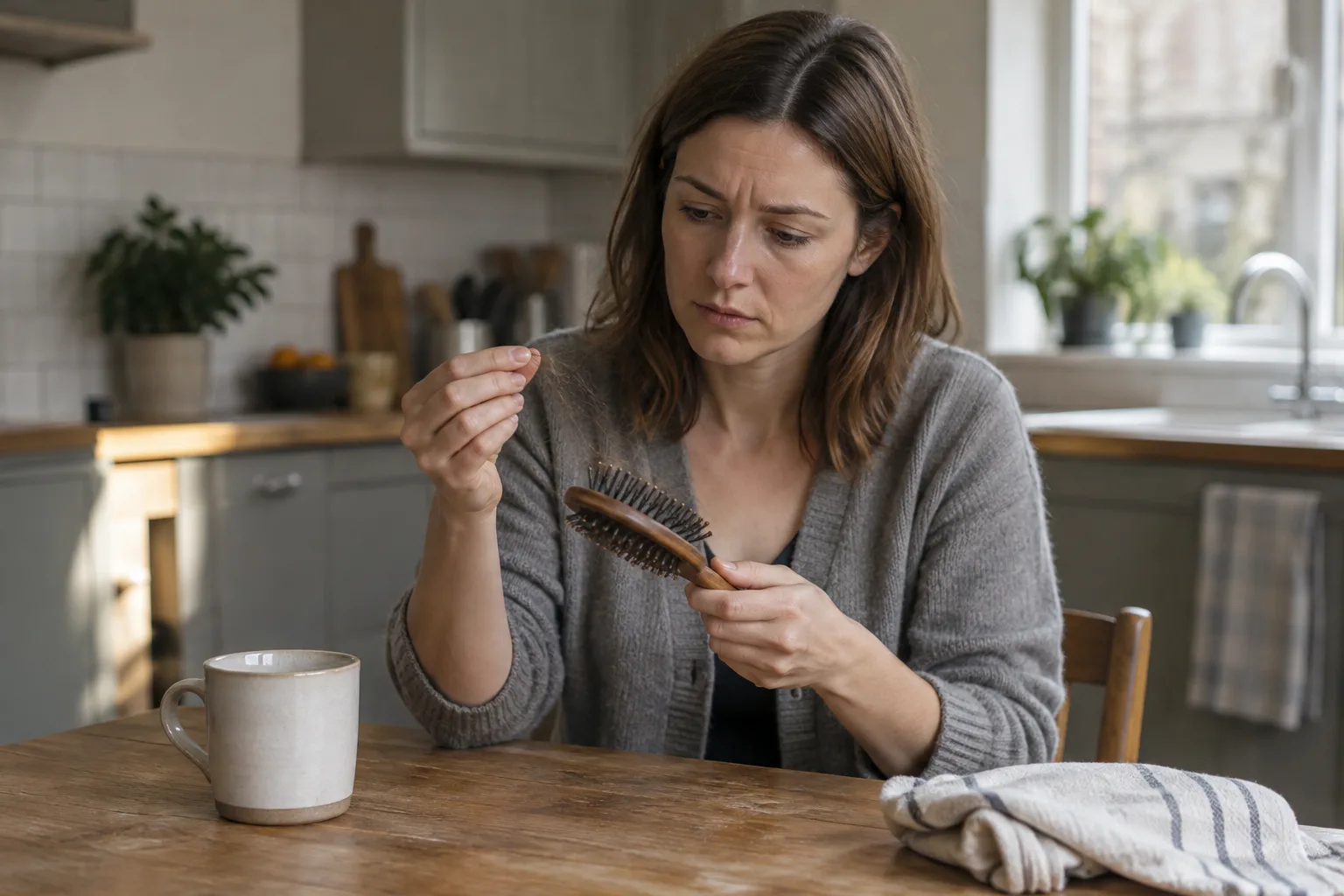
Nor does every hair in a brush represent abnormal loss. The American Academy of Dermatology puts usual daily shedding at roughly 50–100 hairs, as reported by Everyday Health. Counting is rarely a useful diagnostic exercise: a sustained change from your usual shedding or visible loss of density deserves more attention.
Our guide to alopecia types, causes and warning signs explains why the distribution of hair loss matters. Diffuse shedding, a receding hairline and distinct bald patches can point towards different conditions, even when they first become noticeable during washing or styling.
The background
When nutrition deserves closer attention
Protein malnutrition becomes more plausible when someone cannot obtain, eat or absorb enough food. Harvard Health identifies restricted food access, poor appetite, swallowing difficulties and digestive disorders among the relevant risks. Someone may also need practical help with shopping, preparing meals or eating, rather than advice simply to choose different foods.
Severe dietary restriction and eating disorders can compromise nutrition. Depression, alcohol dependence and repeated hospital admissions may also make adequate intake harder to maintain. These circumstances warrant sensitive medical support; describing the problem as a lack of willpower or a poor food choice misses the underlying difficulty.
The effects extend beyond appearance. Significant protein malnutrition can contribute to muscle weakness, reduced energy, impaired immune function and slower wound healing. These symptoms are not specific enough to diagnose a deficiency at home, but hair changes alongside them strengthen the case for a wider health assessment.
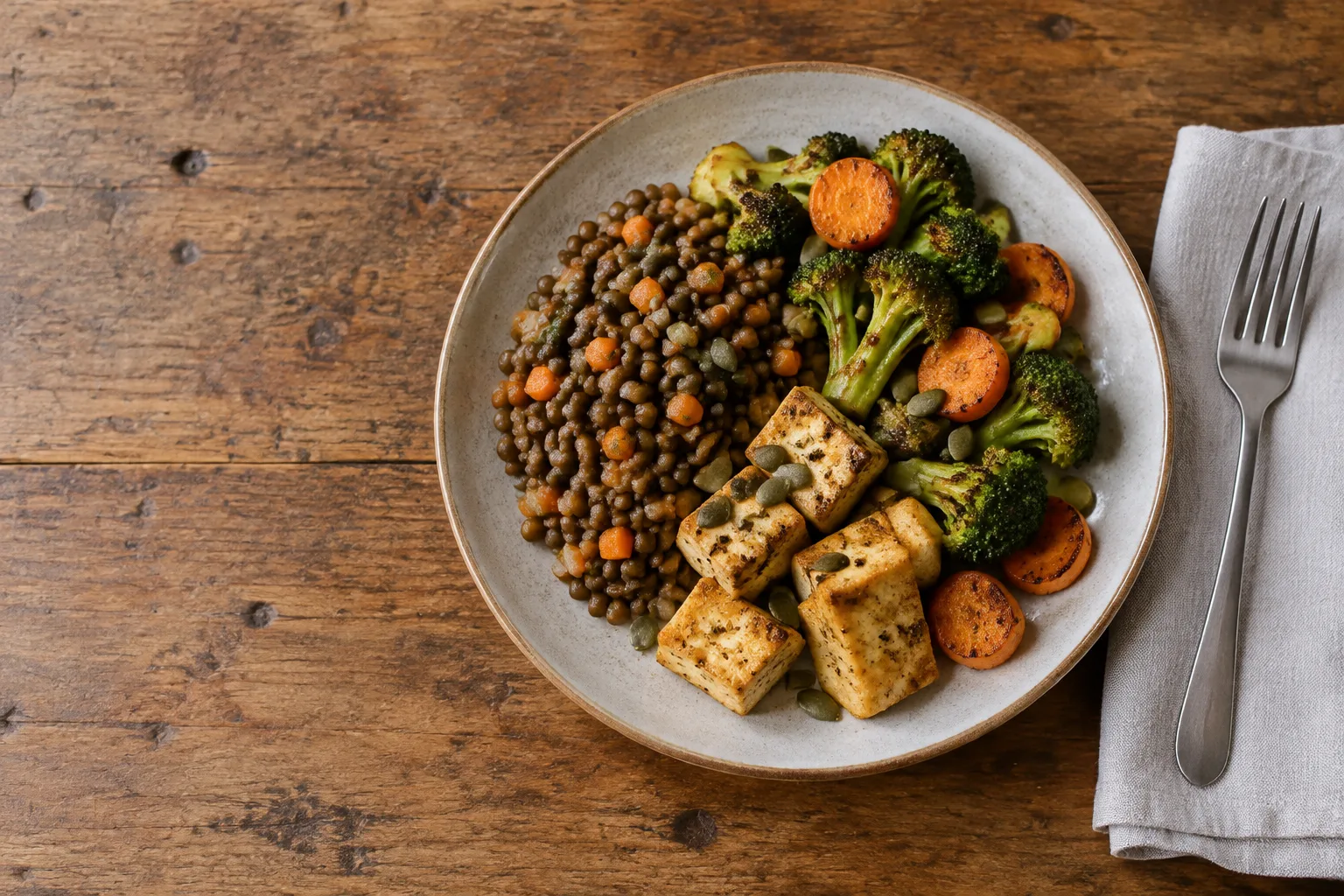
A vegetarian or vegan diet does not automatically mean low protein intake. Beans, lentils, tofu, nuts and seeds can contribute protein, while eggs, dairy products, fish and meat provide other options according to individual preferences. Variety and adequate overall food intake matter more than whether meals fit a particular dietary label.
Why shedding can arrive later
A major nutritional shortfall can trigger telogen effluvium, a disruption in which more hairs than usual move into the resting stage of the growth cycle. The resulting shedding tends to be spread across the scalp rather than confined to one sharply defined patch.
The delay can make the connection difficult to spot. Everyday Health, citing Cleveland Clinic, notes that shedding associated with inadequate protein may become apparent after about two to three months. Looking only at what you ate last week can therefore overlook a longer period of illness, restriction or weight loss.
Major physical stress can produce a similar delayed response without protein deficiency being the sole cause. Our explanation of hair loss after surgery covers how recovery, illness and nutritional changes can overlap. Several contributors may need attention at the same time.
What people are saying
Dermatologists generally advise identifying the type of hair loss before selecting a treatment. Gradual patterned thinning involves changes in follicle function associated with inherited susceptibility and hormones. Alopecia areata, by contrast, involves the immune system mistakenly attacking hair follicles and often causes patches. Neither can be diagnosed from a food diary alone.
Dietitians assess more than a single nutrient. They consider overall energy intake, recent weight changes, food variety and barriers to eating. A person can focus heavily on protein while still eating too little overall, particularly during a restrictive weight-loss diet. Correcting that wider imbalance may be more useful than adding one supplement.
Claims about hair-growth products need a separate evidence check. Evidence that extra protein supplements improve hair growth in people without a deficiency is limited. The same distinction between a plausible biological role and a demonstrated treatment benefit runs through our assessment of herbs marketed for hair growth.
Products applied to the hair answer a different question again. Everyday Health reports that protein-containing treatments may improve the condition of existing strands and help reduce breakage, but they have not been shown to stimulate new growth. A smoother hair shaft is not evidence that an underlying cause of shedding has been treated.
What happens next
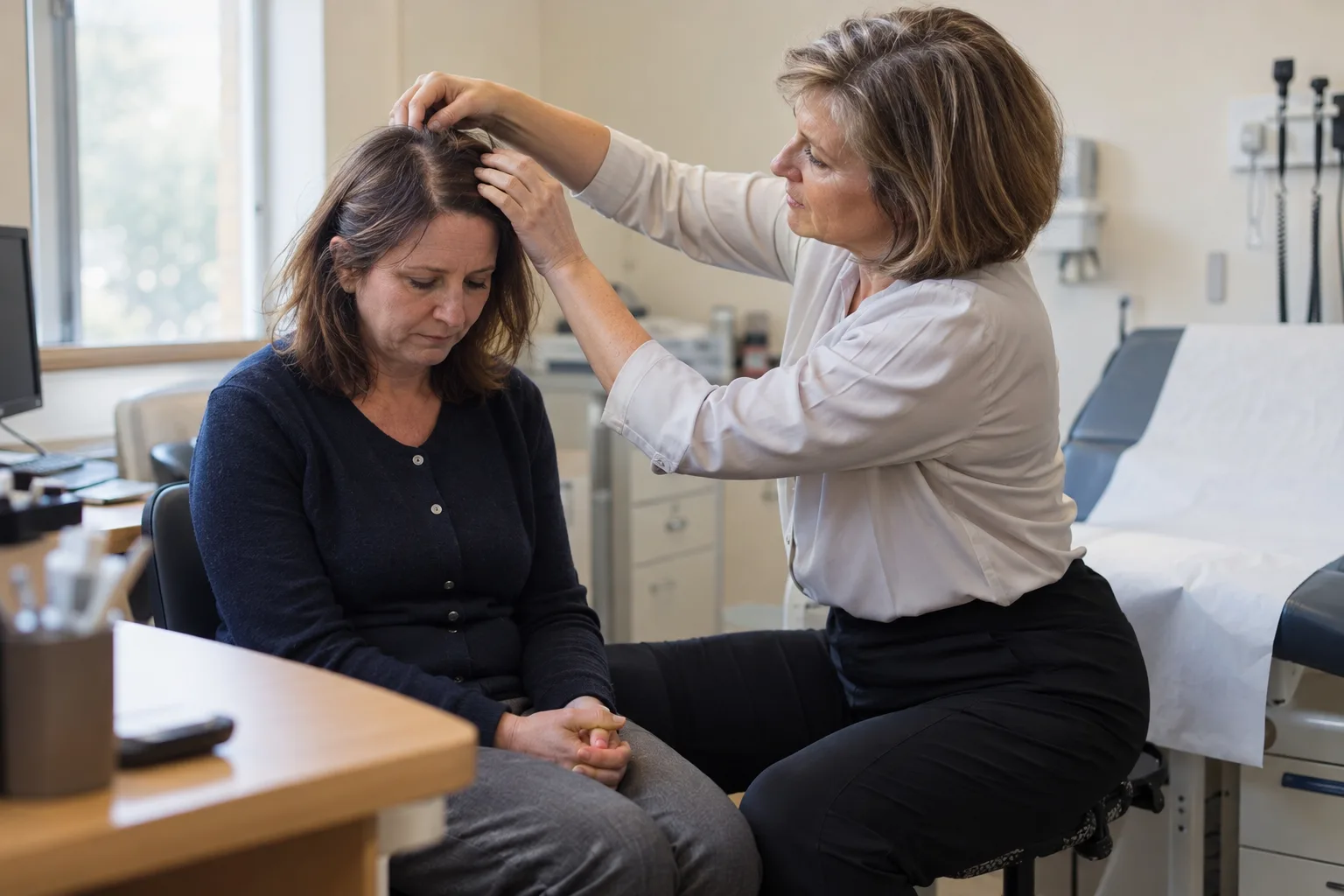
For persistent or unexplained changes, a GP appointment is a sensible starting point. Bring a brief account of when shedding began, whether thinning is localised or widespread, and any recent illness, weight change or dietary restriction. Photographs taken at intervals under similar conditions can help document changes without daily hair counting.
Mention prescribed medicines, over-the-counter treatments and supplements. Some medicines can affect hair cycling, but stopping treatment without advice may create other health risks. Hormonal changes also deserve discussion: our guide to birth control and hair loss explains why starting or stopping contraception can be relevant.
Tests should follow the history and examination rather than replace them. A GP may consider blood tests for iron status, thyroid function or other suspected problems. Blood protein measurements sometimes contribute to an assessment, but inflammation, liver disease and kidney disease can affect results; they are not a simple score of dietary adequacy.
Seek earlier assessment for rapidly developing bald patches, scalp pain, inflammation or scarring. Unintentional weight loss, ongoing digestive symptoms or difficulty swallowing also need attention. A dermatologist can assess suspected scalp disease, while a registered dietitian can help when nutritional intake is inadequate. A trichologist may offer additional hair and scalp advice.
If a nutritional trigger is confirmed and corrected, improvement still takes time because follicles follow a growth cycle. Shedding may take months to settle, and visible density takes longer to recover. Continuing loss should prompt reassessment rather than an assumption that ever more protein is needed.
Why this matters
For people living with hair loss in the UK, nutrition advice can easily become another source of expense or self-blame. A balanced diet supports health, but it cannot be expected to correct every cause of thinning: female pattern hair loss, for example, needs its own assessment and treatment discussion. Speak to a GP if shedding persists, changes quickly or accompanies other symptoms. A dermatologist or suitably qualified trichologist can help clarify hair and scalp concerns, with dietetic support where eating or absorption is a problem.
Common questions
- Can not eating enough protein cause hair loss?
- Yes, severe protein deficiency can cause hair loss. It is less likely if you eat a varied diet, have a normal appetite and absorb nutrients normally. Shedding alone does not diagnose a deficiency.
- Will eating more protein stop my hair falling out?
- Extra protein is unlikely to stop hair loss if you already get enough. Correcting inadequate nutrition may help when it is a genuine trigger, but inherited thinning, scalp conditions and other causes need different approaches.
- How long does it take for low protein to affect hair?
- Diet-related shedding may become noticeable after about two to three months. This delay reflects the hair growth cycle, so the relevant nutritional problem may have started well before you noticed extra hairs falling.
- Can a vegan diet cause protein-related hair loss?
- A vegan diet does not automatically cause protein deficiency or hair loss. Beans, lentils, tofu, nuts and seeds can provide protein. Adequate overall food intake and dietary variety remain important.
- Do protein hair treatments help hair grow?
- Protein-containing hair treatments have not been shown to stimulate new growth. They may improve the condition of existing strands and reduce breakage, which is different from treating hair loss at the follicle.
- Can a blood test show if protein deficiency is causing hair loss?
- Blood tests can contribute to an assessment, but cannot establish the cause on their own. Protein measurements are affected by several health conditions. A GP considers symptoms, diet and examination findings when deciding which tests are useful.
- When should I see a GP about hair loss and diet?
- See a GP for persistent or unexplained shedding, particularly with weight loss, weakness, digestive symptoms or difficulty eating. Rapid bald patches, scalp pain or inflammation warrant earlier assessment rather than relying on dietary changes.
Sources
- Harvard Health: Hair Loss and Protein Deficiency - Harvard Health
- everydayhealth.com: What to Know About Protein for Hair Growth
This article was written by Thicker Thinking using the sources listed above. It is for general information and is not medical advice. Speak to your GP, a dermatologist or a qualified trichologist about your own situation.