Hair Loss Causes
Birth control and hair loss: why the pill can affect shedding
Hormonal changes can affect the hair cycle, but recognising the pattern of loss matters before changing contraception or starting treatment.
By the Thicker Thinking Editorial Team
Published · 6 min read
Quick answerBirth control pills can trigger hair shedding in some people, including after starting, switching or stopping them. This is often temporary, but persistent thinning needs assessment because inherited hair loss and other health conditions may also be involved.
Birth control pills can be linked to hair loss both during use and after stopping, according to patient guidance from Healthline and Kaiser Permanente. For people noticing extra hair in their brush, the practical challenge is distinguishing a temporary response to changing hormones from thinning that needs a different approach.
Changing contraception without advice can complicate that picture and leave someone without reliable pregnancy protection. A GP or sexual health clinician can review the suspected side effect alongside contraceptive needs, while an examination of the scalp can help establish whether the pill is the most likely explanation.
What happened
Healthline identifies starting, switching and stopping oral contraception as possible circumstances surrounding hair changes. Kaiser Permanente also recognises the pill as a potential contributor to hair loss, particularly in people with an inherited tendency towards thinning. Neither situation means that everyone taking hormonal contraception will develop a problem.
The delayed effect is especially important. Kaiser Permanente advises that shedding may start two or three months after oral contraception is stopped and can continue for around six months before settling. This is a possible course rather than a deadline: individual recovery varies, and ongoing loss deserves review.
One explanation is telogen effluvium, a disturbance in the hair cycle that causes more hairs than usual to enter a resting phase before shedding. The follicles — the structures in the skin that produce hair — remain capable of growing new strands. This differs from conditions that permanently damage follicles.
A hormonal change can therefore precede visible shedding by several months. Looking only at medicines taken in the week hair loss becomes noticeable may miss the relevant trigger. Recent illness, surgery, childbirth or substantial weight loss can create a similar delayed response and should also be considered.
The distribution provides another clue. Telogen effluvium generally causes shedding across the scalp rather than isolated bald patches. Our guide to alopecia types and their warning signs explains why patchy loss, inflammation and progressive thinning need different assessments.
The background
Hair follicles do not all follow the same schedule. Anagen is the active growth phase, which lasts years, while telogen is a resting phase before a hair is released. Because follicles normally move through these stages at different times, some daily shedding is expected without an overall reduction in density.
Oral contraceptives come in two broad groups: the combined pill contains oestrogen and a progestogen, while the progestogen-only pill contains no oestrogen. Progestogens are manufactured hormones that act like progesterone. These preparations prevent pregnancy through effects including thickening cervical mucus and, depending on the pill, preventing egg release.
Some progestogens have greater androgenic activity than others. This means they can act more like androgens, a group of hormones that includes testosterone. In susceptible follicles, androgen-related effects may contribute to thinning, although the response to a particular contraceptive cannot be predicted reliably from its ingredients alone.
Female pattern hair loss is a separate, usually gradual process in which affected follicles produce finer hairs. A widening parting may be more noticeable than sudden shedding. As our explanation of female pattern baldness and treatment options sets out, this can overlap with temporary hair-cycle disruption.
Polycystic ovary syndrome, or PCOS, can cause scalp thinning alongside irregular periods, acne or increased facial hair. The pill may be prescribed to manage some PCOS symptoms, making the relationship more complicated than contraception simply causing or preventing hair loss. Thyroid disease and iron deficiency are other possible explanations a clinician may investigate.
Some combined pills can help manage androgen-related symptoms, but evidence comparing contraceptives specifically for scalp hair outcomes is limited. There is no universally best pill for hair loss. A preparation suitable for one person may be inappropriate for another because of their medical history or contraceptive priorities.
What people are saying
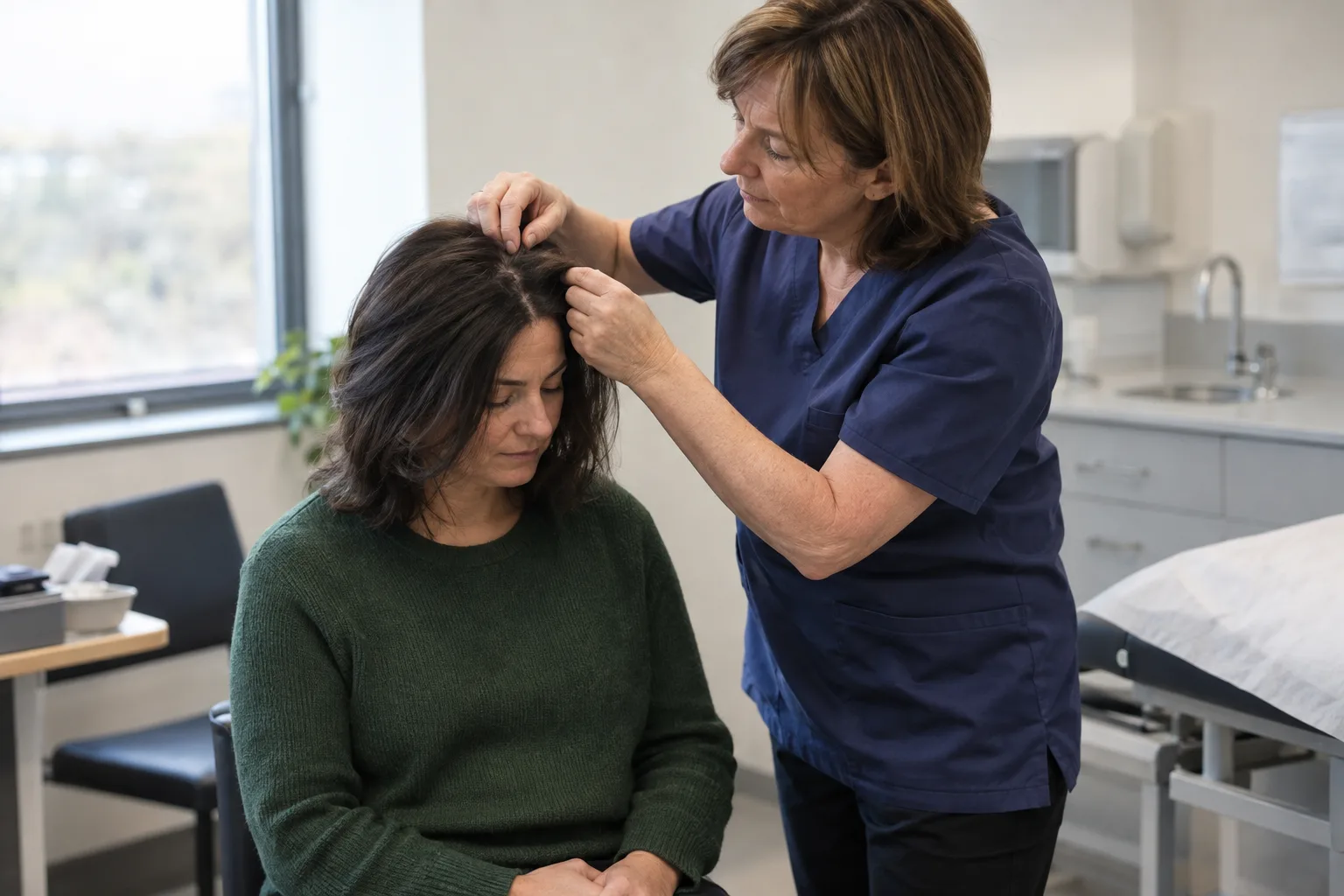
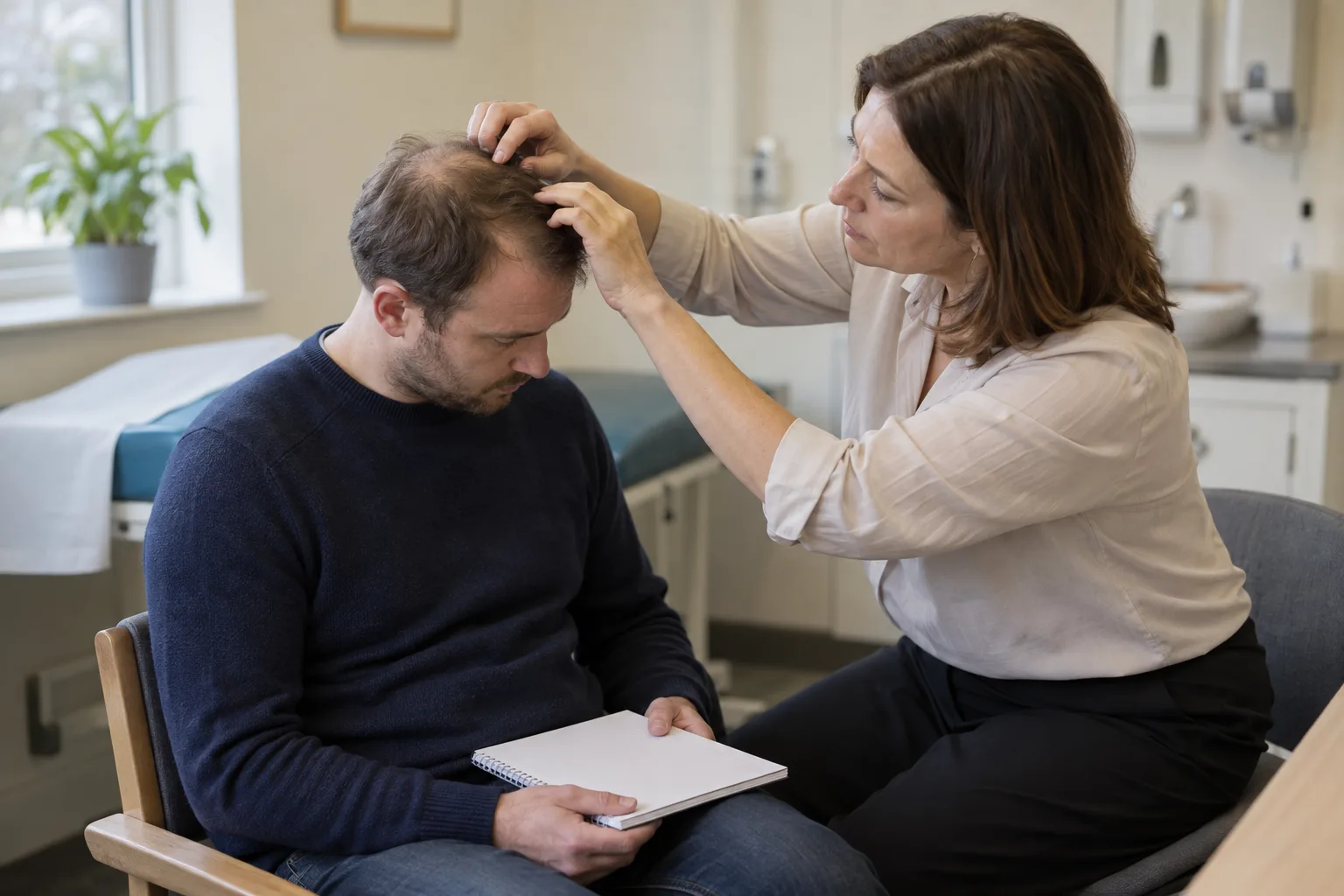
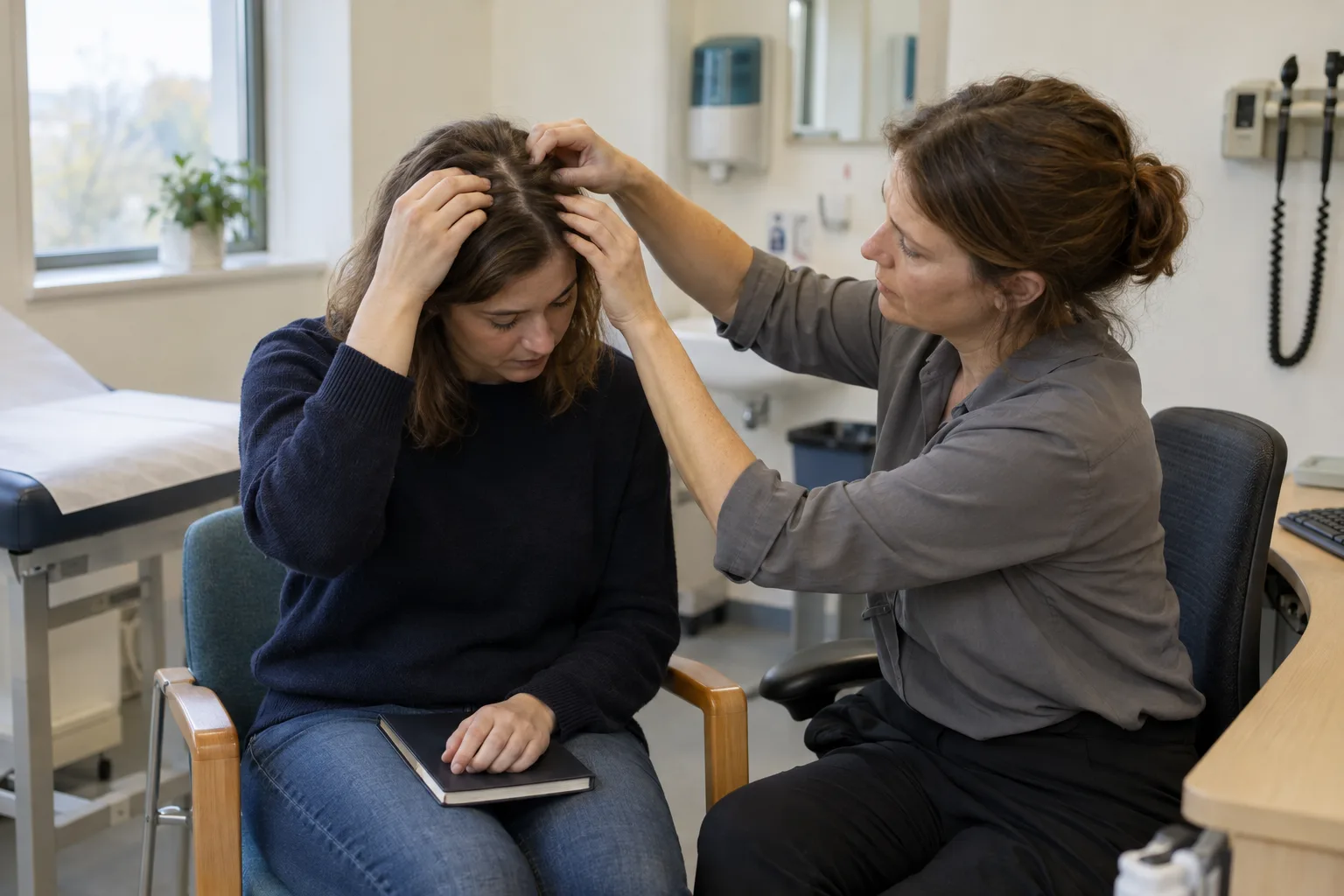
Dermatologists generally advise establishing the type of hair loss before treating it. An assessment usually covers when shedding began, whether density has changed, family history, scalp symptoms, other medicines and recent health events. Examination may include a gentle hair-pull test or magnified inspection of the scalp.
Blood tests are selected according to the history and findings rather than ordered automatically for everyone. For example, a clinician may check iron stores or thyroid function when symptoms suggest a possible problem. Hormone testing may be considered when thinning accompanies features such as new facial hair or menstrual irregularity.
Where PCOS is suspected, the discussion extends beyond hair to menstrual health and wider symptoms. Our guide to PCOS-related hair loss and when to seek advice explains why coordinated care is more useful than treating scalp thinning in isolation.
Contraceptive prescribers also need to weigh safety. Oestrogen-containing contraception is unsuitable for some people, including those with certain blood-clot histories or migraine with aura, which involves neurological symptoms such as visual disturbances. Choosing a pill simply because it is promoted as better for hair can overlook these considerations.
Hair-loss medicines require a separate suitability check. Minoxidil can help some people with female pattern hair loss, but it is not routinely needed for a short-lived episode of telogen effluvium. It should be avoided during pregnancy or when trying to conceive, and breastfeeding also requires medical advice.
Finasteride is not a routine treatment for women and must not be used during pregnancy because it can harm fetal development. Selected specialist use does not make it an appropriate self-treatment for shedding after a pill change. Pregnancy plans should be raised before any hair-loss prescription is considered.
What happens next
Before an appointment, write down the names of current and recently stopped medicines, when contraception changed and when shedding became noticeable. Include non-prescription supplements and major health events. Photographs of the parting taken periodically under similar conditions can show changes in density more usefully than counting every fallen hair.
If a contraceptive change is agreed, ask how to maintain pregnancy protection during the transition and whether temporary additional precautions are needed. A non-hormonal option may be worth discussing, but it has its own benefits and drawbacks. Repeatedly switching pills without a plan can make the cause harder to assess.
For uncomplicated telogen effluvium, addressing the trigger and allowing the hair cycle to recover are usually central. Shedding may improve before hair looks fuller because new strands need time to gain length. Persistent shedding beyond roughly six months, or continuing loss of density, warrants reassessment rather than indefinite waiting.
Gentle handling can reduce breakage while recovery is monitored: avoid tight styles, aggressive brushing and excessive heat. Eating enough protein and a varied diet supports normal growth, but supplements do not automatically speed recovery. Our review of herbs for hair growth and the evidence behind them examines why marketing claims need caution.
Seek earlier medical advice for distinct bald patches, scalp pain, marked redness, heavy scaling or areas that appear scarred. These are not typical features of straightforward hormone-related shedding. Hair loss that is affecting sleep, confidence or daily life is also a valid reason to ask for help, even before its cause is clear.
Why this matters
For people in the UK, suspected pill-related hair loss involves two priorities: understanding the thinning and maintaining contraception that suits their health and plans. Hormonal shedding is not unique to the pill, as our guide to postpartum hair loss explains. Speak to a GP if loss persists, progresses or comes with scalp symptoms. A dermatologist can assess uncertain diagnoses; a suitably qualified trichologist can offer hair and scalp advice, but prescribing and contraceptive changes need an appropriate medical clinician.
Common questions
- Can the contraceptive pill cause hair loss?
- Yes, the pill can contribute to shedding or thinning in some people. Starting, switching or stopping it may be relevant, but inherited hair loss, illness and other health conditions can also explain changes.
- Why is my hair falling out months after stopping birth control?
- Hair-cycle changes can take months to become visible. Kaiser Permanente advises that shedding may begin two or three months after stopping oral contraception, which can make the connection easy to miss.
- How long does hair loss after stopping the pill last?
- Kaiser Permanente says shedding may continue for around six months before settling. Recovery varies, and visible fullness takes longer to return because new hair needs to grow. Persistent or worsening loss needs assessment.
- Which contraceptive pill is best for hair loss?
- There is no single best pill for hair loss. Hormonal effects vary between preparations, but evidence comparing scalp hair outcomes is limited. A prescriber must also consider clot risk, migraine history and other health factors.
- Should I stop taking the pill if my hair is thinning?
- Discuss the thinning with your prescriber before changing contraception. Stopping can itself trigger shedding and may leave you without pregnancy protection. A review can assess other causes and plan a suitable alternative if needed.
- Can I use minoxidil for hair loss after birth control?
- Minoxidil may help if female pattern hair loss is diagnosed, but it is not routinely needed for temporary shedding. Avoid it during pregnancy or when trying to conceive, and seek medical advice if breastfeeding.
- When should I see a GP about hair loss on the pill?
- See a GP if thinning progresses, shedding persists or the change is troubling you. Seek earlier advice for bald patches, scalp pain, redness, heavy scaling or apparent scarring, which are not typical of simple hormonal shedding.
Sources
- Healthline: Birth Control and Hair Loss: Understanding the Link, Treatment & More
- healthy.kaiserpermanente.org: Causes of Hair Loss: Medicines and Medical Treatments | Kaiser Permanente
This article was written by Thicker Thinking using the sources listed above. It is for general information and is not medical advice. Speak to your GP, a dermatologist or a qualified trichologist about your own situation.