Treatments in the News
Best at-home laser hair removal devices in 2026: what editors found
Two consumer titles crown Braun’s IPL models in 2026, highlighting smarter features, slower regrowth and limits around skin tone and hair colour.
By the Thicker Thinking Editorial Team
Published · 6 min read
Quick answerWomen’s Health UK and Forbes say Braun’s latest IPL devices lead 2026 at-home picks, with features like multiple intensity levels and smart guidance. Results are not permanent but can noticeably slow regrowth for suitable skin and hair types.
Two major consumer titles have set out their 2026 choices for at‑home laser hair removal, with both placing Braun’s latest devices at the top for overall performance. According to Women’s Health UK and Forbes, the most praised models combine multiple intensity settings, broad body–face usability and, in one case, app‑based guidance.
Both outlets emphasise these tools chiefly use intense pulsed light (IPL) to target the pigment in hairs and weaken follicles, limiting regrowth rather than removing it permanently. Women’s Health UK reports first changes can appear within weeks, with more complete effects taking longer.
What happened
Women’s Health UK ranks Braun’s Skin i‑expert as its standout device in 2026, highlighting a companion app that helps tailor settings to the user’s skin tone and hair colour. It also notes a higher‑than‑typical number of light pulses (“flashes”), intended to extend the device’s usable life.
The same round‑up lists other consumer favourites, including the Ulike Air+ for face and body use, RoseSkinCo.’s value‑focused handset, and XSoul’s IPL tool that has attracted a large volume of customer reviews. These placements are described as the result of multi‑year editor testing alongside dermatologist input.
Forbes Vetted independently selects Braun’s Silk Expert Pro 5 as its top overall choice, citing 10 intensity levels and attachments that allow treatment of different body areas, including smaller zones on the face. Its editors position it as a flexible option for people who match IPL safety criteria.
Both editorial teams stress that at‑home devices are not equivalent to in‑clinic lasers but can offer noticeable reductions in regrowth for suitable users. Women’s Health UK frames the value as spread over many sessions at home, versus paying for single appointments in a clinic.
Women’s Health UK also reports that users typically see early changes within one to four weeks, with more complete results around 12 weeks. It adds that maintenance sessions are expected after the initial phase, reflecting normal hair growth cycles.
Forbes notes that the method acts by damaging hair follicles so they “reduce hair growth over time,” a summary consistent with how IPL works for people whose skin–hair contrast allows safe targeting of melanin in the hair shafts.
The background
At‑home “laser” devices are most often IPL handsets rather than true medical lasers, using broad‑spectrum light filtered to concentrate on pigment in hairs. This means effectiveness and safety depend on the contrast between hair colour and surrounding skin.
Dermatologists generally advise that at‑home IPL is best suited to lighter skin with darker hair because the device’s light seeks pigment; darker skin or very light/grey hair may not be compatible. Mismatched use can increase risks such as burns or hyperpigmentation.
Manufacturers typically exclude use on the scalp, eyebrows or near the eyes because intense light can damage ocular tissues and scalp hair follicles. People seeking to manage scalp hair loss should use evidence‑based treatments rather than hair‑removal devices.
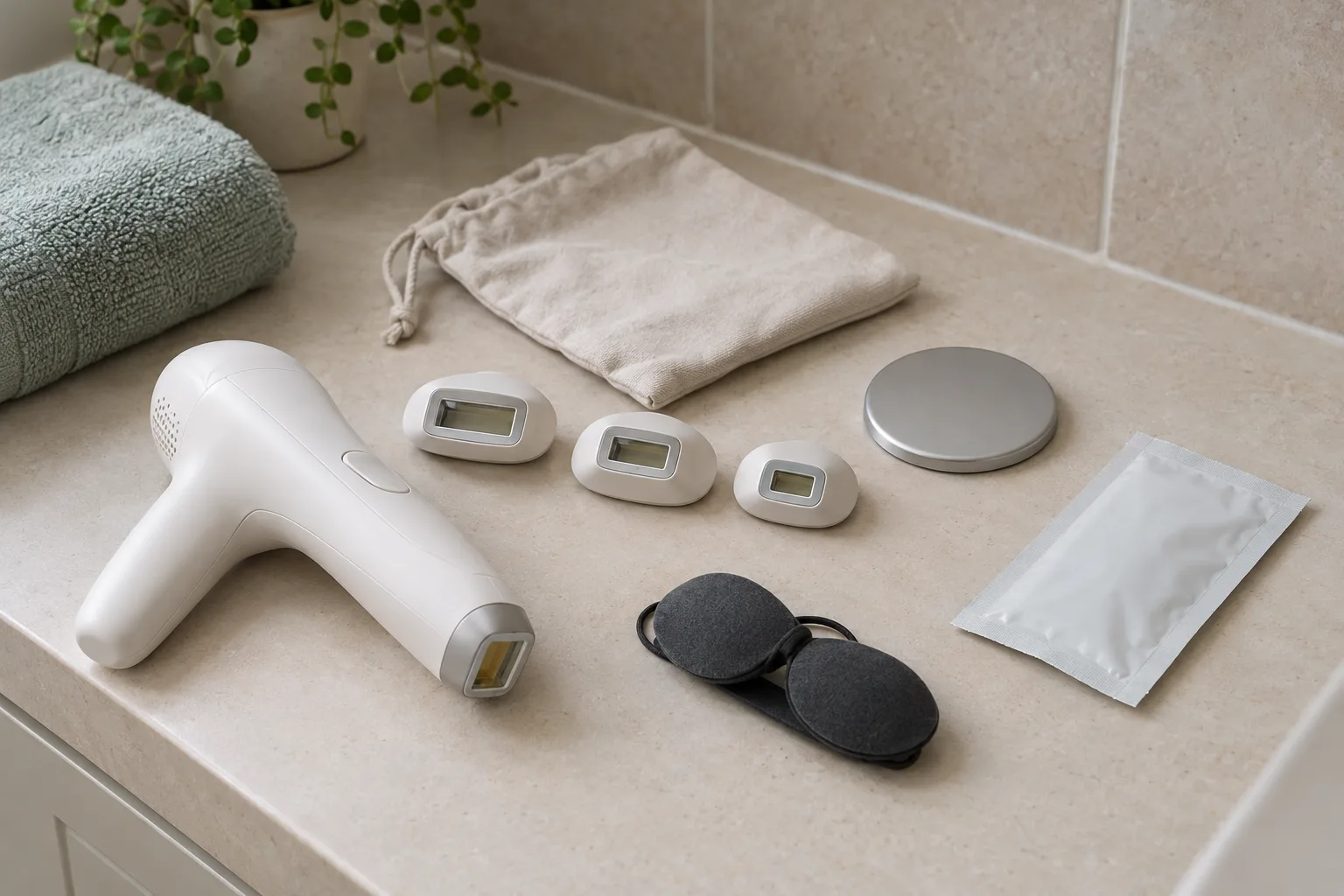
Common device features include multiple intensity levels to adjust energy delivery and swappable heads to fit curved or small areas. Women’s Health UK highlights unusually high flash counts in newer models, aimed at long service life when used over months and years.
Editors at Women’s Health UK describe a heavier run‑in period followed by less frequent upkeep, reflecting that hair grows in cycles and new follicles may enter the active stage later. This pattern is typical of at‑home IPL regimens regardless of brand.
Women’s Health UK also frames cost as a potential advantage: one device can cost roughly the same as a single professional session, but the handset can be reused across many sessions. This may appeal to people treating multiple areas at home over time.
Cooling plates or airflow features, offered on some devices, aim to increase comfort by dispersing heat from the skin surface. While these additions can help tolerance, dermatologists note that energy settings and correct skin matching remain the key safety factors.
People living with conditions that can drive excess hair growth, such as polycystic ovary syndrome (PCOS), often require medical input alongside any hair removal. Managing the hormonal driver can reduce how much removal is needed over time.
Skin preparation and aftercare are important to reduce side‑effects, but product manuals vary. Our explainer on laser hair removal risks and results sets out what to expect from home and clinic approaches.
Recurrent ingrown hairs and folliculitis (inflamed hair follicles) can improve when coarse hairs are thinned or reduced. If you have persistent bumps or tenderness, our guide to folliculitis and hair loss outlines when to seek assessment.
What people are saying
Consumer editors at Women’s Health UK report testing devices for more than three years, highlighting improvements in usability, from clearer indicators to app prompts for area coverage. This reflects a shift toward guided at‑home treatments that reduce user error.
Forbes Vetted’s team underscores body–face versatility in its top pick, with attachments that better fit underarms or upper lip than a single large window. For people with compatible skin and hair, this can support more even coverage and fewer missed areas.
Dermatologists generally advise patch‑testing an inconspicuous spot before broader use, especially for medium to darker skin tones. This helps check for excessive heat response or pigmentation changes before treating larger areas.
Specialists also flag common exclusions: avoid treating tattoos or very dark moles, and be cautious if you use medicines that increase light sensitivity. If you are pregnant or breastfeeding, manufacturers often advise against home IPL pending more safety data.
For people with richly pigmented skin, clinic‑grade lasers operated by trained practitioners can be safer and more effective than at‑home IPL. Many UK clinics offer devices designed to bypass epidermal pigment more selectively than consumer handsets.
If unwanted hair is affecting confidence, practical steps can help while you weigh options. Our piece on the psychological effects of hair loss sets out coping strategies, support and when to ask for specialist help.
People with Afro‑textured hair or skin of colour should ensure any device or clinic confirms suitability for their skin tone. Our feature on Black hair care practices and hair loss explains broader dermatology guidance for protecting skin and follicles.
What happens next
Consumer devices continue to add guided features such as smartphone apps, on‑hand reminders and skin‑tone sensing to reduce guesswork. Women’s Health UK highlights this trend in the Braun Skin i‑expert, suggesting more handsets will offer similar coaching.
As new models arrive, dermatologists generally recommend buying from reputable retailers and verifying UK safety marks to avoid counterfeit products. Clear manuals, accessible support and a return policy can be as valuable as headline specifications.
People considering at‑home IPL should discuss suitability if they have darker skin tones, very light hair, a history of keloid scarring, active skin conditions or recent sun exposure. A GP, dermatologist or trichologist can help weigh home use against clinic options.
For those managing scalp hair loss, IPL hair removal devices are not treatments and should not be used on the scalp or eyebrows. Evidence‑based options, set out in our guide to laser hair removal risks and results, remain separate from therapies that preserve or restore scalp hair.
Why this matters
At‑home hair removal sits alongside many people’s wider hair and skin routines, including those managing scalp shedding or sensitivity. Knowing that 2026’s leading devices slow regrowth rather than remove hair permanently helps set expectations and reduce disappointment. Safety varies by skin tone and hair colour, so it is worth asking a GP, dermatologist or trichologist to confirm if you are a good candidate, especially if you have darker skin, very light hair, a history of pigmentation change, or an underlying condition. Our explainer on laser hair removal risks and results sets out what to expect.
Common questions
- what is the best at-home laser hair removal device in 2026
- Editors at Forbes name the Braun Silk Expert Pro 5, while Women’s Health UK highlights Braun’s Skin i‑expert. Both stress results depend on skin tone and hair colour.
- are at-home laser hair removal devices really lasers or ipl
- Most consumer devices are IPL, not true medical lasers. They use filtered light to target hair pigment and reduce regrowth for suitable skin–hair combinations.
- how long do at-home laser hair removal results take
- Women’s Health UK reports early changes within weeks and fuller effects by around 12 weeks, with maintenance needed afterwards to manage normal hair cycles.
- are at-home laser hair removal results permanent
- No. Both outlets say results reduce regrowth rather than remove hair permanently, so ongoing maintenance sessions are expected over time.
- are at-home ipl devices safe for dark skin
- Dermatologists generally caution that home IPL suits lighter skin with darker hair. Darker skin tones face higher burn or pigment risks and need specialist advice.
- can you use at-home laser hair removal on the face and body
- Some top‑ranked devices include attachments for smaller facial areas and larger body zones. Always follow compatibility guidance and avoid the eye area and eyebrows.
- how does the cost compare with clinic laser hair removal
- Women’s Health UK notes a single device can cost roughly the same as one clinic session, but you can reuse the handset for multiple at‑home treatments.
- who should avoid at-home ipl hair removal
- Avoid on tattoos, dark moles, the scalp or near the eyes. People using photosensitising medicines or who are pregnant should seek medical or manufacturer guidance first.
Sources
- Women's Health UK: 9 Best At-Home Laser Hair Removal Devices of 2026, Tested by Beauty Experts
- forbes.com: Best Laser Hair Removal Devices 2026 - Forbes Vetted
This article was written by Thicker Thinking using the sources listed above. It is for general information and is not medical advice. Speak to your GP, a dermatologist or a qualified trichologist about your own situation.