Treatments in the News
Tretinoin for hair loss: what the evidence really shows
Social media says tretinoin helps hair growth. Early research and expert views suggest a cautious, add‑on role at best.
By the Thicker Thinking Editorial Team
Published · 5 min read
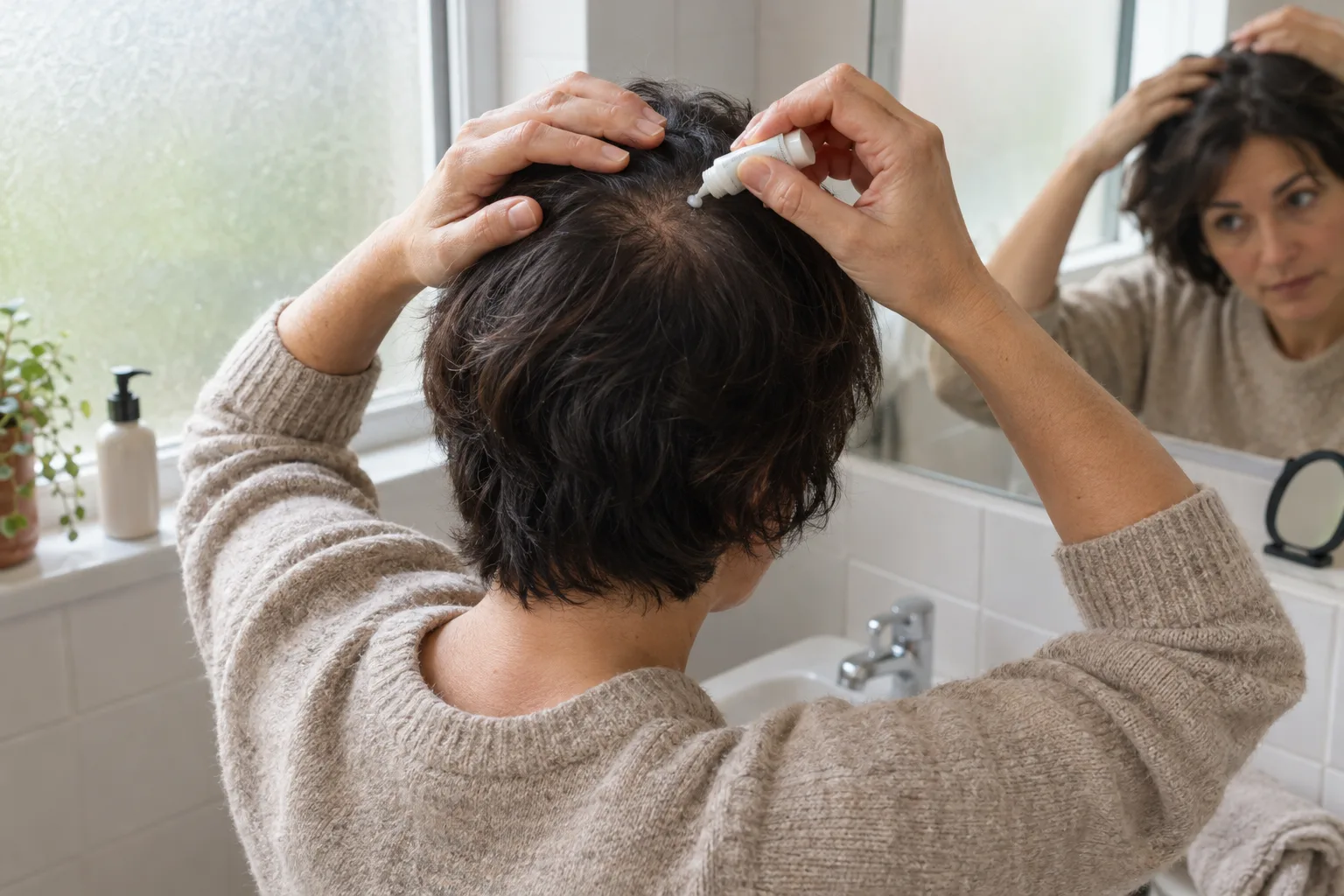
Quick answerSmall studies suggest tretinoin may enhance the effect of minoxidil for pattern hair loss, but evidence is limited and irritation is common. Dermatology experts recommend medical guidance and proven options like minoxidil or finasteride first.
Tretinoin, a prescription retinoid widely used for acne and sun damage, is trending on social platforms as a supposed hair growth booster. According to Women’s Health UK, dermatologists say combining it with minoxidil has been used for years, but robust hair regrowth data are thin.
Specialists quoted by Women’s Health UK describe an add‑on role rather than a standalone fix, noting research is limited and results vary. The outlet also highlights that tretinoin on the scalp is an off‑label use, meaning it is not licensed specifically for hair loss.
What happened
Women’s Health UK reports that social media posts have promoted rubbing tretinoin into brows or scalp to stimulate hair growth. Dermatologists told the magazine the concept is not new in clinics, where tretinoin has sometimes been paired with minoxidil for pattern hair loss.
The publication notes the evidence base is sparse, with small studies and mixed findings. Experts emphasised that minoxidil remains the first‑line topical for many people with androgenetic alopecia, while tretinoin may be considered as an adjunct for selected patients.
Perfecthairhealth.com, a research site focused on hair disorders, similarly stresses that finasteride and minoxidil are the most reliable options for slowing loss and promoting regrowth. The site’s reviewers also caution that some high‑dose topical formulations of hormones modifiers can behave systemically, underlining the need for medical oversight.
Women’s Health UK quotes a dermatologist calling the approach “an old‑school derm technique,” reflecting its long‑standing, if niche, clinical use. The overall message is cautious: try established therapies first and seek tailored advice before experimenting with off‑label combinations.
The background
Tretinoin is a vitamin A–derived retinoid that speeds up skin cell turnover and is prescribed for acne, photoageing and pigmentation. On the scalp, dermatologists sometimes use it off‑label to complement minoxidil, aiming to support absorption and follicle activity, according to Women’s Health UK.
The data behind tretinoin for hair loss are limited to small clinical studies and older reports, with no large, modern randomised trials confirming clear benefits. Researchers have explored tretinoin alone and in combination with minoxidil, but findings have not established tretinoin as a stand‑alone regrowth treatment.
Minoxidil and finasteride remain the best‑supported medicines for androgenetic alopecia, as outlined by perfecthairhealth.com. These drugs have repeated trial evidence for slowing miniaturisation of follicles and promoting partial regrowth in many men and some women, depending on diagnosis and suitability.
Because topical retinoids can be irritating, clinicians are selective about scalp use. Women’s Health UK reports experts warning about redness, flaking and tenderness, which can be more problematic on sensitive or inflamed scalps.
Pregnancy is a key consideration. Dermatologists generally advise avoiding topical retinoids during pregnancy or when trying to conceive, even though systemic absorption from creams is low, due to longstanding caution around vitamin A derivatives.
A precise diagnosis matters before trying any new topical. Diffuse shedding from stress or illness behaves differently from pattern hair loss and often needs a different plan; our guide to diffuse hair loss causes and tests explains common pathways and investigations.
People exploring combination approaches sometimes ask about microneedling with minoxidil. Evidence suggests microneedling can augment topical regimens for pattern loss when supervised; see our report on the dermaroller evidence for hair growth for what trials and experts say.
Herbal or cosmetic shortcuts are often touted online alongside retinoids. Dermatologists generally remind patients that many oils and massagers lack strong evidence and can irritate the scalp if used aggressively; our explainer on rosemary oil and scalp massagers sets out the risks and facts.
What people are saying
According to Women’s Health UK, dermatologists view tretinoin as a possible adjunct to minoxidil in pattern hair loss, not a replacement. They caution that responses vary and that irritation can undermine adherence, reducing any potential benefit.
Clinicians also point out that “topical” does not always mean “risk‑free.” Perfecthairhealth.com notes some topical hormone‑modifying products can reach the bloodstream at higher doses, a reminder that any compounded scalp treatment should be carefully selected and monitored.
Dermatologists generally advise patch‑testing new scalp products, stopping at the first sign of significant inflammation, and avoiding application on broken or eczematous skin. They also suggest sun protection for exposed areas, as retinoids can increase sensitivity.
Trichologists commonly recommend confirming the cause of loss before layering treatments. For recent shedding under six months, especially after illness, medication changes or stress, advice often focuses on watchful waiting and triggers; our piece on the six‑month decision point in telogen effluvium outlines when to escalate.
For people with scalp conditions such as seborrhoeic dermatitis, psoriasis or folliculitis, specialists typically prioritise treating inflammation first to avoid flares. Our guide to scalp conditions that cause hair loss covers the signs that warrant assessment.
Perfecthairhealth.com underscores that minoxidil and finasteride have the strongest evidence base among at‑home options. Dermatologists generally start with these, adding other measures case‑by‑case rather than swapping out proven treatments for trend‑led alternatives.
What happens next
Larger, well‑designed trials would help clarify whether tretinoin meaningfully boosts outcomes beyond minoxidil alone and which patient groups benefit most. For now, experts quoted by Women’s Health UK recommend using tretinoin cautiously, if at all, and only under medical guidance.
UK readers considering a compounded minoxidil–tretinoin product should discuss pros and cons with a GP, dermatologist or trichologist, including the risk of irritation and the limited strength of evidence. People who are pregnant or planning pregnancy should avoid retinoids and seek alternative strategies.
Those not responding to minoxidil may still have options, from ensuring consistent use to exploring supervised add‑ons like microneedling or switching formulations. Addressing contributing factors such as stress, medications and scalp disease can also improve outcomes alongside any topical regimen.
As research evolves, clinicians will refine how and when to use adjuncts. Until clearer data emerge, established medicines with strong safety and efficacy records remain the foundation of treatment, with off‑label additions considered carefully for individual needs.
Why this matters
Many readers ask about tretinoin after seeing social posts promising fast regrowth. The evidence so far is limited, and irritation is common, so it is best considered a cautious add‑on rather than a shortcut. A GP, dermatologist or trichologist can confirm your diagnosis, rule out scalp disease, and discuss proven options like minoxidil alongside any off‑label choices.
Common questions
- does tretinoin help hair loss
- It may help as an add‑on to minoxidil for pattern hair loss, but evidence is limited and mixed. Dermatologists recommend proven treatments first and medical guidance.
- can tretinoin regrow hair on its own
- There’s no strong evidence that tretinoin alone reliably regrows hair. Small studies exist, but minoxidil and finasteride remain better‑supported options.
- is tretinoin safe to use on the scalp
- It can irritate the scalp, causing redness, flaking or soreness, and is generally avoided in pregnancy. Use only with clinician guidance and stop if inflamed.
- can you combine tretinoin with minoxidil
- Yes, some clinicians use them together off‑label, aiming to enhance results. Evidence is limited, and irritation risk means medical supervision is important.
- is tretinoin approved for hair loss treatment
- No. Using tretinoin for hair loss is off‑label. Dermatologists usually prioritise licensed, evidence‑based treatments first and consider add‑ons case‑by‑case.
- what works better than tretinoin for hair regrowth
- Minoxidil and finasteride have stronger evidence for androgenetic alopecia, according to perfecthairhealth.com. A clinician can advise which is suitable for you.
- who should avoid tretinoin on the scalp
- People who are pregnant or trying to conceive should avoid retinoids. Those with irritated or eczematous scalps should be cautious and seek medical advice.
- do topical treatments have fewer side effects than pills
- Not always. Perfecthairhealth.com notes some high‑dose topicals can act systemically, so medical oversight is important when choosing formulations.
Sources
- Women's Health UK: Can Tretinoin Help Hair Loss? What Studies and Experts Really Say
- perfecthairhealth.com: Keeps Review: The Truth About Their Hair Loss Treatments?
This article was written by Thicker Thinking using the sources listed above. It is for general information and is not medical advice. Speak to your GP, a dermatologist or a qualified trichologist about your own situation.