Research and Studies
Psychological effects of hair loss: stress, anxiety and shedding
Evidence links hair loss with anxiety and depression, and stress can trigger temporary shedding.
By the Thicker Thinking Editorial Team
Published · Updated · 6 min read

Quick answerHair loss and mental health are closely linked. According to DermNet and berkeleyhairclinic.com, sustained stress can trigger temporary shedding after two to three months, and people with hair loss experience higher rates of anxiety and depression.
Dermatology resources highlight a two-way link between hair loss and mental health, with stress, anxiety and depression both contributing to shedding and arising from it, according to DermNet and berkeleyhairclinic.com. Researchers and clinicians also note that the severity of hair loss tends to track with psychological distress, particularly when visible areas such as eyebrows and eyelashes are involved.
Sustained psychological strain can trigger telogen effluvium — a form of diffuse shedding — that often appears two to three months after the triggering event, berkeleyhairclinic.com explains. Meanwhile, DermNet summarises evidence that people living with hair loss experience higher rates of depression, anxiety and social phobia than the general population.
What happened
DermNet’s review states that hair loss affects up to 50% of men and women across the lifespan, underlining how common this is. It also notes that abundant scalp hair carries cultural weight, which helps explain why its loss can affect confidence and day-to-day life.
The same review reports that people with hair loss have higher prevalence of psychiatric diagnoses, including major depressive episodes and anxiety disorders, than those without hair loss. It adds that more severe or extensive hair loss correlates with greater psychological burden.
A case–control study cited by DermNet found women who reported high stress were 11 times more likely to experience hair loss than those without high stress. This highlights the role stress can play, particularly for diffuse shedding patterns.
Berkeleyhairclinic.com describes how prolonged stress hormones can shift follicles from the growth phase into the resting and shedding phase prematurely, characteristic of telogen effluvium. It notes that shedding commonly becomes noticeable a few months after the stressor rather than immediately.
DermNet explains that the impact can be amplified when eyebrow and eyelash loss occurs, as these features strongly define facial appearance. People may also fear negative judgment in social situations, feeding avoidance and worsening mood.
Both sources describe a feedback loop: stressful events can trigger hair loss, which then causes further distress, anxiety and low mood. Breaking this cycle often requires addressing both the underlying hair issue and the psychological response.
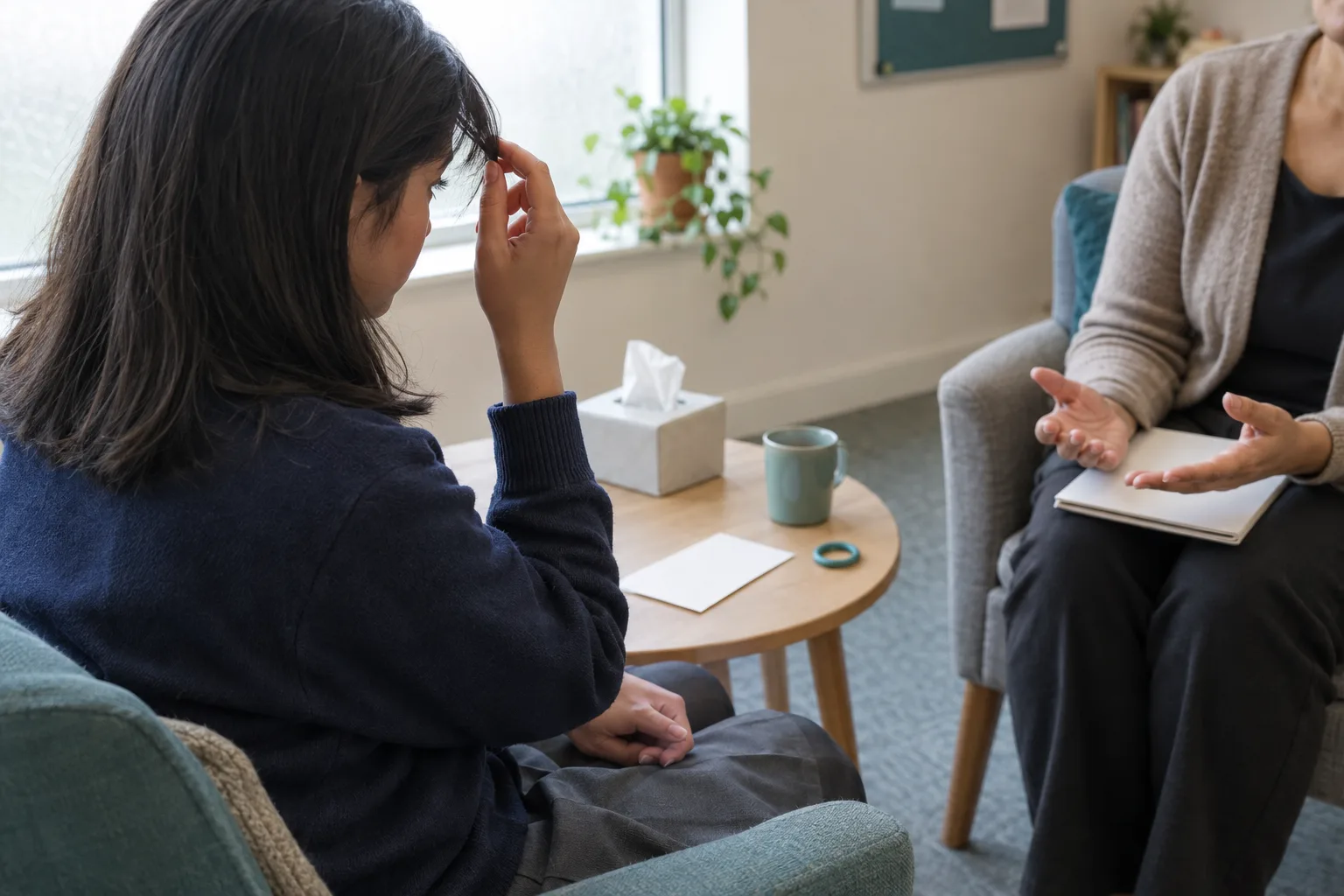
DermNet advises that psychological support can help, including cognitive behavioural therapy (CBT), support groups and, when needed, antidepressant medicines. It emphasises that the most effective approach varies by person and should be individualised.
Berkeleyhairclinic.com adds that stress can aggravate autoimmune activity in some people, potentially worsening conditions like alopecia areata, which causes sudden patchy loss. In contrast, telogen effluvium produces diffuse shedding rather than defined bald patches.
The background
Hair loss is broadly divided into scarring (cicatricial) and non-scarring forms, with patterns that can be focal or diffuse, DermNet outlines. Non-scarring types include androgenetic alopecia, alopecia areata and telogen effluvium, while scarring forms arise from inflammatory disorders and can be permanent.
DermNet notes that diffuse shedding is commonly due to telogen effluvium after a physiological or psychological stressor, or to genetic male or female pattern hair loss. Systemic issues such as thyroid disease, iron deficiency and some medications can also contribute.
Psychiatric disturbances, including acute anxiety and depressive episodes, have been proposed as additional drivers of diffuse shedding, according to DermNet. This does not mean hair loss is “all in the mind”, but that stress pathways can influence the hair cycle in susceptible people.
Berkeleyhairclinic.com explains the biology behind this: raised cortisol and inflammatory signals can constrict scalp blood vessels and push follicles prematurely into rest, leading to increased daily shedding. This diffuse loss often becomes visible in the shower, on the pillow or with brushing.
Alopecia areata, by contrast, involves the immune system mistakenly attacking the follicle, leading to round or oval bald patches. Stress may trigger or exacerbate episodes in some people, according to berkeleyhairclinic.com, though the condition has multiple influences beyond stress alone.
DermNet adds that, whatever the cause, heavier hair loss reduces the likelihood of full regrowth, and regrowth may recur in episodes. When hair returns, it can sometimes differ in colour or texture, which can itself be unsettling for patients.
Medical treatments for hair loss remain limited for several causes, especially scarring disorders, DermNet states. Surgical options like hair transplantation can help selected cases but are not suitable for all diagnoses and have constraints.
For readers comparing stress-related shedding with other triggers, our explainer on telogen effluvium’s 6‑month decision point sets out when to watch and when to seek further tests. We also covered preclinical work linking stress to immune ‘memory’ in hair follicles in mice in our piece on stress and hair loss immune memory.
When eyebrow and eyelash loss is prominent or scalp patches appear suddenly, features point toward alopecia areata rather than telogen effluvium. Our guide to alopecia areata signs, regrowth and treatment explains what to look for and how dermatologists assess pattern and activity.
What people are saying
Dermatologists generally advise starting with a clinical assessment to confirm the hair loss type and screen for reversible contributors such as iron deficiency, thyroid disease and medication effects. This helps separate stress-related shedding from other conditions that may need targeted treatment.
Clinicians often recommend tracking shedding and scalp photographs to monitor changes over time, especially across the two to three months after a major stressor described by berkeleyhairclinic.com. A simple hair‑wash count or part‑width image can clarify whether shedding is easing or progressing.
Mental health support is a core component when distress is high. According to DermNet, CBT, peer support groups and, when appropriate, antidepressants can reduce anxiety, low mood and avoidance behaviours linked to hair loss.
For people with alopecia areata causing visible patches and marked distress, access to new treatments may influence outlook. Our report on NICE backing deuruxolitinib for severe alopecia areata on the NHS summarises how options are changing in specialist care.
Dermatologists also emphasise everyday coping strategies: gentle hair care, avoiding tight styles that pull, and using temporary concealers or toppers if helpful. Practical steps can ease the daily emotional load while medical and psychological care proceed in parallel.
People who pull their hair in response to tension — a condition called trichotillomania, noted by berkeleyhairclinic.com — benefit from psychological therapies and habit‑reversal techniques. Early support helps prevent scarring and breakage from repeated traction.
What happens next
DermNet calls for stronger theoretical models connecting the immune system, stress responses and psychological adaptation in hair disorders. It also highlights the need to test structured support programmes for people with alopecia in real‑world clinics.
The role of the media and social norms in amplifying appearance pressures is another research area flagged by DermNet. Understanding these influences may guide public education to reduce stigma around visible hair loss.
For individuals, next steps depend on pattern and persistence. If shedding follows a stressful period and starts two to three months later, berkeleyhairclinic.com notes it often settles as stress improves. If heavy shedding continues beyond six months, seek specialist review to recheck causes and options.
Where scalp patches, eyebrow loss or nail changes suggest alopecia areata, timely dermatology input can confirm diagnosis and discuss treatments. Our overview of alopecia areata in 2026 tracks evolving guidance and trial data readers may wish to follow.
Because distress itself can intensify the cycle, clinicians encourage early mental health support alongside scalp care. According to DermNet, combining psychological therapies with medical management can reduce symptom burden and improve day‑to‑day function while hair recovers or stabilises.
Related: Ashley Tisdale says stress linked to her alopecia areata
Related: Hair pulling and skin picking common in young people, study finds
Related: Long Covid adds hair loss and erectile problems, study finds
Why this matters
Hair loss can affect mood, sleep and social confidence, and stress can, in turn, worsen shedding. Understanding this two‑way link helps people spot patterns and seek timely support. If shedding is heavy, patchy, or persists beyond a few months, speak to a GP, dermatologist or trichologist. Psychological support, such as CBT or peer groups, can be part of care. Our explainer on telogen effluvium’s decision points outlines when to monitor and when to ask for further tests.
Common questions
- can stress and anxiety cause hair loss
- Yes. According to berkeleyhairclinic.com, sustained stress can trigger telogen effluvium, a temporary diffuse shedding, and may exacerbate alopecia areata in some people.
- how long after stress does hair loss start
- Berkeleyhairclinic.com reports stress‑related shedding often becomes noticeable two to three months after the triggering event, rather than immediately.
- does hair grow back after stress-related shedding
- Often, yes. Telogen effluvium is usually temporary and may settle once the stress is addressed, though persistent or severe shedding should be assessed by a clinician.
- can hair loss lead to anxiety or depression
- Yes. DermNet summarises higher rates of anxiety, depression and social phobia in people with hair loss compared with the general population.
- are women more likely to have stress-related hair loss
- A case–control study cited by DermNet found women with high stress were 11 times more likely to report hair loss than those without high stress.
- what treatments help the psychological effects of hair loss
- DermNet notes cognitive behavioural therapy, support groups and, when indicated, antidepressants can help reduce distress linked to hair loss.
- is alopecia areata linked to stress
- Stress may trigger or worsen episodes in some people, according to berkeleyhairclinic.com, but alopecia areata is an autoimmune condition with multiple influences.
- when should i see a doctor about shedding
- Seek advice if shedding is heavy, patchy, or persists beyond a few months, or if there are symptoms like eyebrow loss. A GP or dermatologist can assess causes.
Sources
- DermNet: Psychological effects of hair loss
- berkeleyhairclinic.com: How Stress and Anxiety Can Trigger Hair Loss - Berkeley Hair Clinic
This article was written by Thicker Thinking using the sources listed above. It is for general information and is not medical advice. Speak to your GP, a dermatologist or a qualified trichologist about your own situation.