Women's Thinning
Women’s hair loss: trichologist outlines causes and what helps
A UK trichologist sets out the main drivers of women’s thinning — and sensible next steps.
By the Thicker Thinking Editorial Team
Published · 6 min read

Quick answerA leading UK trichologist links women’s hair loss to hormones, nutrition, stress and medicines, and urges targeted blood tests, scalp care and cautious treatment choices. Speak to a GP, dermatologist or trichologist for individual assessment.
Women’s Health UK has published new guidance from consultant trichologist Anabel Kingsley, who outlines the most common reasons women notice thinning and what practical checks can help. Her advice spans perimenopause, postpartum changes, nutrition, stress and newer medicines linked to shedding.
Who What Wear separately reports that, despite a crowded market, relatively few hair-loss products have strong trichologist backing, underscoring the importance of diagnosis and targeted care before buying treatments.
What happened
According to Women’s Health UK, Kingsley emphasises that women’s hair loss needs a whole-person view, with attention to hormones, blood health, gut and scalp. She highlights heavy periods, iron deficiency, perimenopause and menopause, stress and medical treatments as frequent contributors.
She advises that iron and ferritin (iron storage), vitamin B12 and vitamin D are key labs worth checking when shedding appears, noting that deficiencies are common and correctable. She also points to thyroid problems as an under-recognised cause of hair thinning symptoms in midlife.
On perimenopause and menopause, Kingsley notes that falling oestrogen can change the skin and how follicles sit in the scalp. She adds that thinner coverage after menopause can leave follicles more exposed to UV, making a hat a sensible safeguard on sunny days.
Postpartum, she urges women not to assume all shedding is routine. According to Women’s Health UK, she flags iron and broader nutritional shortfalls, stress and underlying conditions as issues that can complicate recovery from post-birth hair fall.
Kingsley tells Women’s Health UK that rapid weight loss is a well-known trigger for telogen effluvium, a temporary shedding that typically lasts three to six months. She reports seeing some GLP‑1 users continue shedding beyond this window, suggesting an ongoing disruption to the hair cycle in a subset.
She adds that inadequate calorie intake or low iron, vitamin D or B12 could be at play when shedding persists on GLP‑1 therapy, and raises the possibility of gut microbiome effects. As she puts it, “Hair follicles are very metabolically active and need calories,” from food first.
On treatments, Kingsley cautions against starting minoxidil pre-emptively to prevent potential GLP‑1 shedding, arguing it is a medicine best used for the right diagnosis and at the right time, ideally with professional input.
The background
Dermatologists generally agree that women’s thinning has multiple overlapping causes, including telogen effluvium from illness, stress or nutritional gaps, and female pattern hair loss driven by follicle sensitivity to androgens. Our explainer on female pattern baldness: signs, causes and treatment options outlines how widening parts and diffuse crown thinning often present.
Telogen effluvium typically follows a trigger by several weeks and can settle once the cause is addressed. Women’s Health UK notes that a typical episode lasts months, but repeat or prolonged triggers can prolong shedding, which is why identifying and correcting contributors matters.
Clinicians commonly start with history, examination and a few blood tests, prioritising ferritin, full blood count, vitamin B12 and vitamin D, and assessing thyroid function where symptoms suggest it. This aligns with Kingsley’s emphasis on checking the basics early to avoid missing fixable issues.
Heavy menstrual bleeding is a frequent, overlooked source of iron deficiency in women of reproductive age. Women’s Health UK highlights that even “normalised” heavy periods can deplete ferritin over time, which may worsen postpartum shedding or midlife thinning until treated.
Perimenopause brings fluctuating hormones that can unmask or accelerate pattern thinning in genetically susceptible women. Dermatologists often see this alongside drier scalps and increased sensitivity, making gentle scalp care and UV protection useful adjuncts rather than cures.
Stress is a recognised driver of telogen effluvium via hormonal and inflammatory pathways. If shedding surges after a major stressor, our guide to does stress cause hair loss? Signs, timing and recovery explains what to expect and how recovery usually unfolds.
It is also helpful to understand what “normal” daily shedding looks like and when to seek help. Our primer on how much hair loss is normal — and when to worry walks through typical ranges and red flags that merit a GP or dermatology review.
What people are saying
According to Women’s Health UK, Kingsley urges targeted supplementation only when a deficiency is confirmed. She reports seeing clients taking overlapping products or high-dose IV vitamin “drips”, warning that excesses, including selenium, can themselves trigger hair loss.
WhoWhatWear.com notes that, while many products claim hair growth benefits, trichologists back relatively few with meaningful evidence. This reinforces the value of confirming the cause first and focusing on proven options for that diagnosis rather than buying widely.
Minoxidil remains one of the few topical medicines with evidence for female pattern hair loss, but dermatologists generally recommend using it for a confirmed diagnosis and with realistic expectations. Our overview of female pattern baldness: signs, causes and treatment options sets out where it can help and its limits.
Women’s Health UK reports that rapid weight loss can drive shedding, and that some GLP‑1 users shed despite gradual weight change. Our reporting on GLP‑1 hair loss: what studies show and why it happens summarises early research and the leading theories, including nutritional adequacy and stress on follicles.
Kingsley advises medical supervision, regular blood checks and working with a dietitian or nutritionist when using GLP‑1 drugs, alongside sufficient dietary fibre to support gut health. She cautions that prevention may not be fully possible if weight loss itself is the trigger.
On postpartum changes, she recommends checking iron and key vitamins rather than attributing all shedding to hormones. Our guide to postpartum hair loss: what helps and when to seek advice explains why shedding peaks months after birth and when a review is sensible.
Dermatologists generally advise monitoring hair and skin changes when testosterone is added to HRT or used therapeutically, as androgen-sensitive follicles can thin in predisposed women. Any new or worsening shedding on hormonal therapy warrants clinical advice and, if needed, treatment adjustment.
Kingsley also highlights simple scalp protection after menopause. Reduced hair density and skin changes can increase UV exposure at the follicle level, so hats or shade on bright days are low-risk measures that support scalp health while other treatments do their work.
What happens next
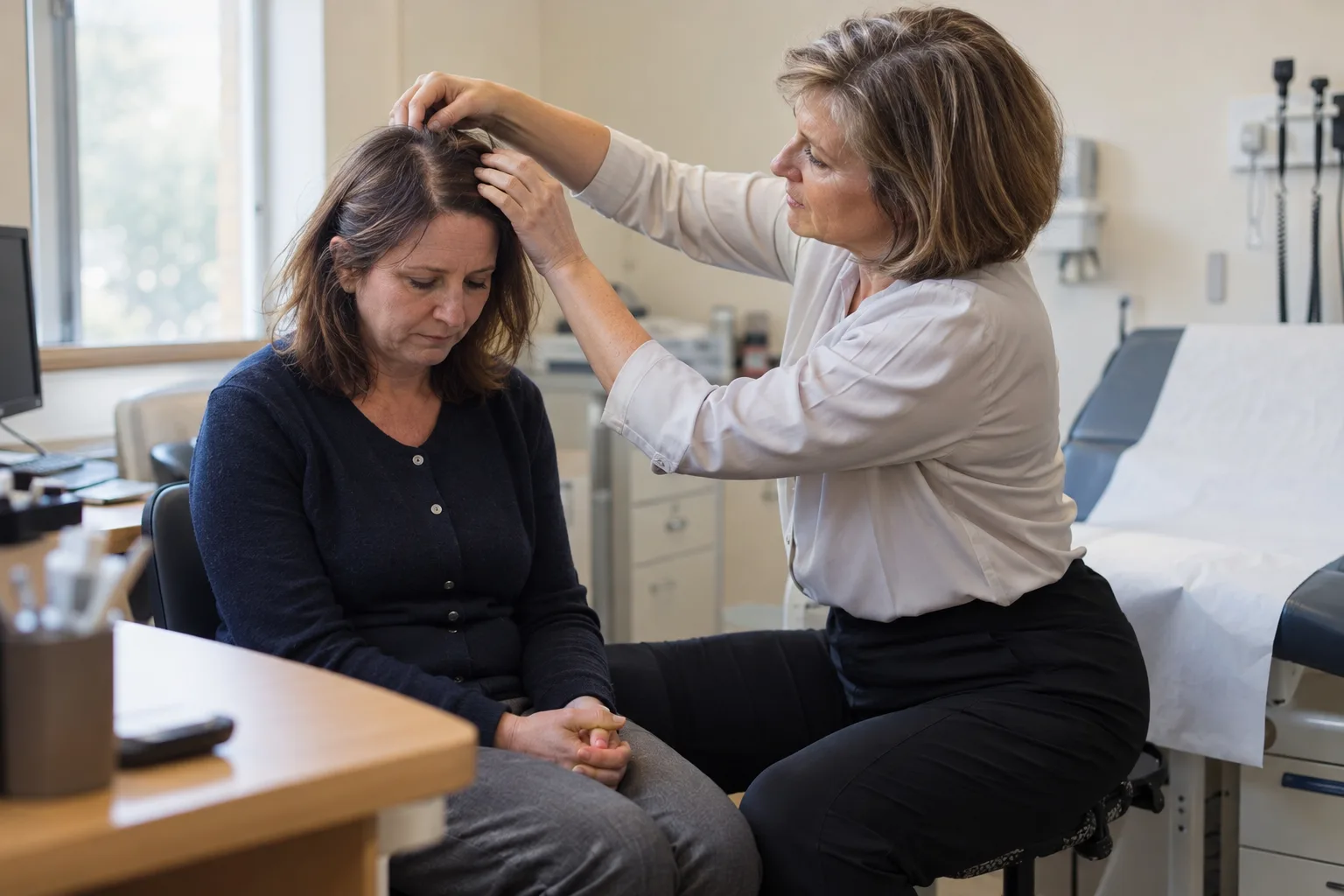
For women noticing new thinning, the next step is a clinical assessment to establish the cause. A GP can organise initial blood tests and, where needed, refer to dermatology or recommend a trichologist for detailed scalp and hair evaluation.
If you are starting or already using a GLP‑1 medicine, Women’s Health UK relays advice to seek medical supervision, ensure adequate protein, calories and micronutrients, and arrange periodic bloods. Early attention to nutrition may not stop shedding entirely but can reduce avoidable risks.
After childbirth, most shedding settles, but compounding factors are common. Addressing iron deficiency, low vitamin D or B12, and sleep and stress may help recovery, and new bald patches or scalp symptoms should be reviewed to rule out other conditions.
Around menopause, women with new widening at the parting or crown may have emerging pattern hair loss. Evidence-based options exist, but they work gradually and require consistency, so setting expectations early helps women choose the approach that fits their goals.
For anyone considering supplements, confirm what you actually need and avoid stacking overlapping products. High-dose or repeated IV vitamin infusions are not routinely recommended for hair health and can carry risks that outweigh unproven benefits.
Scalp care remains a foundation: manage dandruff or inflammation, protect from excess sun, and avoid tight styles or harsh treatments while shedding is active. These steps support a healthier environment for regrowth alongside medical care where indicated.
Research into GLP‑1–related shedding and gut–scalp links is still evolving. Women’s Health UK notes that more data are needed to explain why a minority experience prolonged shedding, so staying in contact with your healthcare team is sensible if shedding continues.
Why this matters
Understanding why hair is thinning can reduce worry and shorten the path to useful care. Women’s Health UK and whowhatwear.com highlight that targeted tests, nutrition and evidence-based treatments can help, while over-supplementing or guessing may backfire. If shedding is new, worsening or distressing, or follows major life changes, speak to a GP, dermatologist or trichologist for assessment and a plan. Our overview of alopecia types, causes and warning signs can help you prepare for that conversation.
Common questions
- what should i test if i’m losing hair
- Start with ferritin, full blood count, vitamin B12 and vitamin D, as advised by trichologists. A clinician may also check thyroid function based on symptoms and history.
- can glp-1 weight-loss drugs cause hair loss
- They have been linked to shedding in some users, according to Women’s Health UK. Rapid weight loss and nutritional shortfalls are likely contributors, and some report prolonged shedding.
- does slow weight loss still cause hair shedding
- Yes, some GLP‑1 users report shedding even with gradual weight loss, Women’s Health UK notes. Mechanisms may include inadequate calories, low iron or vitamins, or gut effects.
- is postpartum hair loss always normal
- No. While common and temporary, postpartum shedding can be compounded by iron or nutrient deficiencies, stress or other conditions. A GP check can identify treatable contributors.
- do hair-loss supplements always help
- Not necessarily. Trichologists advise supplementing only confirmed deficiencies. Excesses, including selenium, and high-dose IV vitamin infusions can worsen shedding or cause other problems.
- does menopause cause women’s hair to thin
- Falling oestrogen can unmask or worsen thinning in susceptible women and may increase UV vulnerability at the scalp. Scalp care and evidence-based treatments can help.
- should i start minoxidil to prevent possible shedding
- Trichologists advise against starting minoxidil pre-emptively. It’s a medicine best used for the right diagnosis and timing, ideally with professional guidance.
- can testosterone treatment worsen hair loss in women
- It can in predisposed women. Dermatologists advise monitoring hair changes if testosterone is added to HRT or used therapeutically, and seeking advice if shedding appears.
Sources
- Women's Health UK: 10 things every woman should know about hair loss – and a trichologist shares what actually works
- whowhatwear.com: 9 Best Products for Hair Loss, Backed by Trichologists | Who What Wear
This article was written by Thicker Thinking using the sources listed above. It is for general information and is not medical advice. Speak to your GP, a dermatologist or a qualified trichologist about your own situation.