Hair Loss Causes
Does stress cause hair loss? Signs, timing and recovery
Stress-related shedding can appear months after an illness or difficult experience, but the pattern of hair loss helps determine what care is needed.
By the Thicker Thinking Editorial Team
Published · 5 min read
Quick answerYes, emotional or physical stress can cause hair loss, most commonly temporary shedding called telogen effluvium. It often begins two to three months after a trigger, but patchy or persistent hair loss needs assessment rather than being put down to stress.
Stress can contribute to hair loss, but a stressful period is not enough to establish the cause of thinning. Cleveland Clinic and the medical information platform lahalak.sa identify several conditions linked to stress that need different approaches to diagnosis and care.
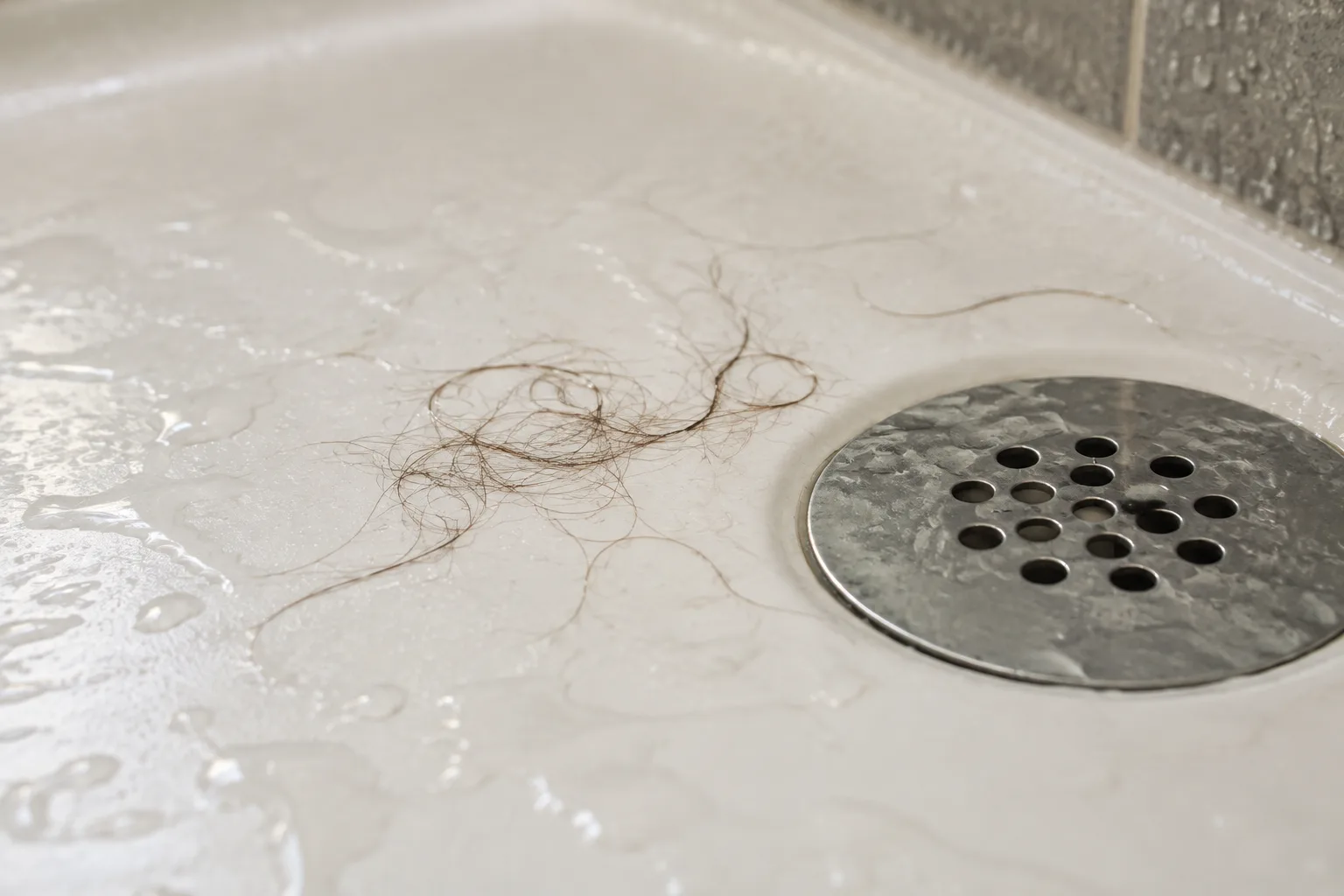
For people noticing extra hair in the shower, an important clue is timing: shedding may reflect something that happened months earlier. The practical message is to consider both emotional strain and physical illness, without overlooking other treatable explanations.
What happened
Cleveland Clinic’s advice highlights the importance of medical assessment before labelling hair loss as stress-related. Thyroid disorders and nutritional deficiencies can also affect hair, while more than one cause can be present at the same time. Feeling anxious does not rule out a separate medical problem.
Lahalak.sa uses the term ‘psychological alopecia’ for hair loss associated with emotional distress, while acknowledging that it is not a separate formal diagnosis. Alopecia simply means hair loss. The label alone cannot establish whether someone has increased shedding, an immune-related condition or damage from pulling.
The appearance of the scalp helps guide assessment. A noticeable increase in loose hairs with thinning across the head can fit telogen effluvium, a disruption of the normal hair cycle. Smooth, clearly defined bald patches suggest a different process and warrant examination rather than a wait-and-see approach based on stress alone.
A widening parting is less specific than it may seem. It can accompany increased shedding, but also occur in inherited pattern hair loss. Someone may first notice gradual thinning during a stressful period without stress being its main cause. Our guide to female pattern baldness and its treatment options explains that distinction.
Scalp symptoms matter too. Pain, marked itching, redness or scaling are reasons to seek medical advice, particularly alongside new hair loss. Straightforward telogen effluvium generally does not produce an inflamed-looking scalp, so these changes can point towards another condition needing treatment.
The background
Hair follicles, the small structures in the skin that produce hairs, work in cycles. Each hair spends time growing, passes through a short transition and then rests before shedding. These cycles are normally staggered, so routine shedding does not leave the scalp suddenly bare.
Telogen effluvium occurs when an unusually large proportion of hairs enter the resting stage around the same time. According to Cleveland Clinic, the resulting shedding often becomes noticeable two to three months after a significant trigger. This delay can make the connection difficult to recognise, especially if life has already become calmer.
Physical stress is part of this picture. Feverish illness, an operation, rapid weight loss or inadequate nutrition can disrupt the growth cycle even when someone does not feel emotionally overwhelmed. The same delayed pattern is explored in our coverage of hair loss after surgery.
Cortisol, a hormone involved in the body’s stress response, is one possible part of the biological explanation. Stress signals can influence follicle activity, but the mechanisms are complex. Shedding is not proof of persistently high cortisol, and its appearance cannot tell someone their hormone levels.
Alopecia areata has a different basis: it is an autoimmune condition, meaning the immune system mistakenly targets the body’s own tissues, in this case hair follicles. It often causes round or oval patches. Stress may contribute in susceptible people, but evidence does not establish it as the cause of every episode.
Trichotillomania is different again. It involves recurrent urges to pull out hair, sometimes during tension and sometimes almost automatically. Uneven patches and hairs of different lengths can result. It is not simply a bad habit or a failure of willpower; our explanation of trichotillomania and hair pulling covers the support available.
What people are saying
Dermatologists generally focus on the history of the hair loss as well as its appearance. Useful details include when shedding began, whether it is spreading, recent illnesses, changes in weight or diet, and new medicines. Looking back several months is often more informative than concentrating only on the previous week.
Cleveland Clinic also highlights uncertainty about the direction of the relationship between stress and alopecia areata. Hair loss itself can be distressing, making it difficult to separate a possible trigger from its emotional consequences. That distinction matters because telling someone simply to relax can leave them feeling responsible for a condition they did not choose.
For hair pulling, mental health care can directly address the behaviour causing damage. Cognitive behavioural therapy, a talking treatment that examines patterns of thinking and behaviour, may include habit reversal training. This helps people recognise pulling urges and practise alternative responses rather than relying on determination alone.
Stress-management measures have a different role in other forms of hair loss. Exercise, regular sleep, breathing exercises or counselling may support wellbeing, but evidence that any one relaxation technique reliably restores hair is limited. They are supportive options, not substitutes for diagnosing an immune disorder or treating a deficiency.
Diet is another area where reassurance needs precision. Adequate energy and protein support normal hair growth, but supplements do not automatically improve shedding in someone whose nutritional needs are already met. Our guide to protein deficiency and hair loss explains why restrictive eating deserves attention without assuming every case needs a supplement.
What happens next
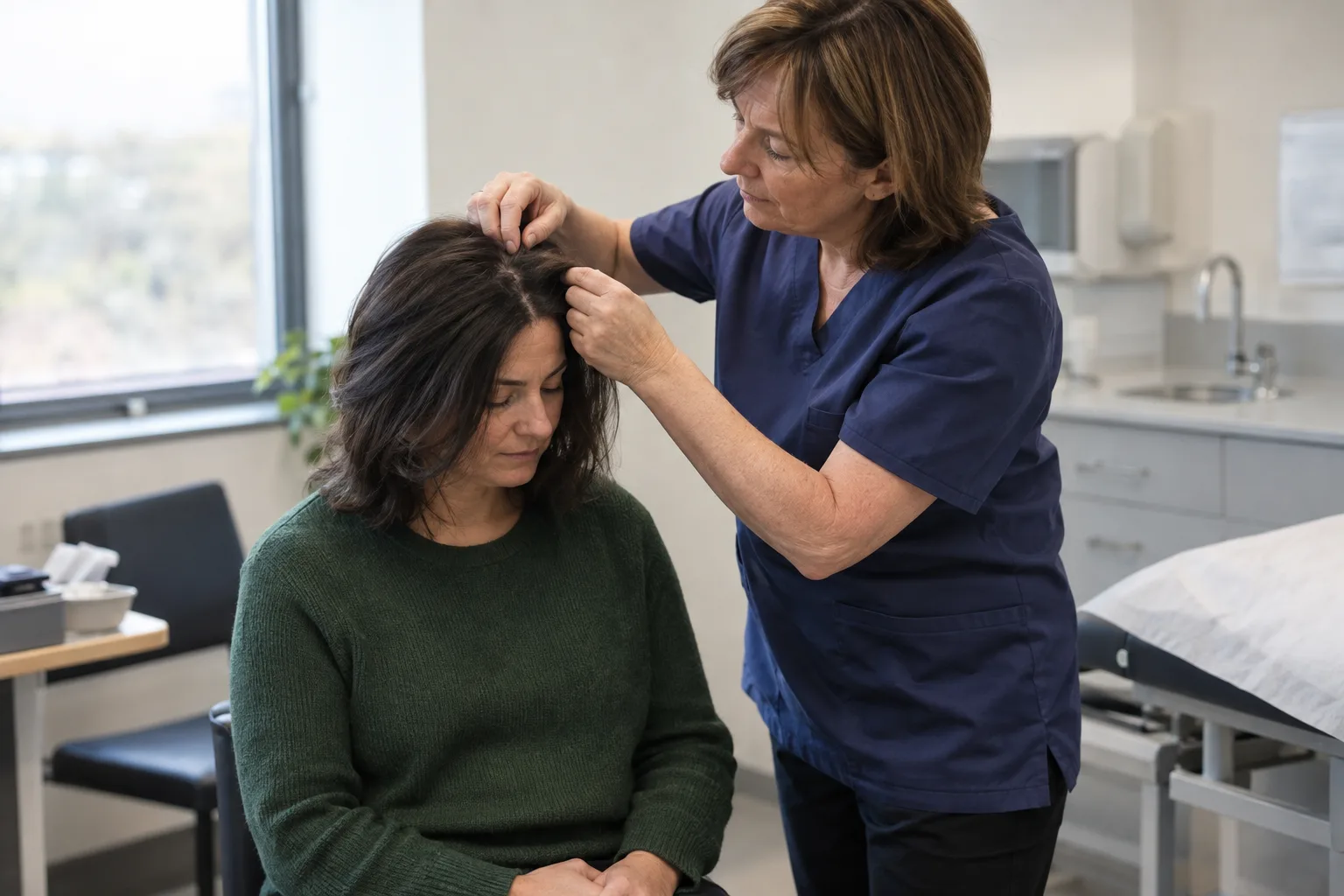
A GP is a sensible first contact for unexplained or troubling hair loss in the UK. They can examine the scalp, review medicines and decide whether targeted blood tests are appropriate. Tests for thyroid function or iron stores may be useful depending on symptoms and history; not everyone needs the same panel.
A dermatologist may examine the scalp with a magnifying instrument, a technique called trichoscopy, to assess hairs and follicle openings more closely. A trichologist can also offer hair and scalp advice, although qualifications vary and medical investigation or prescription treatment requires an appropriately qualified clinician.
For uncomplicated telogen effluvium, addressing the trigger and allowing the cycle to recover are usually central to care. New growth may become visible within a few months, but restoring previous fullness takes longer because hair grows gradually. Continued shedding beyond six months deserves reassessment for ongoing or additional causes.
Treatment for alopecia areata is tailored to its extent and impact. Corticosteroids, medicines that reduce inflammation and immune activity, are among the options. Minoxidil, a medicine that promotes hair growth, is sometimes used alongside other treatment; it does not address the underlying immune process on its own.
While awaiting an appointment, gentle washing and detangling can limit breakage, and avoiding tight styles reduces extra pulling on follicles. Washing may release hairs already ready to shed; avoiding shampoo does not keep those hairs growing. Occasional photographs of the same areas can help document change without making daily hair counting another source of worry.
Why this matters
For UK readers, recognising the difference between temporary shedding and other forms of hair loss can prevent unnecessary spending and delays in care. Our guide to alopecia types and warning signs offers a broader starting point. Speak to a GP if loss is sudden, patchy, persistent or accompanied by scalp symptoms; a dermatologist can investigate uncertain cases, while a suitably qualified trichologist may help with scalp care. Distress also deserves support, even when the hair loss is expected to improve.
Common questions
- Can stress make your hair fall out months later?
- Yes. Telogen effluvium often becomes noticeable two to three months after emotional or physical stress because affected hairs pass through a resting stage before shedding.
- What does stress-related hair loss look like?
- Telogen effluvium usually causes extra shedding and thinning across the scalp. Smooth bald patches or uneven areas with broken hairs can indicate other conditions and should be assessed.
- How long does stress hair loss take to grow back?
- New growth may become visible within a few months once the trigger is addressed, but fullness takes longer to return. Shedding that continues beyond six months needs reassessment.
- Does stress cause alopecia areata?
- Stress may contribute to alopecia areata in susceptible people, but it is not an established cause of every episode. Alopecia areata is an autoimmune condition, and hair loss itself can also cause stress.
- Should I take vitamins for stress hair loss?
- Not automatically. Supplements do not reliably improve shedding when nutritional needs are already met. A GP can assess whether your symptoms, diet or blood tests suggest a deficiency that needs treatment.
- Should I wash my hair less if it is shedding?
- Washing less will not stop telogen effluvium. Washing releases hairs already ready to shed; gentle shampooing and detangling help maintain scalp care without unnecessary breakage.
- When should I see a GP about stress hair loss?
- See a GP if hair loss is unexplained, worrying, sudden, patchy or persistent. Pain, marked itching, redness or scaling also warrant assessment rather than assuming stress is responsible.
Sources
- Cleveland Clinic: Does Stress Cause Hair Loss?
- lahalak.sa: Psychological Alopecia: Can Stress Cause Hair Loss?
This article was written by Thicker Thinking using the sources listed above. It is for general information and is not medical advice. Speak to your GP, a dermatologist or a qualified trichologist about your own situation.