Treatments in the News
Mayo Clinic outlines hair loss diagnosis and treatment options
Guidance details tests, medicines, surgery and self‑care for hair loss, with timelines, side effects and what to ask your clinician.
By the Thicker Thinking Editorial Team
Published · Updated · 7 min read
Quick answerMayo Clinic sets out common tests for hair loss and treatments including minoxidil, finasteride, hair transplant surgery and low‑level laser therapy, plus practical self‑care steps.
Mayo Clinic has set out an updated overview of how doctors assess and treat hair loss, published on 7 February 2026. The guidance spans diagnostic tests, medicines, surgical options and self‑care, alongside what to expect at a clinic appointment.
The organisation says “effective treatments for some types of hair loss are available,” but outcomes depend on the cause. The overview emphasises confirming the diagnosis before starting therapy and explains that some conditions, such as patchy alopecia areata, may regrow without treatment within a year.
What happened
Diagnostic work‑up
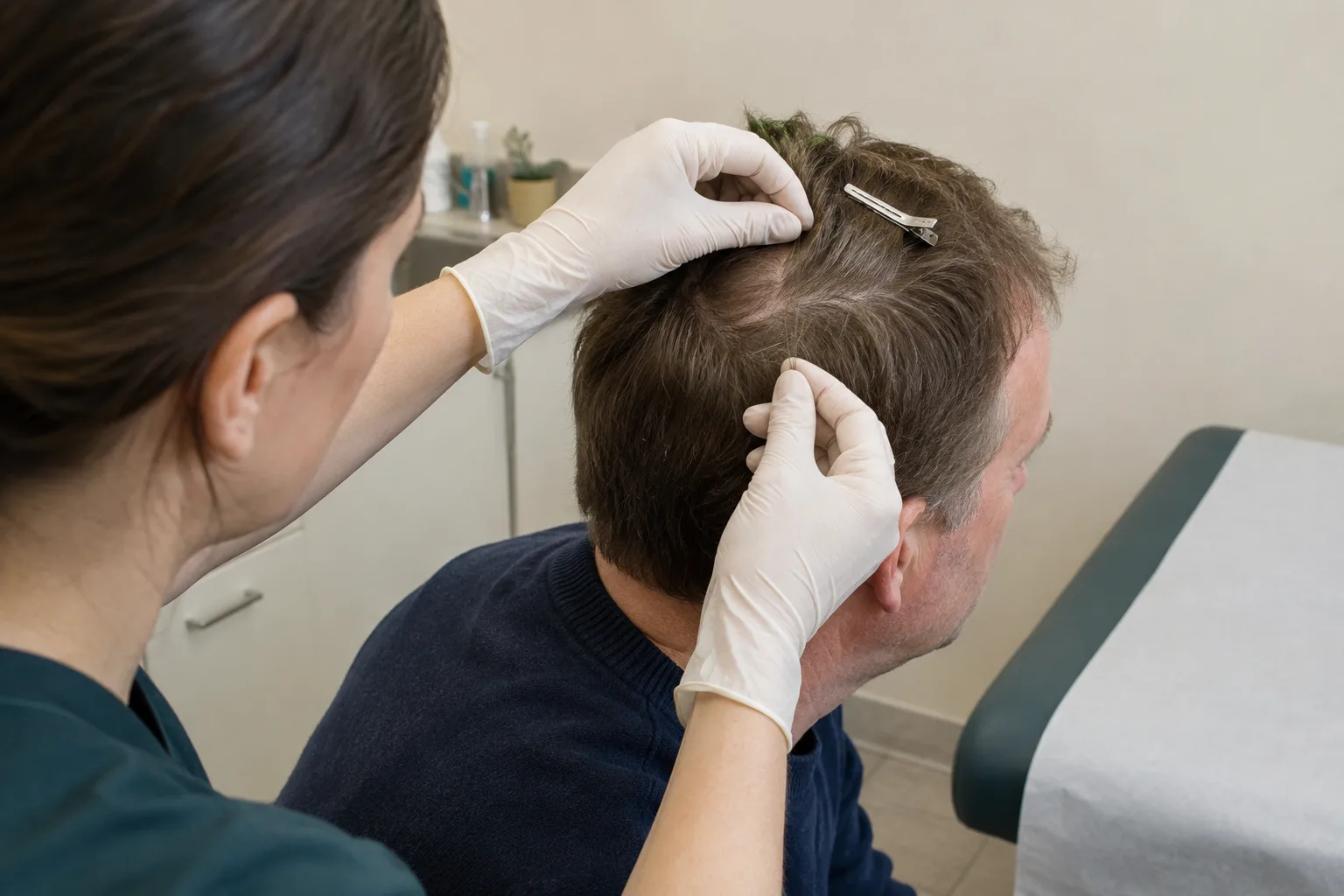
According to Mayo Clinic, clinicians typically start with a physical examination and questions about diet, hair care, medical history and family history. Blood tests can help uncover medical conditions linked to shedding.
A pull test, in which the doctor gently tugs a small bundle of hairs, helps determine the phase of shedding. Scalp biopsy can identify infections or inflammatory conditions by analysing roots and skin samples under a microscope.
Light microscopy of hairs trimmed at the base can reveal disorders of the hair shaft. These tools are used to separate pattern hair loss from other causes, guiding the best next steps.
For readers weighing whether their shedding is out of the ordinary, our explainer on how much hair loss is normal — and when to worry sets out typical ranges and red flags to discuss with a clinician.
Medicines
If hair loss is driven by an underlying disease, Mayo Clinic advises treating that condition first. Where a medicine may be contributing to shedding, a clinician may suggest pausing it, if appropriate.
For hereditary pattern hair loss, over‑the‑counter minoxidil in liquid, foam or shampoo forms is a common option. Mayo Clinic says products with minoxidil help many people regrow hair or slow loss, and results are typically assessed after at least six months of consistent use.
Possible minoxidil side effects include scalp irritation and unwanted hair growth on adjacent skin if the product spreads beyond the intended area. People often prefer foam formats because they are easier to apply to the scalp.
Finasteride is a prescription tablet for men that can slow loss and, in some cases, stimulate regrowth. Mayo Clinic notes it may not work as well for men over 60, and benefits usually depend on continued use to maintain gains.
Rare finasteride side effects include reduced sex drive and sexual function. Mayo Clinic also cautions about an increased risk of prostate cancer and advises that women who are or may be pregnant should avoid handling crushed or broken tablets. Our guide to finasteride for hair loss: benefits, risks and UK advice covers known effects and safety points in more detail.
Other oral options listed by Mayo Clinic include spironolactone and dutasteride, which some clinicians use in specific cases. Treatment choices depend on diagnosis, medical history and risk tolerance, and should be discussed with a GP or dermatologist.
Surgery
For permanent hair loss affecting the top of the scalp, hair transplant surgery can redistribute follicles from denser areas to thinning or bald patches. Procedures use small grafts containing one or several hairs, or sometimes a larger skin strip, placed into recipient sites.
Mayo Clinic explains that hospital admission is not usually required, but sedation is used for comfort. Risks include bleeding, bruising, swelling and infection, and more than one procedure may be needed to reach a desired density.
Crucially, hereditary hair loss continues to progress over time, so transplantation does not halt the underlying process. Mayo Clinic adds that surgical procedures for baldness are generally not covered by insurance. For a patient’s view of aftercare and warning signs, see our piece on hair transplant recovery: risks and when to seek help.
Devices
Low‑level laser therapy devices have been cleared by the US Food and Drug Administration for hereditary hair loss in men and women. Mayo Clinic cites small studies showing improved hair density, while noting that long‑term effects still need more research.
In the UK, these devices are marketed for home and clinic use, but expectations should be modest. Our explainer on laser treatment for hair loss: benefits, limits and UK advice outlines what evidence exists and who may benefit.
Self‑care and appearance options
Mayo Clinic encourages practical approaches to appearance alongside medical treatment. Volumising products, strategic colouring and hairstyles can make a widening part less noticeable. Some people choose wigs or extensions, and others prefer to shave the head.
If hair loss is due to a medical condition, Mayo Clinic notes the cost of a wig might be covered by insurance, and suggests speaking with a stylist about options. A supportive plan can improve confidence while medical treatment takes effect.
Preparing for your appointment
Mayo Clinic recommends arriving prepared. Bring a list of medications, vitamins and supplements, and note any major stresses or life changes that could be relevant. Writing down key questions can help make the most of a short visit.
Doctors may ask when the hair loss started, whether it is steady or episodic, and if there is shedding, breakage or slow growth. Family history, prior episodes and factors that worsen or improve the problem are also commonly explored during assessment.
The background
Pattern hair loss (androgenetic alopecia) is the most common cause of thinning in men and women, typically affecting the hairline, crown or part. Mayo Clinic’s overview focuses on this and other causes, including patchy hair loss such as alopecia areata.
Minoxidil remains a mainstay for pattern hair loss because it can prolong the growth phase of hair follicles and increase thickness in responders. Consistency is important, and stopping treatment usually leads to loss of any gains over time.
Finasteride reduces the effect of dihydrotestosterone (DHT) on susceptible follicles in men. Its benefits and risks are well described by clinicians, and shared decision‑making is key given the need for long‑term use to maintain results.
Medical evaluation helps rule out scalp infections or hair‑shaft disorders that need targeted treatment. It also checks for conditions that may worsen shedding, such as inflammatory scalp disease, which may require different medicines than those used for pattern loss.
Distinguishing shedding from breakage matters. Pull tests and microscopy, as outlined by Mayo Clinic, help clinicians determine if hairs are being lost at the root or snapping due to fragility, which points to different solutions.
Surgery can be an effective density‑building strategy once the diagnosis is secure and the pattern is stable. However, donor hair is a limited resource, and realistic planning is essential because native hair may continue to thin around transplanted grafts.
Device‑based therapies attract interest because they are non‑invasive, but results vary and take time to judge. As Mayo Clinic notes, evidence so far suggests possible density gains in some users, with unanswered questions about durability.
Self‑care decisions, including wigs and styling, can make a practical difference to day‑to‑day confidence. They also provide a bridge while medical treatments, which often act slowly, are given time to work.
What people are saying
Dermatologists generally advise getting a firm diagnosis before buying treatments. Tests described by Mayo Clinic help separate common pattern hair loss from conditions that need different management.
Clinicians often highlight that hair medicines demand patience. Mayo Clinic indicates several months are typically needed before people can tell if minoxidil or finasteride are helping, and stopping usually reverses benefits.
Safety monitoring is part of good care. Mayo Clinic lists scalp irritation and unwanted nearby hair growth with minoxidil, and rare sexual side effects and other warnings with finasteride, underscoring the value of medical supervision.
Specialists also remind patients that surgery is not a cure for hereditary loss. Planning considers donor supply, future thinning and the possibility of more than one procedure to sustain a natural look over time.
For those unsure about tablets, non‑drug options like low‑level laser therapy and cosmetic approaches can be considered, with the understanding that results vary and the evidence base is still developing in places.
People exploring supplements or diet changes are encouraged to avoid unproven claims. Our guide to vitamins for hair loss: what helps and what to know covers when testing and targeted correction may make sense.
What happens next
If you are noticing ongoing thinning or patchy loss, it is worth speaking to a GP, dermatologist or trichologist. Bringing a timeline of symptoms, photos and a list of medicines helps your clinician match the tests Mayo Clinic describes to your situation.
A treatment plan may combine minoxidil, prescription medicines or device‑based therapy, alongside appearance strategies such as wigs or styling. Expect to review progress after several months, adjusting the plan based on response and side effects.
People considering surgery should discuss graft numbers, donor planning, risks and likely need for future procedures. Mayo Clinic’s reminder that hereditary loss progresses helps set expectations and supports long‑term planning.
For patchy alopecia areata, Mayo Clinic notes that spontaneous regrowth can occur within a year, so options typically range from watchful waiting to targeted treatments, depending on severity and personal preference.
Financing and access are practical considerations. Mayo Clinic states that hair transplant surgery is not usually insured, and that wigs may be covered if hair loss is due to a medical condition, so checking individual policies is sensible.
Whichever route you choose, tracking changes with regular photos, noting any side effects promptly, and maintaining follow‑up with your clinician can improve outcomes and reduce risks over time.
Related: Best hair loss treatments in 2026: what experts say
Related: Sugar study suggests hair regrowth in mice, matching minoxidil
Why this matters
Hair loss is common and confusing, and people often try products before they have a diagnosis. Mayo Clinic’s guidance sets out the core tests and options so readers can plan a sensible next step with a GP, dermatologist or trichologist. It also explains timelines, risks and alternatives — from medicines to devices and wigs. If costs are a concern, our explainer on NHS wigs: costs, free entitlement and help with charges may help you explore support.
Common questions
- what tests do doctors use to diagnose hair loss
- Doctors may use blood tests, a pull test, scalp biopsy and light microscopy to determine causes and hair‑shaft problems, according to Mayo Clinic.
- how long does minoxidil take to work for hair loss
- Mayo Clinic says it usually takes at least six months of consistent use before you can judge if minoxidil is helping regrowth or slowing loss.
- does finasteride work for older men with hair loss
- Finasteride may not work as well for men over 60, according to Mayo Clinic, and benefits require continued use to maintain any gains.
- what are finasteride side effects for hair loss treatment
- Mayo Clinic lists rare side effects including reduced sex drive and sexual function, plus an increased risk of prostate cancer and handling precautions in pregnancy.
- can alopecia areata regrow without treatment
- Yes. Mayo Clinic notes patchy alopecia areata can regrow without treatment within a year in some people.
- are hair transplants permanent for male pattern baldness
- Transplants move hair to thinning areas but do not stop hereditary loss progressing, Mayo Clinic advises, and more than one surgery may be needed.
- do low level laser devices work for hair loss
- Mayo Clinic reports FDA‑cleared devices with small studies showing improved density, but long‑term effects remain uncertain and more research is needed.
- can insurance cover wigs for medical hair loss
- Mayo Clinic says wig costs might be covered if hair loss is due to a medical condition. Coverage varies, so check your policy.
Sources
- Mayo Clinic: Hair loss - Diagnosis and treatment - Mayo Clinic
- Medical Xpress: Expert shares practical tips for treating hair loss
This article was written by Thicker Thinking using the sources listed above. It is for general information and is not medical advice. Speak to your GP, a dermatologist or a qualified trichologist about your own situation.