Research and Studies
He Shou Wu for hair loss: new review suggests multi‑pathway effects
Ancient Chinese herb He Shou Wu is linked to multiple hair pathways in a new review, but clinical proof in people is still lacking.
By the Thicker Thinking Editorial Team
Published · 5 min read
Quick answerA new review suggests He Shou Wu (Polygonum multiflorum) may influence several hair‑growth pathways relevant to pattern baldness, according to The Independent and youtube.com. Evidence is early and largely lab‑based, so people should speak to a clinician before trying it.
A traditional Chinese root, He Shou Wu (Polygonum multiflorum), is drawing new attention for potential benefits in male pattern hair loss after a research review highlighted multi‑pathway effects, according to The Independent and youtube.com.
The paper in the Journal of Holistic Integrative Pharmacy links the herb to mechanisms that could matter in androgenetic alopecia, the most common form of hair thinning in men.
What happened
Researchers evaluated evidence spanning laboratory studies, clinical reports and historical herb records to map how Polygonum multiflorum might affect hair biology, The Independent reports.
They concluded the herb appears to act on several fronts at once, rather than through a single target commonly seen with licensed treatments.
In androgenetic alopecia, dihydrotestosterone (DHT) gradually miniaturises follicles; the review suggests He Shou Wu may reduce the hormone’s impact on follicle cells.
The authors also point to anti‑apoptotic effects, meaning support for follicle cells to avoid premature programmed cell death that can disrupt the growth cycle.
Improved scalp microcirculation was flagged as another potential action, which could benefit follicles that rely on a steady nutrient and oxygen supply.
The review notes activation of regeneration‑related signalling pathways involved in cell growth, tissue repair and communication inside the follicle environment.
Ex vivo and cell culture findings referenced on youtube.com add detail: extracts prolonged anagen, the growth phase, and dampened DHT effects in dermal papilla cells central to follicle control.
These lab signals align with the herb’s traditional reputation for supporting hair and vitality in Chinese medicine over more than a millennium, The Independent notes.
The Independent attributes the work to author Han Bixian, who said modern data increasingly matches historical observations, adding: “Modern studies now confirm that this isn’t folklore; it’s pharmacology.”
The authors contrasted Polygonum multiflorum’s multi‑target profile with many single‑pathway medicines, though they emphasised the need to translate mechanisms into human outcomes.
They reported that traditionally prepared forms show a more favourable safety profile than raw material when “properly processed,” highlighting preparation as a critical quality step.
Dermatologists generally advise that, until clinical trials in people show clear regrowth benefits, proven therapies remain first‑line for pattern hair loss.
Current UK‑used options include topical minoxidil and oral finasteride; both have the strongest evidence base for androgenetic alopecia and are covered in our review of the best hair loss treatments in 2026.
People weighing alternatives are often balancing efficacy against tolerability, as finasteride can cause sexual side effects and minoxidil may irritate the scalp in some users, The Independent notes.
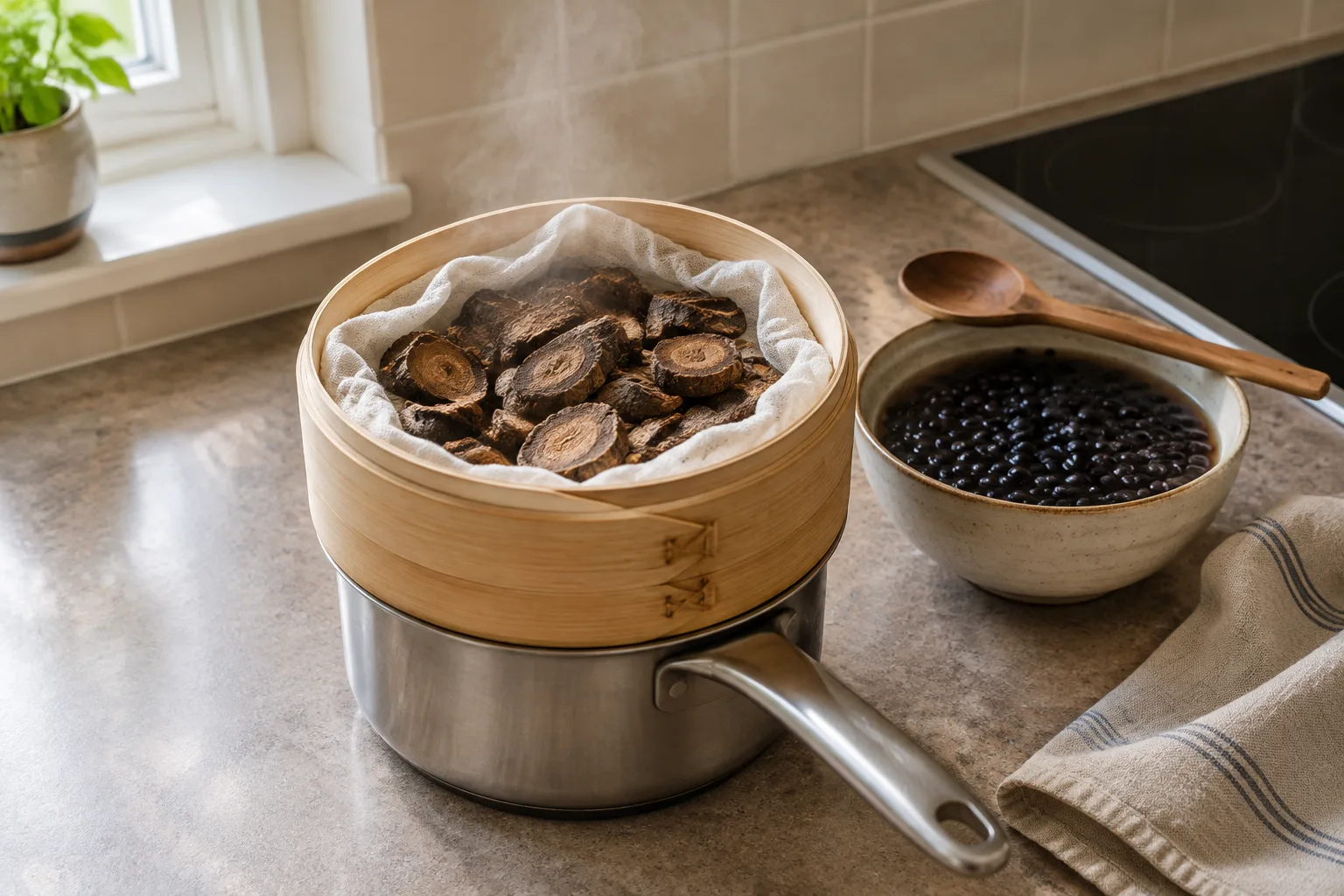
Traditional practice described on youtube.com stresses that He Shou Wu is usually steamed with black soybean juice before use and combined with other herbs rather than taken alone.
The video further distinguishes between hair colour research and hair loss biology, noting that darkening grey hair and reversing follicle miniaturisation are separate questions.
The background
Androgenetic alopecia involves a gradual shortening of anagen and thinning of hairs as follicles shrink under androgen influence over time.
DHT, a metabolite of testosterone, binds to receptors in susceptible follicles, contributing to miniaturisation and reduced hair shaft calibre.
Dermal papilla cells at the base of the follicle regulate the switch between growth and rest phases, making them a frequent focus for experimental therapies.
Licensed medicines each act differently: finasteride reduces DHT production, while minoxidil is thought to increase blood flow and prolong anagen in part via potassium channel effects.
Multi‑pathway agents can look promising in models, but dermatologists generally await randomised, controlled trials that track density, diameter and patient‑reported outcomes over months.
Variation in herbal sourcing, processing and dosing complicates comparison across studies, reinforcing the need for standardised extracts in future trials.
Nutrition, iron status and thyroid health can influence shedding in some people, which is why clinicians often assess broader health alongside scalp findings; see our explainer on what makes hair grow faster — and what causes breakage.
People sometimes self‑supplement with multiple products for months without clear benefit, and dermatologists generally advise setting a review point to judge response objectively with photos and part‑width measures.
Hair loss patterns differ by cause, so confirming the diagnosis matters; our guide to alopecia types, causes and warning signs outlines the common variants and when they overlap.
What people are saying
The Independent reports that the review positions He Shou Wu as a candidate for next‑generation therapies that may work alongside existing medicines rather than replace them.
Youtube.com highlights that extracts have lengthened anagen and countered DHT’s effects in lab systems, suggesting a rationale for testing in human androgenetic alopecia.
Practitioners of Chinese medicine typically emphasise preparation and formula context, noting that raw versus prepared roots can behave differently in the body, as described on youtube.com.
Dermatologists generally caution that laboratory findings do not guarantee clinical regrowth and recommend avoiding abrupt cessation of proven treatments without medical input.
Clinicians also flag quality assurance for herbal products, advising patients to consider reputable suppliers and to discuss potential interactions with prescribed medicines.
Nutritional supplements marketed for hair often mix botanicals, vitamins and minerals; the evidence base varies, as we outline in vitamins for hair loss: what helps and what to know.
Side‑effect concerns drive some to seek alternatives; The Independent notes the review’s claim that properly processed He Shou Wu may be acceptable to people wary of sexual or scalp side effects.
General clinical advice is to monitor liver health when trying new botanicals associated with historic safety questions and to stop and seek care if symptoms such as jaundice or dark urine appear.
People considering changes to finasteride use should discuss risks and benefits first; our guide to finasteride for hair loss summarises known benefits, side effects and UK advice.
What happens next
Researchers hope to move from mechanistic and ex vivo results to randomised, placebo‑controlled trials in men and women with confirmed androgenetic alopecia.
Key trial endpoints would likely include photographic density counts, hair‑shaft diameter, global investigator assessments and patient‑reported outcomes over at least six to twelve months.
Standardising He Shou Wu extracts and preparation methods will be essential to interpret results and compare across studies, given the importance of processing noted by traditional practice.
Safety monitoring should be built into trials, including liver function testing and adverse‑event tracking, to define tolerability in real‑world dosing ranges.
Combination studies could explore whether multi‑pathway botanicals add to minoxidil or lower‑dose finasteride effects, while checking for interactions and cumulative side effects.
If future data show meaningful benefit, guidance would still need to clarify who is most likely to respond, how long to try it, and how to assess success objectively.
For now, people curious about botanicals can discuss options with a GP, dermatologist or trichologist, set realistic expectations and plan regular follow‑up to review progress.
Why this matters
People living with hair loss often weigh effectiveness against side effects. This review suggests He Shou Wu could act on several hair pathways, but human trials are still needed. If you are considering botanicals, speak to a GP, dermatologist or trichologist to confirm the cause, discuss proven options, and plan safe monitoring. Our overview of alopecia types and warning signs can help you prepare for that conversation.
Common questions
- what is he shou wu and how is it linked to hair loss
- He Shou Wu is Polygonum multiflorum, a root used in Chinese medicine. A new review links it to multiple hair‑growth pathways relevant to androgenetic alopecia, but clinical proof in people is still lacking.
- does he shou wu work for male pattern baldness
- Early lab and review data suggest potential actions against DHT and support for follicle growth, according to The Independent and youtube.com. There are no robust clinical trials proving regrowth yet.
- how might he shou wu help hair growth
- Researchers report several mechanisms: blunting DHT effects, supporting follicle cell survival, improving scalp microcirculation and activating regeneration‑related signalling pathways seen in lab models.
- is the evidence for he shou wu in hair loss strong
- No. Most evidence cited is laboratory or ex vivo, not large, controlled human trials. Dermatologists generally advise sticking with proven treatments while research continues.
- is he shou wu safe to try for hair loss
- Safety appears to depend on processing and product quality, with traditional preparation viewed as important. Clinicians advise caution and medical guidance, especially regarding potential liver considerations.
- what is the difference between hair colour claims and hair loss claims
- Keeping hair dark involves pigment cells, while hair loss involves follicle miniaturisation under hormones like DHT. Evidence for colour does not automatically translate to thicker hair.
- can he shou wu be used with finasteride or minoxidil
- There is no clinical guidance on combinations yet. People considering changes or additions should speak to a GP, dermatologist or trichologist to assess risks, benefits and interactions.
- what research comes next for he shou wu in hair loss
- Randomised, placebo‑controlled trials with standardised extracts are needed, measuring density, diameter and patient outcomes over months, alongside careful safety monitoring.
Sources
- The Independent: The ancient Chinese herb that transforms hair loss: ‘Studies now confirm this isn’t folklore’ | The Independent
- youtube.com: This 1,000-Year-Old Chinese Herb Reverses Hair Loss (New Research) - YouTube
This article was written by Thicker Thinking using the sources listed above. It is for general information and is not medical advice. Speak to your GP, a dermatologist or a qualified trichologist about your own situation.