Hair Loss Causes
Central centrifugal cicatricial alopecia: causes and signs
A scarring hair loss that starts at the crown, with new case reports on a supplement drawing interest but needing stronger evidence.
By the Thicker Thinking Editorial Team
Published · Updated · 6 min read
Quick answerCentral centrifugal cicatricial alopecia is a scarring scalp condition that begins on the crown and can cause permanent hair loss, most often in women of African descent. Early diagnosis and anti‑inflammatory treatment may slow progression; hair lost from scarred follicles does not regrow.
Central centrifugal cicatricial alopecia (CCCA) is a scarring form of hair loss that typically starts on the crown and expands outward. According to DermNet, it is the most common scarring alopecia seen in Black women, though men and people of other ethnicities can be affected too.
A small case series published in the Journal of Drugs in Dermatology in October 2026 reported improvement in two people with CCCA taking a proprietary nutrient supplement alongside standard therapies. Researchers described follow‑up at two and four months after adding the supplement, with visual gains documented in clinic photographs.
What happened
Researchers in the United States presented two cases of CCCA treated with an over‑the‑counter supplement marketed for hair support, called Xtressé, added to each person’s ongoing medical plan. Both cases involved clinically and biopsy‑confirmed CCCA affecting the crown area.
In one case, a 55‑year‑old woman had treatment with topical minoxidil, topical clobetasol and a single intralesional steroid injection before the supplement was started two weeks after biopsy. The supplement was then continued alongside these anti‑inflammatory and growth‑supporting measures.
The authors reported “notable improvement” at two‑ and four‑month reviews after adding the supplement, based on serial photographs. Because the patients remained on multiple therapies during follow‑up, any contribution from the supplement is uncertain and would require controlled studies to clarify.
Dermatologists generally advise that case reports are useful signals but cannot establish efficacy on their own. Larger, randomised studies are needed to determine whether any supplement adds benefit beyond standard care for CCCA.
The background
CCCA causes progressive destruction of hair follicles with replacement by scar tissue, leading to permanent loss in affected areas. DermNet notes this process typically begins at the vertex (crown) or mid‑scalp and advances centrifugally, often over years.
Symptoms vary. Some people have scalp tenderness, itching or burning around the thinning area, while others notice little more than widening patches of loss. Early hair breakage at the crown can be a warning sign before obvious thinning develops.
On examination, loss of normal follicular openings may give the scalp a shiny look in the affected zone. A photographic scale has been developed to grade central scalp hair loss severity in clinical practice and research.
The exact cause is not fully understood and appears multifactorial. According to DermNet, variants in the PADI3 gene, which encodes a hair‑shaft‑related enzyme, have been found in some people with CCCA, supporting a genetic component in at least a subset.
Hair care practices such as tight braids, weaves, chemical relaxers and intensive heat have long been suspected risk factors, but studies show inconsistent links. Dermatologists still recommend avoiding painful or irritating styles while research continues, aligning with guidance in our report on Black hair care practices and hair loss: what dermatology says.
Medical comorbidities may intersect. One study cited by DermNet found an association between CCCA and type 2 diabetes, suggesting a possible systemic link, though causality has not been established.
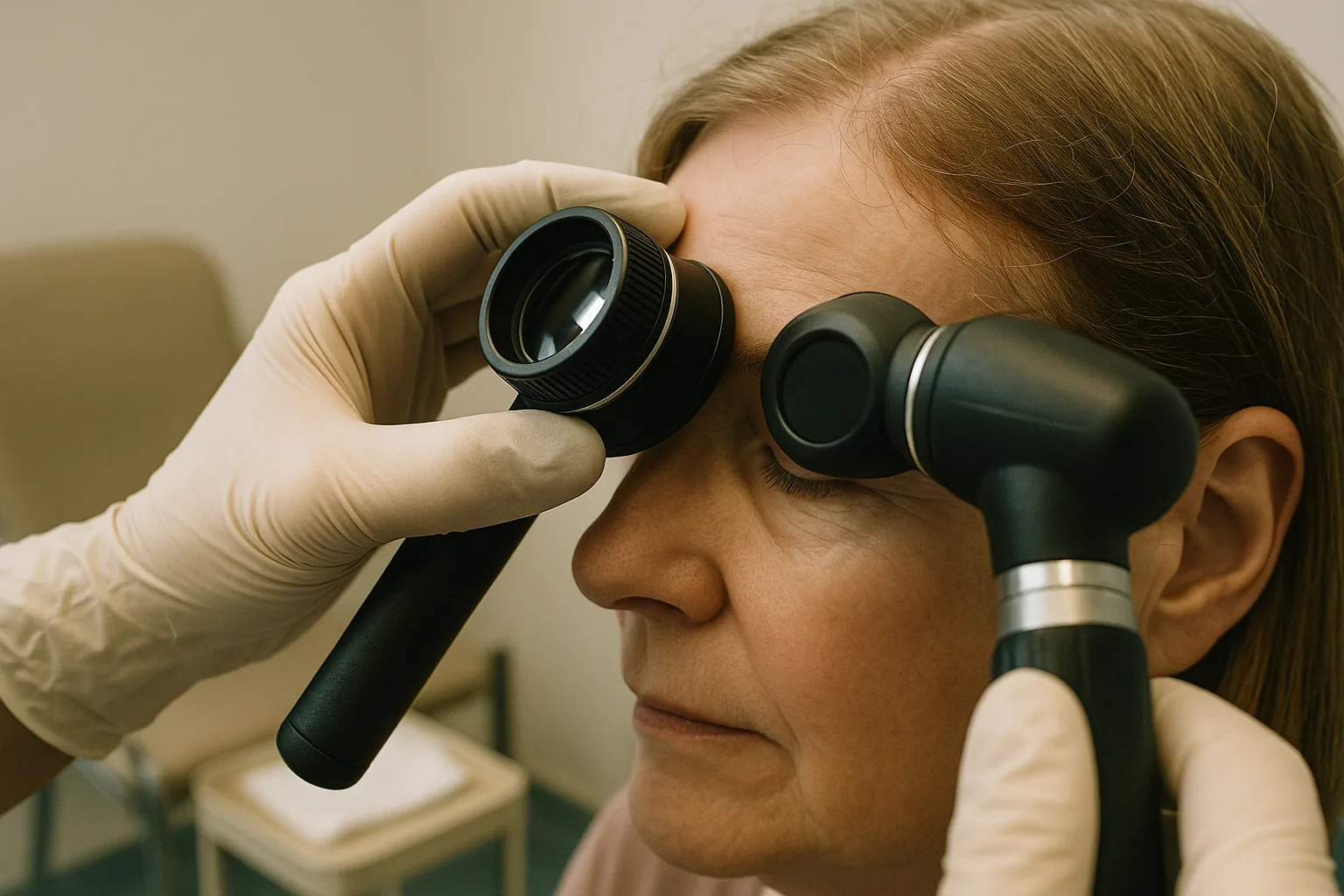
Diagnosis rests on clinical patterns plus scalp biopsy to confirm scarring inflammation and to exclude look‑alike conditions. The preferred biopsy site is the “active” edge of the patch, where inflammation is present, rather than the bald centre where follicles may already be scarred.
Under the microscope, CCCA typically shows lymphocytic inflammation around the upper hair follicle and fibrous scarring. Premature shedding of the follicle’s inner root sheath is commonly seen in tissue samples.
Dermatologists classify CCCA as a primary scarring alopecia, similar in its scarring outcome to conditions like lichen planopilaris and folliculitis decalvans, but with its own pattern and histology. For comparison on another scarring type, see our explainer on folliculitis decalvans: scarring scalp inflammation that causes hair loss.
Treatment aims to halt progression, as follicles replaced by scar tissue cannot produce hair. Anti‑inflammatory approaches commonly include potent topical steroids, intralesional steroid injections, topical calcineurin inhibitors, oral tetracyclines, hydroxychloroquine or ciclosporin, tailored to the individual’s disease activity and tolerance.
Topical minoxidil may help stimulate growth in follicles that remain viable at the margins of thinning areas. Treating coexisting scalp conditions such as seborrhoeic dermatitis can reduce additional irritation and scale that may aggravate symptoms.
Surgical options are limited. Hair transplantation may be considered only when the disease has been well controlled and stable for an extended period, and even then graft survival is often low, which specialists weigh carefully before recommending surgery.
Practical hair care changes form part of management. DermNet advises avoiding tight, traction‑creating styles and minimising high heat, while opting for comfortable, non‑irritating, natural hairstyles that do not inflame the scalp or cause breakage.
Shampooing frequency varies widely. Among Black women, washing every week or two is common and can help prevent excessive dryness; this is considered normal and does not, by itself, drive CCCA, according to DermNet.
For readers comparing symptoms, our guide to scalp conditions that cause hair loss: signs and next steps outlines red flags that warrant medical assessment and how scarring patterns differ from non‑scarring shedding.
What people are saying
Dermatologists generally stress swift assessment when central scalp thinning is noticed, because early anti‑inflammatory treatment can limit irreversible loss. Prompt biopsy from an active edge is often recommended to confirm diagnosis and guide therapy.
Specialists commonly set expectations that stabilising disease is the main goal. As the JDD authors put it, “hair will not grow from permanently damaged hair follicles,” underscoring the need for early action before scarring dominates.
Where hair grooming is concerned, clinicians usually advise stopping painful or inflammatory practices, spacing out chemical services, and reducing high‑heat tools. This aligns with broader traction avoidance principles previously discussed in our piece on Black hair care practices and hair loss.
On adjunctive therapies, the 2026 JDD case series suggests possible benefit from a nutrient supplement added to standard care, but clinicians caution that two uncontrolled cases cannot prove effectiveness. Balanced nutrition remains important, while decisions on supplements are best made with a clinician.
Regarding medical options, dermatologists often combine topical and intralesional steroids with other anti‑inflammatories over months, monitoring symptoms and trichoscopic signs. If seborrhoeic dermatitis is present, medicated shampoos and topical agents are used to calm scale and itch.
Experts also flag limited roles for surgery. Transplantation is generally reserved for stable, well‑controlled disease and even then carries a risk of poor graft take, making non‑surgical stabilisation the priority.
For context on another scarring pattern that often affects the hairline rather than the crown, readers can see our overview of frontal fibrosing alopecia: receding hairline cause explained.
What happens next
Future research priorities include clarifying the genetics of CCCA and how PADI3 variants influence hair‑shaft biology, which could point to new, targeted treatments. At present, no therapy specifically targets the underlying cause.
Larger, controlled trials are needed to test supportive strategies, including nutrient supplements like the one described in the JDD case series, and to define which combinations of anti‑inflammatories achieve the most durable disease control.
DermNet notes small case‑series evidence that low‑dose oral metformin was associated with symptomatic improvement, which warrants further study. Replication and head‑to‑head comparisons with standard care would help clinicians decide where, if anywhere, such adjuvants fit.
Improved awareness among primary care teams and hair professionals could shorten the path to diagnosis. Early referral to a dermatologist or trichologist familiar with scarring alopecias offers the best chance to preserve remaining follicles.
Inclusive clinical research that reflects the communities most affected is also essential. Consistent use of photographic scales and biopsy protocols will improve comparability across studies and help patients and clinicians track response objectively over time.
Related: Folliculitis and hair loss: causes, signs and next steps
Related: Alopecia mucinosa: causes, signs and treatment options
Why this matters
For people in the UK who notice thinning or breakage starting at the crown, CCCA is a key cause to recognise early because scarring hair loss is permanent once established. Prompt assessment can slow progression, and gentle styling choices help protect remaining follicles. If you have tender, itchy or enlarging patches at the crown, speak to a GP, dermatologist or trichologist for assessment and a treatment plan. For practical styling changes that reduce scalp strain, see our guide to Black hair care practices and hair loss.
Common questions
- what is central centrifugal cicatricial alopecia
- It is a scarring scalp condition that usually begins on the crown and spreads outward, leading to permanent hair loss in affected areas.
- who gets CCCA most often
- CCCA is most commonly seen in Black women, though it can affect men and people of all races and hair types.
- what are early signs of CCCA
- Early signs can include hair breakage at the crown, scalp tenderness, itching or burning, followed by slowly expanding thinning patches.
- is hair loss from CCCA permanent
- Hair loss is permanent where follicles have been replaced by scar tissue, but early treatment may preserve hair in still‑viable areas.
- how is CCCA diagnosed
- Diagnosis combines clinical examination with a scalp biopsy from the active edge of a lesion to confirm scarring inflammation and rule out mimics.
- what treatments are used for CCCA
- Anti‑inflammatory treatments such as topical or injected steroids and other immunomodulators are used to halt progression; minoxidil may support remaining follicles.
- do tight styles and relaxers cause CCCA
- Traction styles and chemical relaxers have been implicated, but studies show inconsistent links. Dermatologists advise avoiding painful, irritating or high‑heat practices.
- what is the evidence for supplements like Xtressé in CCCA
- A small two‑case series reported improvement after adding Xtressé to standard care, but controlled trials are needed to confirm any benefit.
Sources
- DermNet: Central centrifugal cicatricial alopecia
- jddonline.com: Central Centrifugal Cicatricial Alopecia and the Use of Xtressé Nutrient Supplement: A Case Series - JDDonline - Journal of Drugs in Dermatology
This article was written by Thicker Thinking using the sources listed above. It is for general information and is not medical advice. Speak to your GP, a dermatologist or a qualified trichologist about your own situation.