Research and Studies
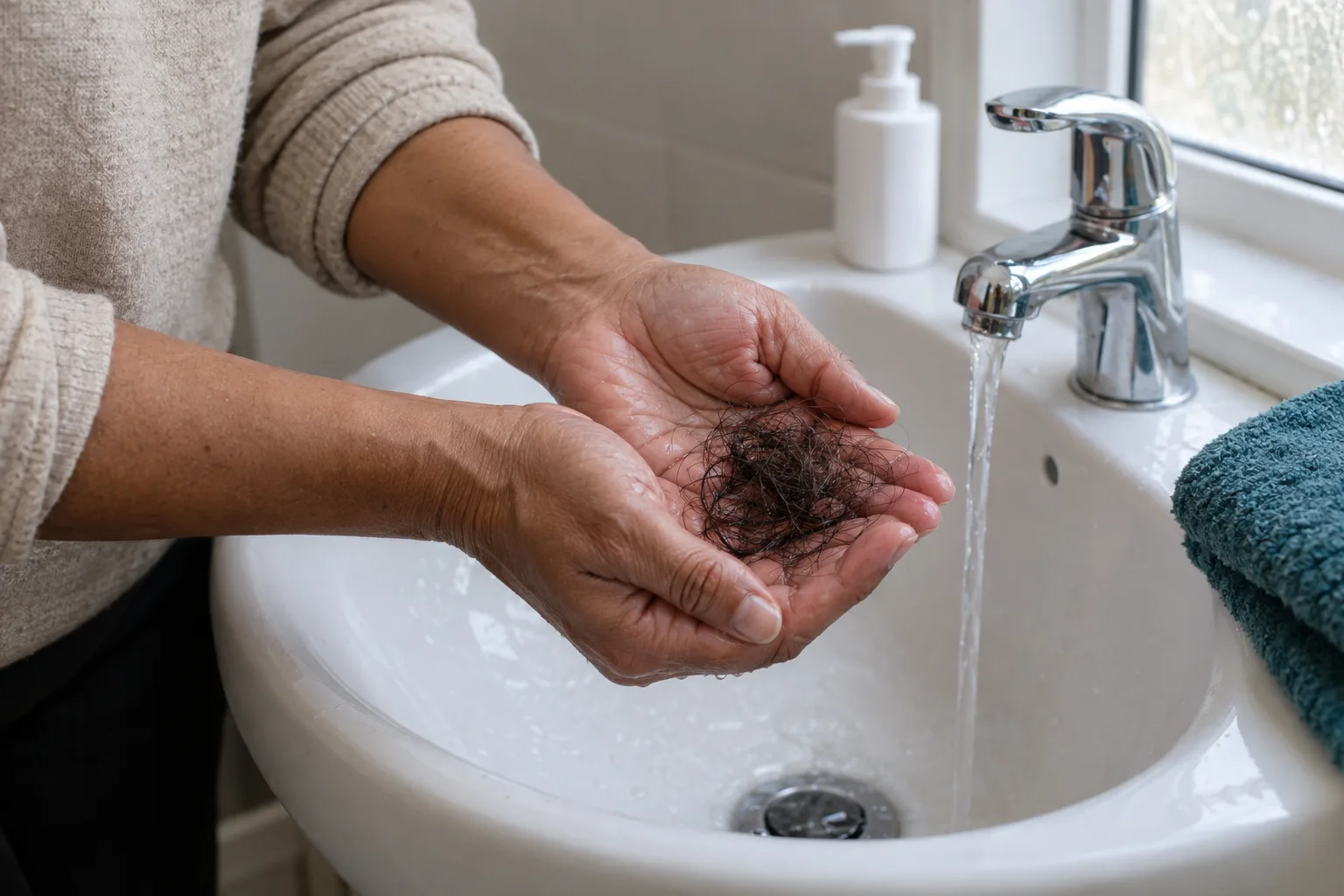
Long Covid adds hair loss and erectile problems, study finds
University of Birmingham data link long Covid with hair loss and erectile dysfunction alongside 60 other symptoms.
By the Thicker Thinking Editorial Team
Published · 6 min read

Quick answerA large UK study has linked long Covid with hair loss and erectile dysfunction among 62 symptoms reported 12 weeks after infection. Researchers also identified higher‑risk groups, including women, younger adults and people from deprived backgrounds.
Hair loss and erectile problems have been added to the growing list of long Covid features, according to The Independent and pmc.ncbi.nlm.nih.gov. The new signals emerged from real‑world NHS records showing dozens of symptoms reported more often at least 12 weeks after coronavirus infection than in matched people without recorded infection.
The scale of the issue remains substantial in the UK. Office for National Statistics estimates indicate about two million people are living with long Covid, equating to roughly 3.1% of the population, with hundreds of thousands reporting symptoms persisting for two years or more.
What happened
Researchers at the University of Birmingham analysed anonymised electronic health records for 2.4 million people in the UK between January 2020 and April 2021, according to The Independent. The dataset included 486,149 with prior infection and 1.9 million matched controls without a recorded infection.
People who had tested positive were more likely to report 62 distinct symptoms at least 12 weeks later than matched controls, researchers found. These spanned body systems beyond the lungs, underlining the multi‑system nature of post‑Covid illness.
When the team focused on those not admitted to hospital, three broad symptom groupings stood out: respiratory complaints, mental‑health and cognitive issues, and a wider grab‑bag of problems affecting other organs and functions.
The expanded list included hair loss and erectile dysfunction alongside neurological and gastrointestinal features such as memory problems, hallucinations, difficulty carrying out learned movements, bowel incontinence and limb swelling, The Independent reported.
The study also flagged groups with higher reported risk of long Covid. Women, younger adults, and people from Black, mixed or other minority ethnic backgrounds were more likely to report ongoing symptoms than matched peers.
Lifestyle and health factors were linked to increased risk. Deprivation, smoking, higher body mass index, and having one of a wide range of existing health conditions were all associated with persistent problems after infection.
The NHS currently lists fatigue, breathlessness, chest pain or tightness, and brain fog among common long Covid symptoms. The new analysis suggests clinicians should watch for a broader symptom spectrum, including changes to hair and sexual function.
“Long Covid symptoms are extremely broad,” said Dr Shamil Haroon, senior author, quoted by The Independent. The authors suggested their list could help refine assessments and future clinical guidance.
Lead author Anuradhaa Subramanian noted that the higher risk seen in women raises questions about immune mechanisms, including autoimmunity, as possible contributors that warrant investigation, The Independent reported.
A separate 2026 systematic review with meta‑analysis, highlighted by pmc.ncbi.nlm.nih.gov, examined persistent Covid symptoms in both the general population and healthcare workers, underscoring ongoing international efforts to map and characterise long Covid.
The background
Dermatologists describe the most common post‑illness shedding pattern as telogen effluvium, where a physical stressor such as infection, fever or surgery shifts more follicles into a resting and then shedding phase.
This diffuse shedding often begins two to three months after the trigger and may continue for several months before easing as the hair cycle resets.
In most cases, regrowth follows without specific treatment, though overall density can take many months to look fuller. Gentle hair care and patience are usually advised while monitoring for recovery.
Patchy bald spots or sharply defined areas of loss point to a different condition, alopecia areata, which is autoimmune. Viral infections and psychological stress are recognised triggers for flares in some people. For context on management advances, see our piece on new guidance and trial results for alopecia areata in 2026.
Stress around illness and recovery can exacerbate shedding and scalp‑focused behaviours, which may worsen hair breakage or loss. Support for mood and anxiety can help, as explored in our feature on the psychological effects of hair loss.
Dermatologists generally advise checking common, treatable drivers if shedding is heavy or prolonged. Iron deficiency, thyroid disease and nutritional shortfalls are frequent culprits and can be addressed once identified by a clinician.
Day‑to‑day care can make a difference during recovery. Experts often recommend avoiding tight styles, limiting harsh chemical processes and heat, and using camouflage options. Our guide to haircuts that make thin hair look fuller covers styling ideas that do not stress the scalp.
Early laboratory science hints at links between stress, immunity and hair follicles. Animal work we reported on connected stress‑primed immune responses with shedding; this is early evidence in mice, not people, but it helps frame hypotheses for long Covid research. See our summary of the stress–immune ‘memory’ study in mice.
Long Covid’s inclusion of erectile dysfunction alongside hair loss highlights how post‑viral effects can involve vascular, neurological and hormonal pathways, not only the respiratory system. That breadth aligns with the three symptom clusters identified by the researchers.
Not everyone with long Covid will experience hair loss, and hair loss after illness does not always mean long Covid. The study reports population‑level patterns, while individual experiences vary widely.
What people are saying
UK dermatology clinics have seen more cases of post‑illness telogen effluvium since 2020, and many report similar surges following other infections or major operations. The pattern with Covid appears to follow the usual telogen effluvium timeline in many patients.
Dermatologists generally advise watching for regrowth over several months and seeking medical review if shedding is patchy, is accompanied by scalp pain, redness or scale, or is not improving by around the six‑month mark. Our explainer on telogen effluvium’s six‑month decision point outlines when to ask for help.
GPs can arrange basic blood tests, review medicines and refer to dermatology if needed. For those with persistent multi‑system symptoms, local Long Covid services may offer rehabilitation and symptom management plans.
Some people with alopecia areata flares after illness require specialist care. For severe, refractory cases, newer medicines called JAK inhibitors are now available for some patients on the NHS following NICE approval. We covered this in detail in our report on deuruxolitinib for severe alopecia areata.
Lifestyle measures that support recovery—adequate sleep, balanced nutrition and gradual return to activity—are often encouraged. No supplement or topical product can guarantee faster regrowth, and dermatologists caution against expensive, unproven treatments.
Emotional support matters too. Hair changes can affect self‑confidence and wellbeing, and brief psychological support or peer groups can be helpful while hair recovers and other long Covid symptoms are addressed.
What happens next
Researchers are now working to refine symptom definitions and test biological explanations for long Covid, including potential roles for autoimmunity, microvascular changes and autonomic dysregulation. Larger, longer studies will be needed to confirm mechanisms behind hair changes.
Real‑world analyses of health records, alongside systematic reviews, will continue to track who is most at risk and which symptoms improve over time. The 2026 meta‑analysis indexed by pmc.ncbi.nlm.nih.gov reflects this sustained effort across both the general public and healthcare workers.
For individuals noticing increased shedding after Covid, an early discussion with a GP can help rule out other causes, organise basic tests and set expectations for recovery. Referral to dermatology or trichology is appropriate if the diagnosis is unclear or if red‑flag features are present.
Until hair‑specific long Covid trials report, care will mirror established approaches for telogen effluvium and alopecia areata, tailored to each person’s history and symptoms by a GP, dermatologist or trichologist. Patience, scalp‑friendly routines and psychological support can make the wait more manageable.
Why this matters
For people in the UK living with hair loss, this research connects increased shedding to long Covid in a large, real‑world dataset. That helps explain patterns clinics are seeing and may guide assessments. If shedding is heavy, patchy, scarring, or not easing by six months, speak to a GP, dermatologist or trichologist. Multi‑system symptoms affecting daily life also warrant medical advice and possible referral to Long Covid services. Our guide to the psychological effects of hair loss offers support ideas while you seek help.
Common questions
- does long covid cause hair loss
- Yes. A UK analysis found hair loss reported more often 12 weeks after infection than in matched controls. Dermatologists say many cases follow telogen effluvium, a temporary shedding after illness.
- what new long covid symptoms did researchers identify
- Researchers reported 62 symptoms seen more often after infection, including hair loss, erectile dysfunction, memory problems, hallucinations, bowel incontinence and limb swelling.
- who is most at risk of long covid according to the study
- Women, younger adults, and people from Black, mixed or other minority ethnic groups had higher risk. Deprivation, smoking, higher BMI and pre‑existing conditions were also linked.
- how common is long covid in the uk right now
- ONS estimates suggest around two million people in the UK live with long Covid, about 3.1% of the population, with many symptomatic for two years or more.
- how long after covid does hair loss usually start
- Dermatologists report telogen effluvium often begins two to three months after illness or fever, then gradually improves over subsequent months as regrowth starts.
- when should i see a doctor for hair loss after covid
- See a GP if shedding is patchy, painful, scarring, or not easing by around six months. Persistent multi‑system symptoms also warrant medical advice and possible referral.
- what did the 2026 meta‑analysis on persistent covid symptoms look at
- According to pmc.ncbi.nlm.nih.gov, it systematically reviewed persistent Covid symptoms in both the general population and healthcare workers to map ongoing burdens.
- what clusters of long covid symptoms did researchers find
- They identified three clusters: respiratory symptoms; mental‑health and cognitive problems; and a broader set affecting other organs and functions.
Sources
- The Independent: Long Covid symptoms now include erectile dysfunction and hair loss | The Independent
- pmc.ncbi.nlm.nih.gov: Persistent COVID‐19 Symptoms in General Population and Healthcare Workers: Systematic Review With Meta‐Analysis - PMC
This article was written by Thicker Thinking using the sources listed above. It is for general information and is not medical advice. Speak to your GP, a dermatologist or a qualified trichologist about your own situation.