TrendingTreatments in the News
Alopecia areata: new guidance and trial results in 2026
New consensus guidance, an adolescent approval and trial updates are reshaping severe alopecia areata care in 2026.
By the Thicker Thinking Editorial Team
Published · Updated · 6 min read

Quick answerInterest in alopecia areata is rising as 2026 brings a first evidence‑based care pathway and fresh trial data. A new US consensus prioritises oral JAK inhibitors for severe disease, and baricitinib is now approved for adolescents, with longer‑term results reported at EADV.
Timeline
2026
NAAF and AHRS publish the first evidence‑based consensus on severe alopecia areata management.
27 September 2026
US FDA approves baricitinib for adolescents aged 12+ with severe alopecia areata.
28 Sept – 3 Oct 2026
EADV Congress presents longer‑term JAK data and off‑treatment responses with investigational biologics.
Early 2027
Phase 3 ZENITH‑AA trial of rezpegaldesleukin planned to begin enrolment.
Second half of 2027
Additional open‑label extension data for bempikibart expected.
Public interest in alopecia areata has spiked this week, and several concrete developments help explain why. A first‑ever evidence‑based management framework was published in 2026, the US regulator extended a key medicine to adolescents in September, and new trial updates emerged at a major European dermatology meeting, according to hairdoctornyc.com and naaf.org.
The new pathway centres on immune‑modulating tablets for severe disease, while research presented at the European Academy of Dermatology and Venereology (EADV) meeting suggested some investigational biologics may sustain hair regrowth even after treatment is paused. Together, they mark a clearer route to care for patients and clinicians.
What happened
According to hairdoctornyc.com, a 2026 National Alopecia Areata Foundation (NAAF) and American Hair Research Society (AHRS) consensus set out a standard approach to severe alopecia areata. It recommends an initial six‑month course of an oral JAK inhibitor as first‑line therapy, continued consistently over that period.
The same guidance advises prioritising US‑approved JAK inhibitors—baricitinib, ritlecitinib and deuruxolitinib—over off‑label options because their safety and effectiveness are documented. This aims to reduce fragmented care and provide a predictable sequence before any cosmetic steps are considered.
In a significant regulatory shift, baricitinib received US approval on 27 September 2026 for adolescents aged 12 and over with severe alopecia areata, naaf.org reports. This aligns treatment access with the age at which the condition often begins.
Longer‑term and investigational data were presented at EADV 2026 in Vienna. Q32 Bio’s Phase 2a SIGNAL‑AA trial of bempikibart, which blocks IL‑7 and TSLP signalling, showed that participants who responded at 36 weeks maintained hair coverage during a 16‑week off‑treatment period, with some improving further, according to naaf.org.
Nektar’s rezpegaldesleukin (REZPEG), designed to stimulate regulatory T cells, reported Phase 2b results where 75% of patients who had reached substantial regrowth at 52 weeks kept that level four months after stopping and 63% maintained it at six months. The share with near‑full coverage rose in the months off treatment.
For approved JAK inhibitors, Sun Pharma shared up to two‑year extension data for deuruxolitinib indicating a safety profile broadly in line with earlier experience and sustained regrowth with continued therapy. Many slower starters improved over longer treatment, naaf.org notes.
Lilly presented adolescent data for baricitinib showing sustained efficacy through 1.5 years and a safety profile consistent with earlier findings, with exposure reported up to 2.5 years. AbbVie showed 52‑week results for upadacitinib in adults and adolescents; the drug is approved for alopecia areata in the EU but is not FDA‑approved in the US.
The background
Alopecia areata is an autoimmune condition in which the immune system disrupts hair growth. It is common, with an estimated 6.7 million people in the US and 160 million worldwide affected, and a lifetime risk of around 2%, according to hairdoctornyc.com.
Females carry roughly 1.9 times the lifetime risk of males, and the highest incidence falls between ages 15 and 29. Up to 44% of cases begin before age 20, which explains the significance of adolescent treatment access. Most people develop a few patches and often regrow within a year, while fewer than 10% progress to extensive loss and under 1% develop total loss across scalp and body.
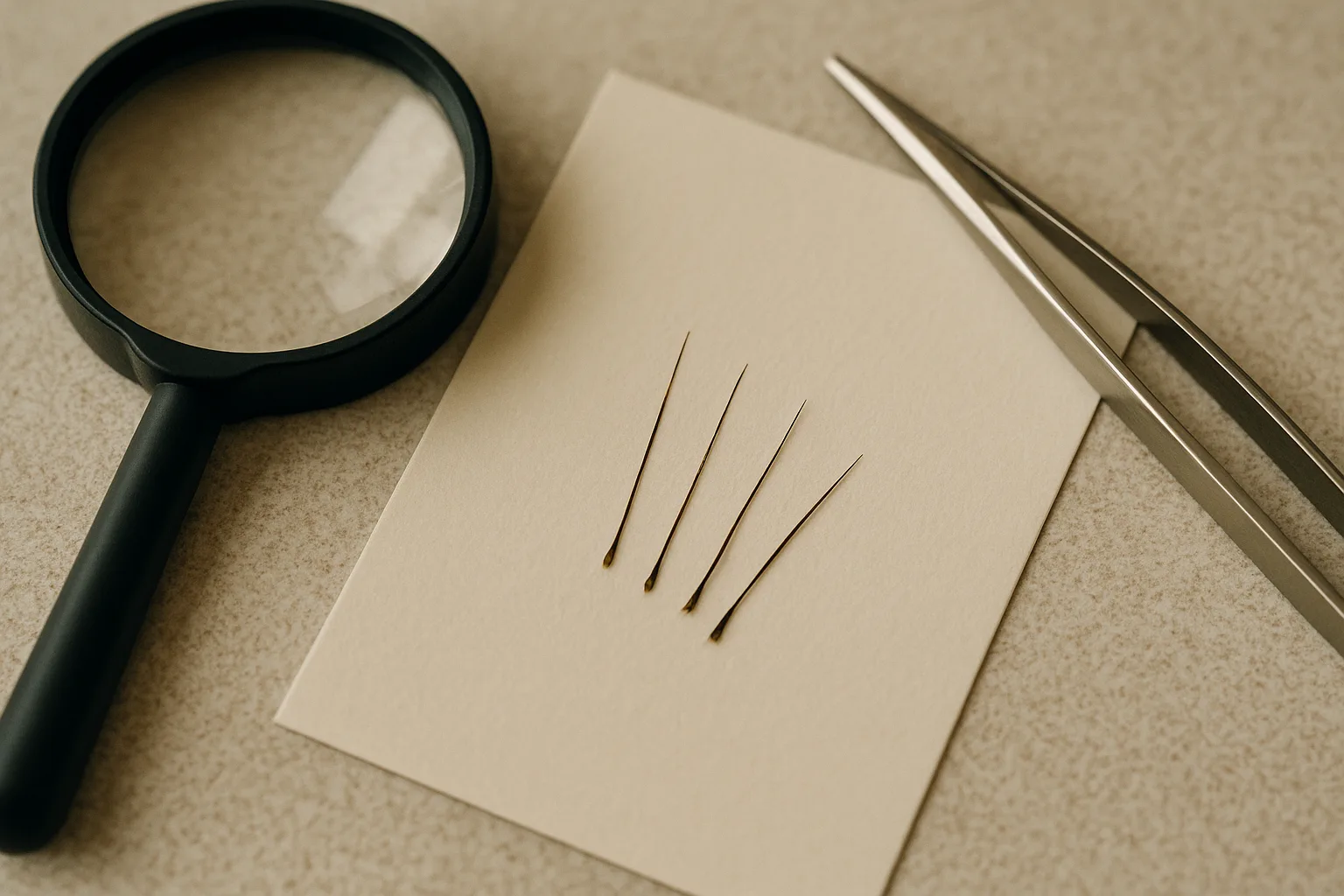
Recognising alopecia areata early helps direct care. Sudden, coin‑sized patches, “exclamation‑mark” hairs at the patch edge and a positive pull test suggest active disease, hairdoctornyc.com notes. Patterned, gradual thinning points more towards androgenetic alopecia. Our guide to hair loss in small patches: causes, signs and next steps explains what to look for.
When the picture is unclear or conditions overlap, dermatologists use trichoscopy (a magnified scalp exam) or scalp biopsy to confirm the diagnosis. Histology in alopecia areata typically shows lymphocytes around growing follicles, while androgenetic alopecia shows miniaturisation. A professional assessment prevents missteps and delays.
Doctors measure extent using the SALT (Severity of Alopecia Tool) score from 0 (no loss) to 100 (complete scalp loss). A score of 50 or more is usually classed as severe. SALT reflects how much hair is gone, but activity—the tendency to expand—also matters, and a positive pull test signals active disease.
For severe alopecia areata, spontaneous recovery without treatment is uncommon. Hairdoctornyc.com cites clinical evidence that only about 8% of those with at least 50% loss achieve 25% or more regrowth without active therapy, underlining the role of timely medical care.
A dermatologist‑led plan puts immune control first. Approved oral JAK inhibitors are now central for severe disease. For people with atopic conditions, hairdoctornyc.com notes dupilumab as a potential alternative route. For moderate disease, dermatologists may consider topical corticosteroids and sometimes minoxidil. Our explainer on alopecia areata hair loss: signs, regrowth and treatment sets out typical pathways.
No topical JAK inhibitor is currently FDA‑approved for scalp alopecia areata, despite claims online, according to hairdoctornyc.com. Eyelash treatments are separate: bimatoprost is licensed for lash growth and does not treat scalp disease.
Stress and immune signalling are active research areas. Laboratory work suggests stress can influence immune memory involved in hair loss, which may help explain flares in some people. Our coverage of a study linking stress and hair loss to immune ‘memory’ in mice explores this early‑stage science.
What people are saying
Dermatologists generally advise stabilising active autoimmune disease before any cosmetic steps. Hairdoctornyc.com emphasises that cosmetic procedures cannot halt immune‑driven shedding and may deliver unpredictable results if undertaken during a flare.
Clinicians typically prioritise medicines with robust efficacy and safety data. According to hairdoctornyc.com, that means favouring US‑approved JAK inhibitors for severe disease and maintaining consistent therapy during the initial six‑month window recommended by the 2026 consensus.
For patients with atopy, hairdoctornyc.com reports that dupilumab may be considered as an alternative first‑line option, reflecting overlap between eczema and alopecia areata in a substantial minority of people.
The emotional impact is considerable. Hairdoctornyc.com cites research indicating high lifetime rates of anxiety and depression among people with alopecia areata, underscoring the value of holistic care and support alongside medical treatment.
Specialists also stress accuracy in expectations. There is currently no cure; even effective medicines require ongoing management, and responses vary. Our feature on a rheumatoid arthritis drug upadacitinib boosting alopecia areata regrowth explains how targeted treatments can help some people, while noting regulatory differences across regions.
What happens next
According to naaf.org, larger studies are on the way. Nektar plans to start a Phase 3 trial of rezpegaldesleukin in early 2027, and Q32 Bio expects further bempikibart extension data in the second half of 2027. These programmes will test whether off‑treatment durability seen in early studies holds in bigger groups.
For currently approved JAK inhibitors, extension studies are clarifying who maintains regrowth over time and which patients benefit from longer courses. Deuruxolitinib’s two‑year data suggest many responders can sustain improvement with continued therapy, while some slower responders catch up, naaf.org reports.
For adolescents, longer‑term baricitinib data through 1.5 years offer additional reassurance on sustained efficacy, with safety observations extended to 2.5 years, according to naaf.org. This supports the September approval for ages 12 and up in the US.
In clinic, hairdoctornyc.com advises clear milestones before considering cosmetic options: disease inactive for at least six months, a negative pull test, and no inflammatory signs on the scalp. Transplantation is not recommended during active disease and is generally unsuitable for total scalp loss; scalp micropigmentation can be an option in stable cases, including more extensive forms.
If you are noticing new patches, seek a prompt assessment. A dermatologist or trichologist can confirm the diagnosis, discuss approved treatments and monitoring, and plan supportive care. For a broader view of today’s options, see our guide to the best hair loss treatments in 2026, and speak to your GP for referral if needed.
Related: NICE backs deuruxolitinib for severe alopecia areata on NHS
Why this matters
Clearer guidance and longer‑term data help people in the UK navigate a confusing landscape. If you notice sudden patches or rapid changes, book an assessment with your GP, a dermatologist or a trichologist. Early treatment improves the odds of regrowth, and cosmetic options are safer once disease is stable. Our explainer on alopecia areata signs and regrowth can help you prepare for that appointment.
Common questions
- what changed for alopecia areata treatment in 2026
- A new consensus recommends oral JAK inhibitors as first‑line for severe alopecia areata, and the US FDA approved baricitinib for adolescents aged 12 and over.
- is baricitinib approved for adolescents with alopecia areata
- Yes. In the US, baricitinib gained approval on 27 September 2026 for adolescents aged 12 and over with severe alopecia areata.
- what is the salt score in alopecia areata
- SALT is a tool rating scalp hair loss from 0 (none) to 100 (complete). A score of 50 or higher generally indicates severe disease.
- do any treatments keep working after you stop them
- Early studies at EADV 2026 found some patients on investigational biologics maintained or improved regrowth for months after stopping treatment.
- are topical jak inhibitors approved for scalp alopecia areata
- No. According to hairdoctornyc.com, no topical JAK inhibitor is FDA‑approved for scalp alopecia areata at this time.
- how likely is severe alopecia areata to regrow without treatment
- In severe cases with at least 50% hair loss, about 8% regrew at least 25% of hair without therapy, based on cited clinical evidence.
- is upadacitinib approved for alopecia areata
- Upadacitinib is approved for alopecia areata in the European Union but is not FDA‑approved for this use in the United States, naaf.org reports.
- when can cosmetic treatments be considered for alopecia areata
- After disease is inactive for at least six months, with a negative pull test and no inflammatory signs, according to hairdoctornyc.com guidance.
Sources
- hairdoctornyc.com: Hair Loss Alopecia Areata Treatment: 2026 Guide
- naaf.org: New Alopecia Areata Research at EADV Highlights Promising Treatment Advances - National Alopecia Areata Foundation | NAAF
This article was written by Thicker Thinking using the sources listed above. It is for general information and is not medical advice. Speak to your GP, a dermatologist or a qualified trichologist about your own situation.